

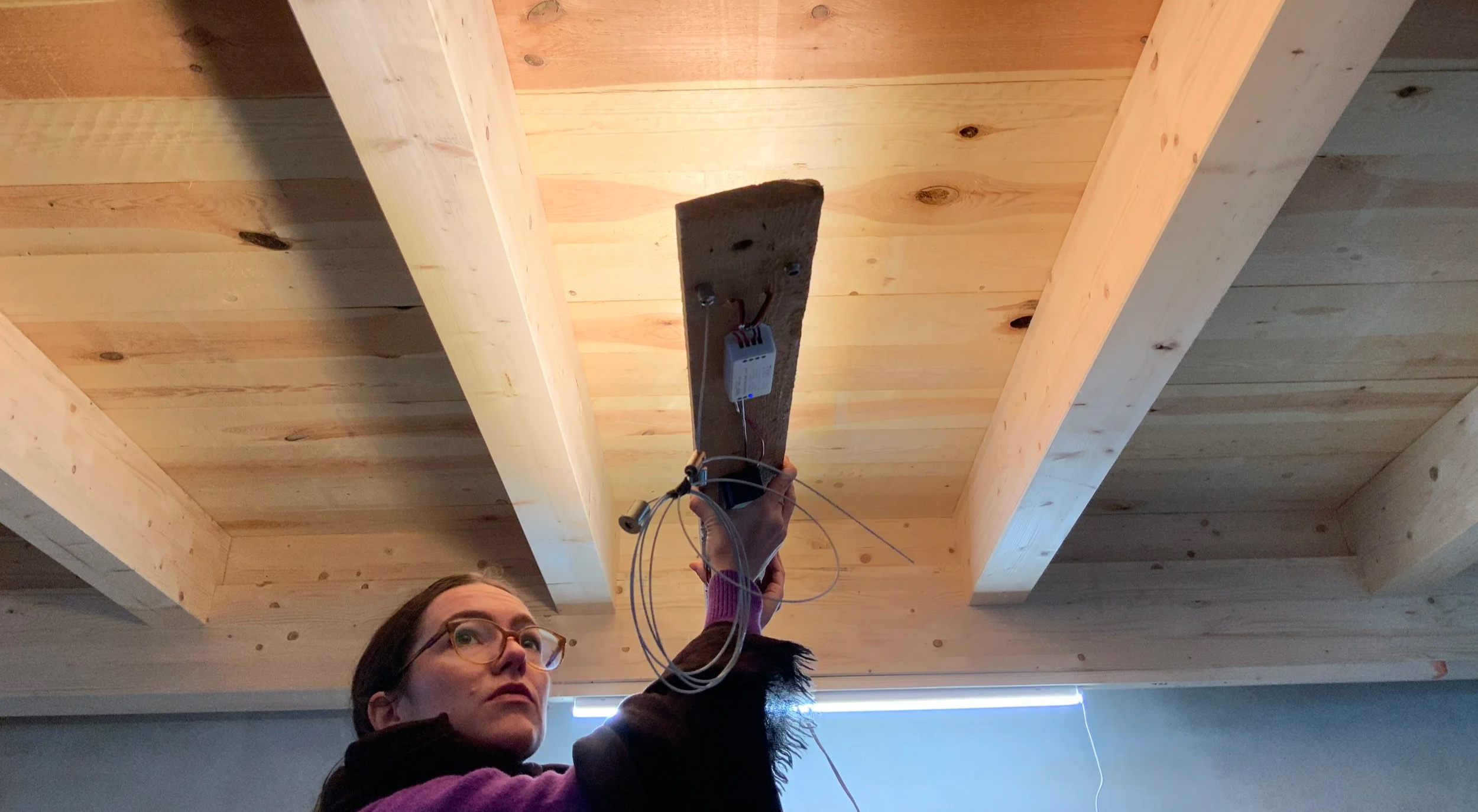
Why Lighting Should Be Considered Early in New Builds
In new builds, lighting is not something that should be figured out at the very end alongside switches and furniture. That is a common misconception. Because the moment outlet positions, ceiling connections, cut-outs, installation heights and wiring paths are defined, you are already deciding how precisely a space can function later on and how much design freedom actually remains.
What is planned early feels natural later.
What is planned late often feels added on.
You don’t always see it immediately.
But you feel it.
Every day.
A New Build Doesn’t Need a Lighting Scheme. It Needs Answers.
Not every room needs the same light.
Not every use requires the same brightness.
And not every architectural idea benefits from the same solutions.
That’s why a strong lighting concept in a new build is never just a collection of beautiful fixtures, but a response to very specific questions that arise from the layout, sightlines, materials, and the way the space will actually be lived in.
Where does a space begin visually?
Where should focus be created?
Where is restraint needed?
Which areas need to support multiple functions at once?
Only when these questions are clearly answered does a lighting concept emerge that does more than simply illuminate.
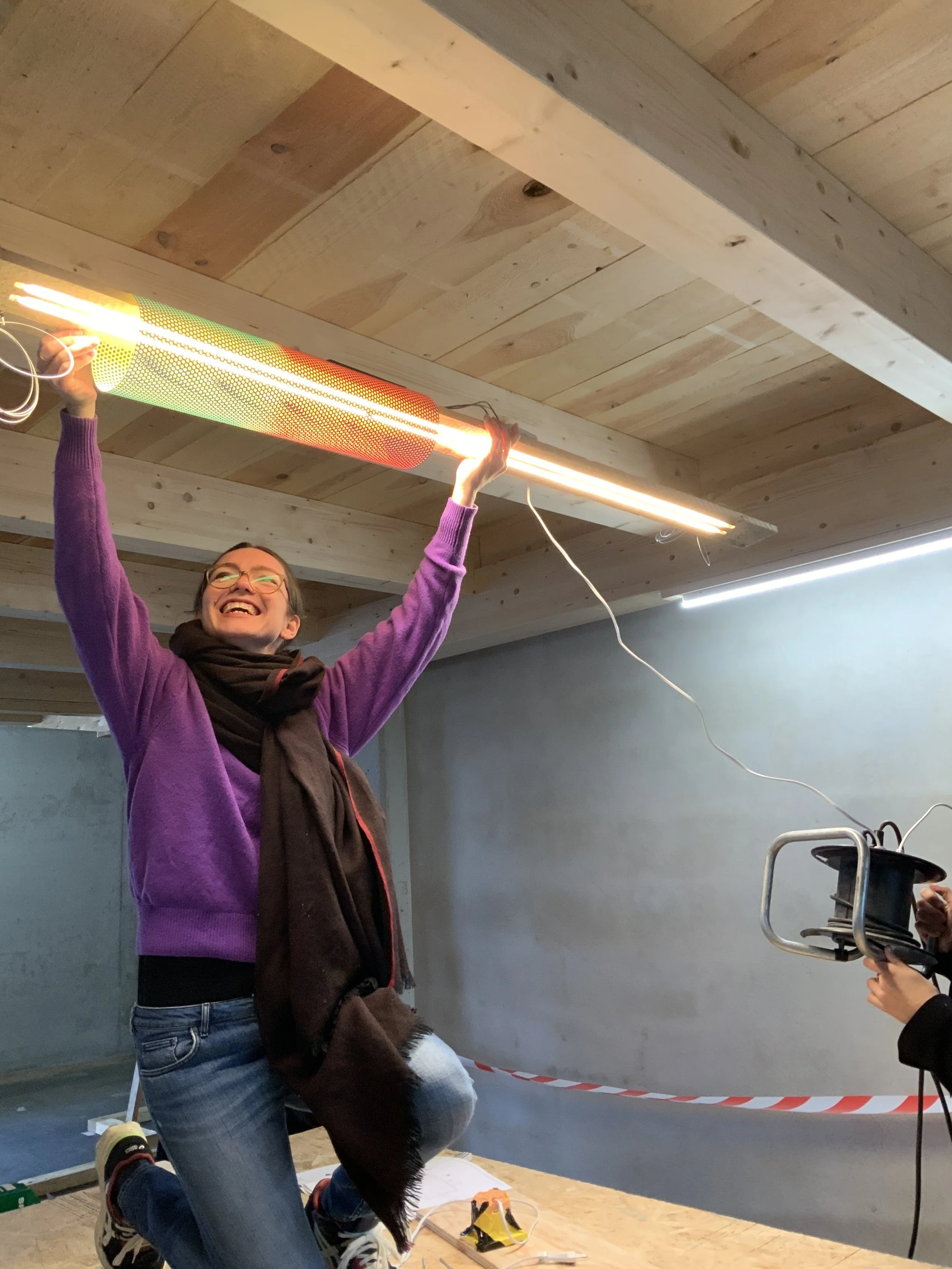
Four Spaces Where Good Lighting Design in New Builds Truly Shows
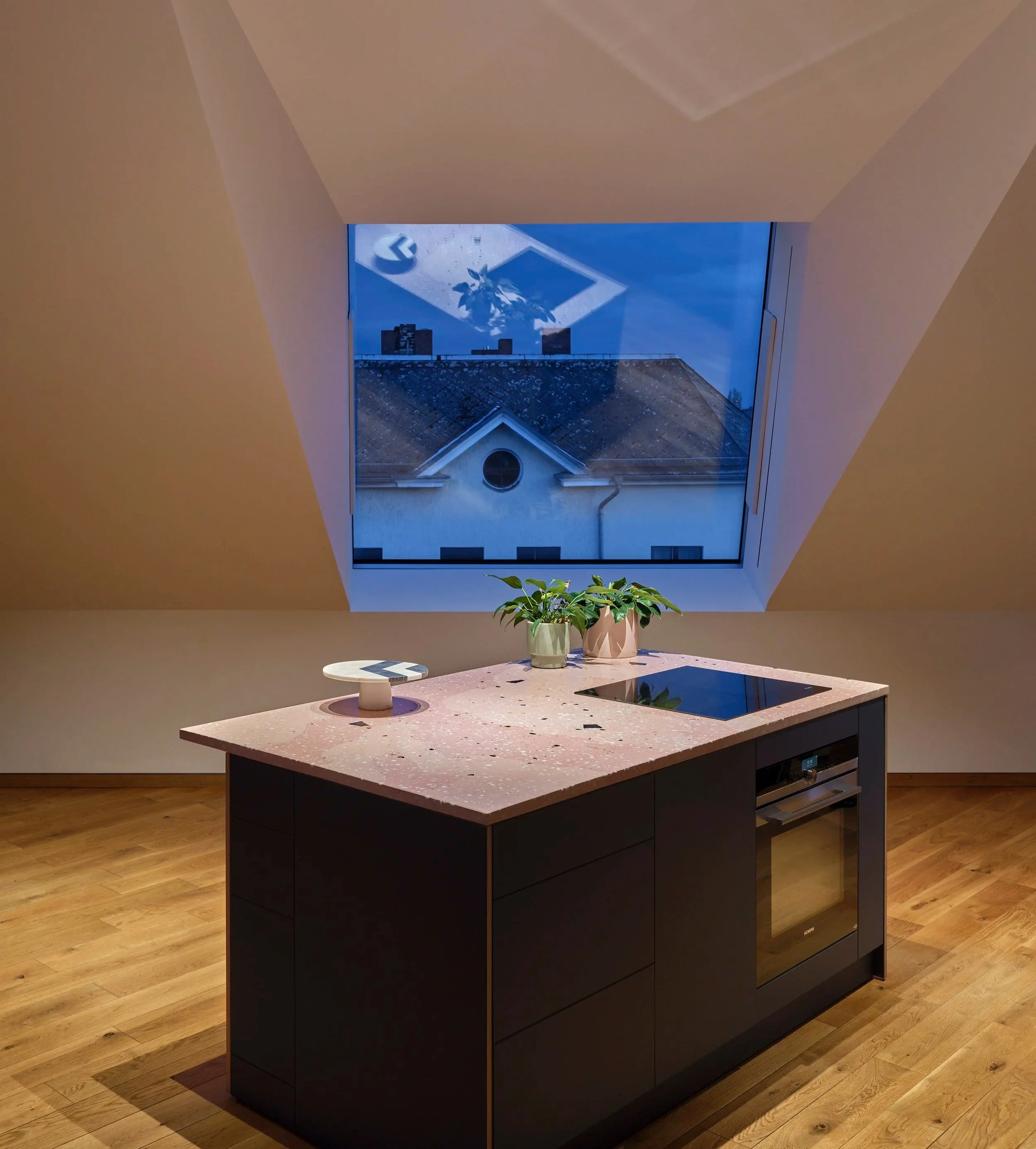
1. Kitchen
In new builds, the kitchen is often far more than just a functional workspace. It is planned as a meeting point, a transition to the dining area, a place of communication, and sometimes even the visible center of the entire living concept. This is exactly why lighting here must be precise, clearly zoned, and spatially well-structured, so that different uses do not compete with each other but instead work together seamlessly.
Work surfaces need directed, clean light without disturbing shadows
Kitchen islands require a solution that combines function and presence
Transitions to adjacent areas must be considered
Light points should not interfere with pathways or sightlines
Especially in open-plan layouts, it becomes very clear whether lighting has been properly thought through or not, because even the most high-end kitchen loses quality if light falls on the wrong surfaces, creates reflections, or fails to clearly define working zones, ultimately disrupting workflows and reducing spatial clarity.
It is also often underestimated how strongly materials react to light, especially glossy fronts, natural stone, or stainless steel, which is why the positioning and alignment of light sources must be carefully coordinated not only functionally but also visually to avoid unnecessary visual noise.
A kitchen does not need a single lighting object.
It needs structure.
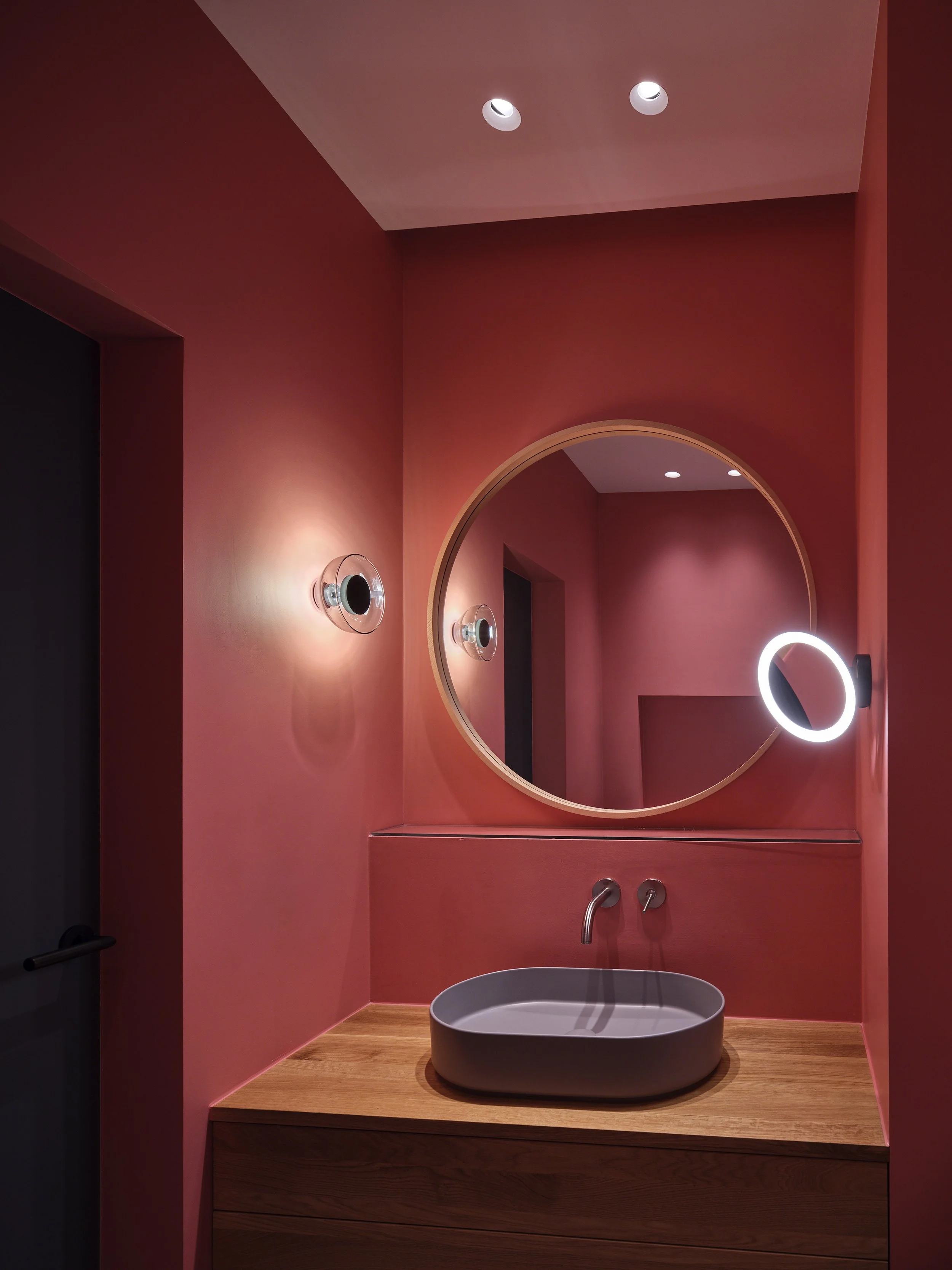
2. Bathroom
In the bathroom, planning mistakes become immediately and unforgivingly visible, because light directly interacts with faces, surfaces, mirrors, and materials. It therefore has to be not only functional, but also balanced, calm, and precisely positioned, so that daily routines feel effortless instead of being disrupted by poor lighting conditions. Relying on a single central ceiling light in a new build means giving up quality in the very space where good lighting is experienced every morning and every evening, and where even small differences become noticeable.
Mirror areas need light from the right direction
Shadows on the face should be avoided
Materials such as stone, ceramic, or wood require a clean light effect
Bright bathrooms should not feel sterile, dark ones should not feel too heavy
This is not just about seeing enough.
It is about seeing correctly.
Without harsh contrasts, without distracting reflections, and without the feeling that the space, although new, never quite works comfortably in everyday use because the light either glares, distorts, or feels uneven.
It is in the interaction between mirrors, wall surfaces, and indirect lighting that real quality emerges, ultimately defining whether a bathroom feels calm, refined, and well considered, or remains visually unsettled despite high-end materials.
3. Bedroom
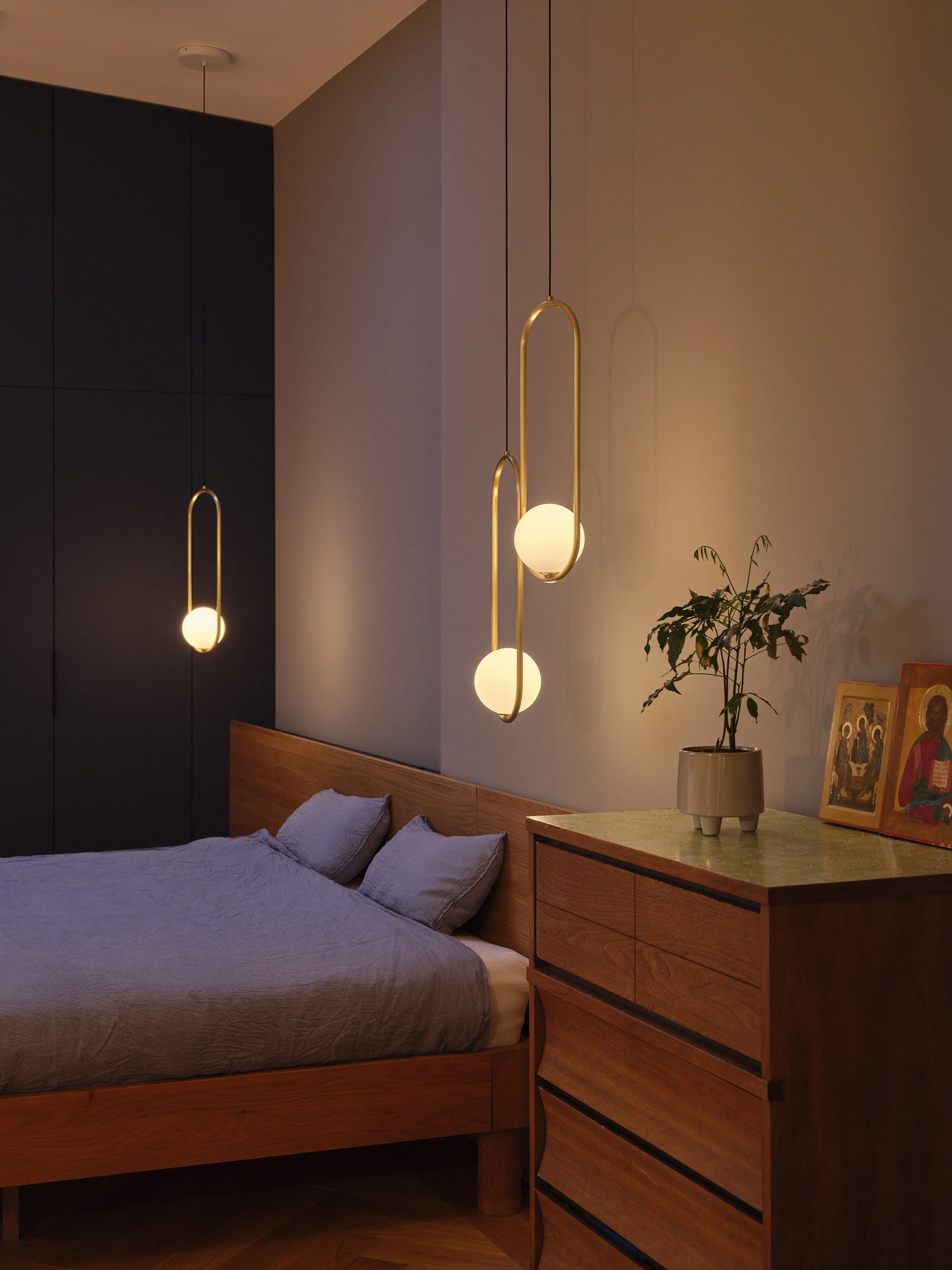
The bedroom is one of the spaces where it becomes especially clear in a new build whether lighting has been treated as a purely technical task or truly considered as part of the spatial experience, because this is not a place for maximum presence or unnecessary staging, but for a lighting approach that supports retreat, provides orientation, and allows for different situations without overwhelming the space or creating visual noise.
Soft ambient light for arriving in the evening
Targeted reading light at the bedside instead of diffuse general lighting
Solutions for wardrobes and transitions
Lighting moods that function differently in the morning and evening
Too often, the bedroom is still treated with a single central light source, even though this is exactly where quality lies in the details, and where small decisions make a significant difference in determining whether a space feels calm, comfortable, and clear, or whether it never fully comes together despite high-quality materials and finishes.
A bedroom does not need spectacle.
It needs sensitivity.
4. Hallways
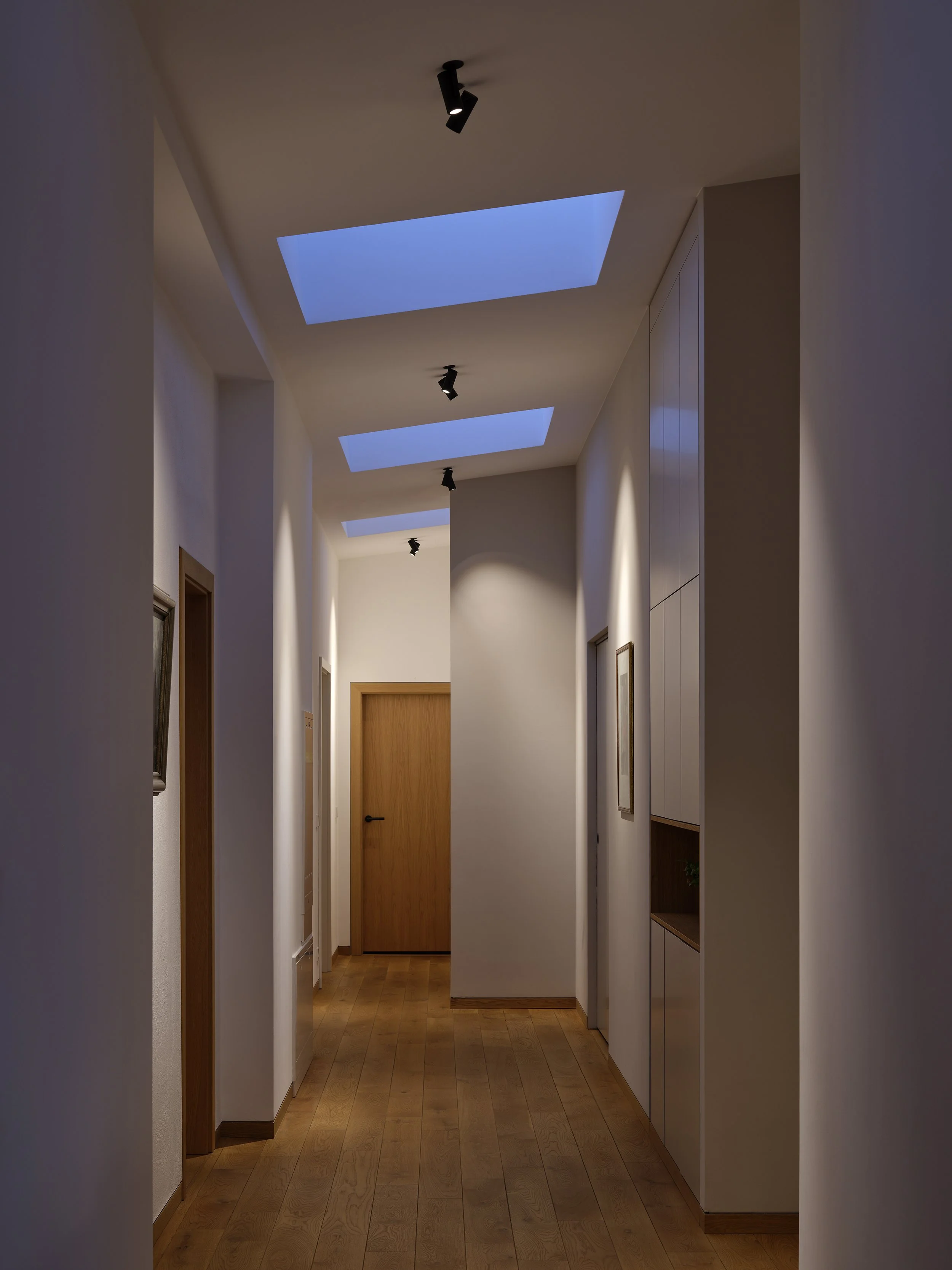
In new builds, hallways are surprisingly often underestimated. Not only in terms of space, but also in planning. Yet they are far more than simple circulation areas. They structure daily life, connect rooms, create the first impression of a home, and ultimately determine whether a layout feels clear and intuitive or unsettled, dark, and somewhat random, because transitions are not properly guided, proportions are not supported, and sightlines are not consciously directed.
Even circulation requires more than a single central light point
Longer hallways benefit from rhythm and clear sequencing
Transitions to rooms, stairs, or wardrobes need hierarchy
Light can create depth and visually open up narrow spaces
Especially in longer or more complex layouts, the quality of planning becomes very evident, because lighting here is not just about illumination, but about guidance. It defines sections, suggests direction, and creates a sequence that can be understood intuitively without requiring conscious attention.
And precisely because hallways are rarely the first space people focus on in a new build, they are often treated as purely technical tasks. That is a missed opportunity, because well-designed hallways bring structure, calm, and orientation to an entire home without relying on additional design elements, but simply through precise lighting and clear spatial logic.
A hallway is not a leftover space. It is the system that connects everything.
What Homeowners Often Underestimate in New Builds
When it comes to lighting, many people initially focus on the visible elements: fixtures, shapes, design, and perhaps the light color. But in new builds, it is often the invisible decisions behind them that matter far more, because they define what is actually possible later on and how flexible, precise, and high-quality the final result can be.
Typical aspects that are considered too late:
Connections may seem logical, but don’t support the space effectively
Switches and lighting scenes don’t reflect real daily routines
Installation positions don’t align with furniture or sightlines
Individual rooms are planned in isolation instead of as part of a whole
The issue is not that these mistakes are dramatic.
The issue is that they remain.
Light Turns Square Meters into Everyday Life
In new builds, a lot is said about materials.
About facades.
About kitchen fronts.
About flooring.
Far less attention is given to the fact that lighting ultimately determines how all of this is perceived. How clear a space feels in the morning. How comfortable it is in the evening. How calm a bathroom appears, how precise a kitchen functions, how intuitive a hallway feels, and how quietly a bedroom recedes.

That’s exactly why lighting design in new builds is not something to consider once everything is finished, but at the point where decisions still have impact and don’t need to be corrected later, but instead support the project from the very beginning.
Because in the end, you are not just building a floor plan.
You are building a life into it.
Contact Us:
