

Bedroom Lighting Ideas: How Lighting Designers Think About Calm and Atmosphere
A bedroom is more than just a room.
Whether in a private home or a hotel,
it is the place where the day ends and the next one begins.
This is where it is decided whether we can truly switch off
or remain restless.
And this is exactly where light has the strongest impact.
Even before we consciously perceive materials, colors, or furniture,
our body responds to light—
to brightness, to contrasts, to color temperature.
Light is not a detail.
It is the trigger for calm or restlessness.
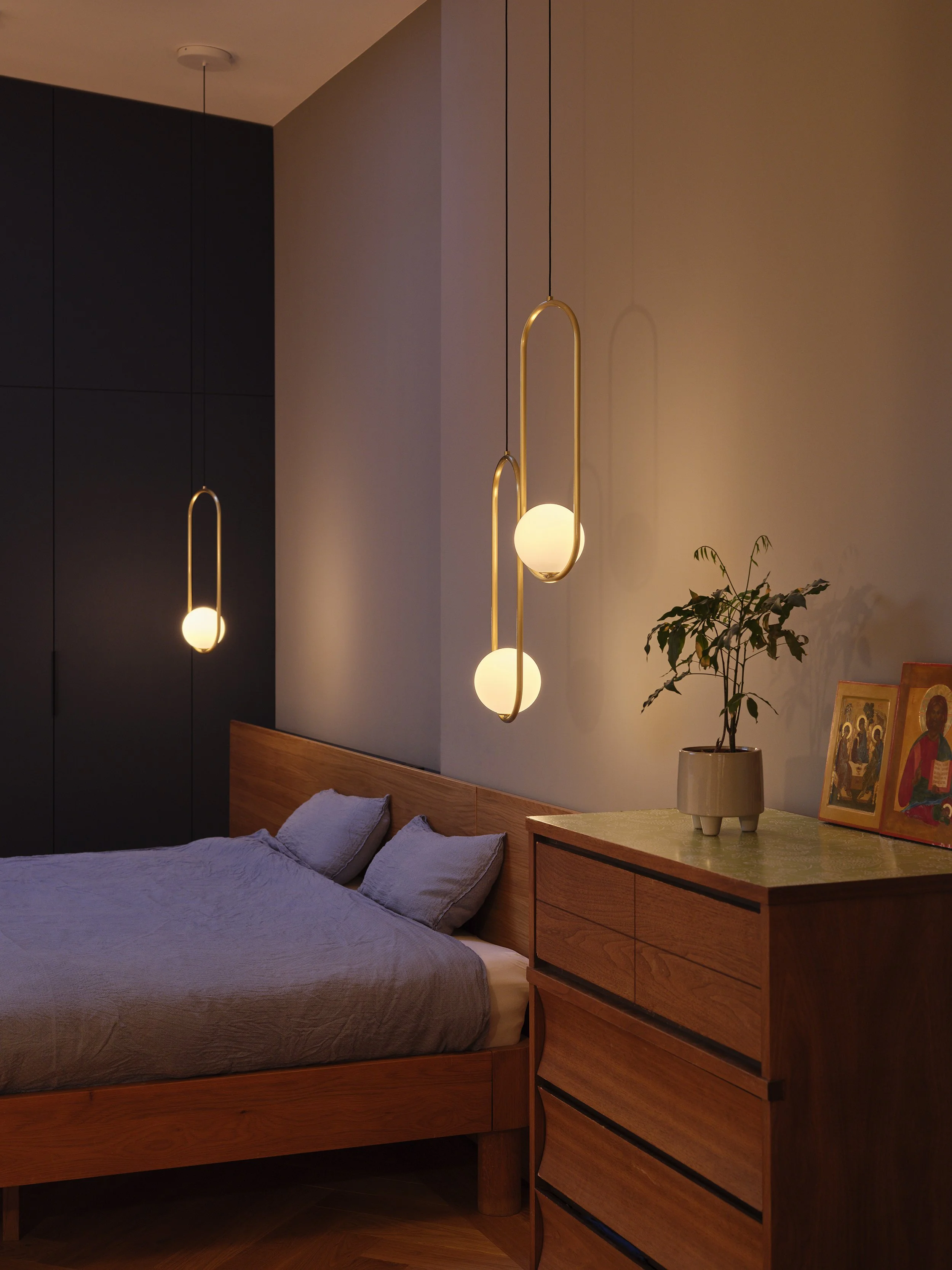
1. Calm is created through light layers, not a single luminaire
Many bedrooms follow a simple principle:
Ceiling light on, room bright.
The problem:
Uniform, flat brightness does not create atmosphere. It often feels cold and restless. The room is illuminated, but not designed.
That’s why lighting designers work with clearly defined layers that serve different purposes and complement each other:
• Ambient light for orientation in the space
• Indirect light for a soft, balanced atmosphere
• Accent light for depth and visual tension
• Task lighting for specific use, e.g. reading
Only the precise interplay of these layers creates true calm—visually and emotionally.
Not flat.
But deliberately composed.
2. Indirect light is the foundation of relaxation
Direct light activates.
Indirect light calms.
When light is reflected off walls or ceilings, soft transitions are created.
The eye is relieved.
The space feels more balanced and calm.
Typical solutions:
• Cove lighting in ceilings or walls
• Backlit headboards
• Linear light profiles along architectural lines
• Concealed light sources with diffuse output
Uniformity outweighs brightness.

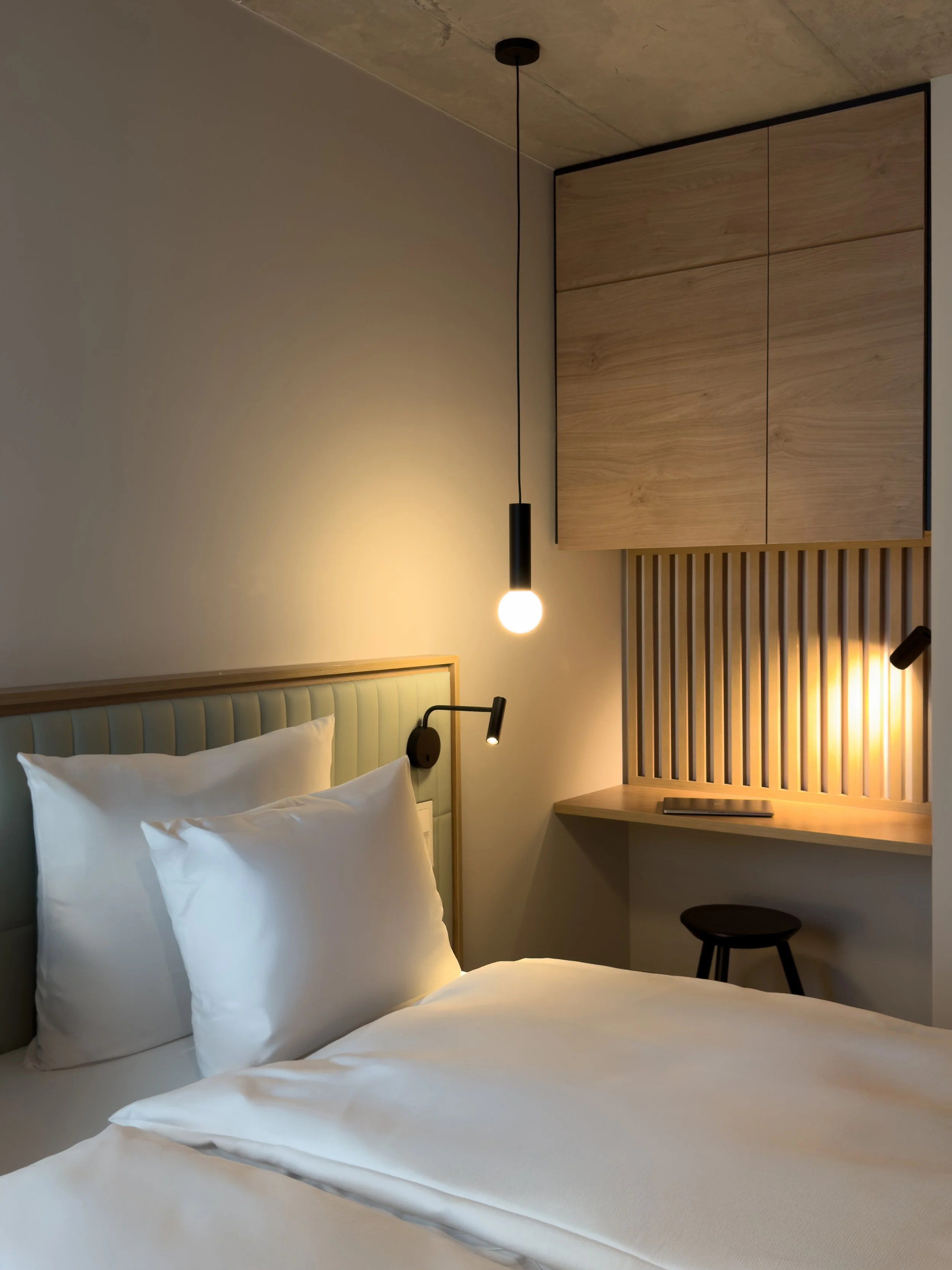
3. Color temperature shapes your rhythm
A common mistake:
Light that is too cool in the bedroom.
Lighting designers deliberately use warm color temperatures:
• 2200K to 2700K for evening and relaxation
• Slightly more neutral values for functional areas such as wardrobes
Why this matters:
Warm light signals calm to the body.
Cool light activates.
It becomes even more precise with controllable scenes:
• “Relax” with dimmed, warm light
• “Read” with focused, slightly clearer illumination
• “Wake up” with gently increasing brightness
Light becomes part of the daily rhythm.
4. Light structures the space
A well-designed bedroom is not evenly lit.
It has hierarchy.
Lighting designers place accents deliberately:
• Wall surfaces are softly illuminated
• Materials are emphasized through grazing light
• Furniture is highlighted in a differentiated way
The result:
The space feels larger.
Calmer.
Clearer.
Not because there is less light.
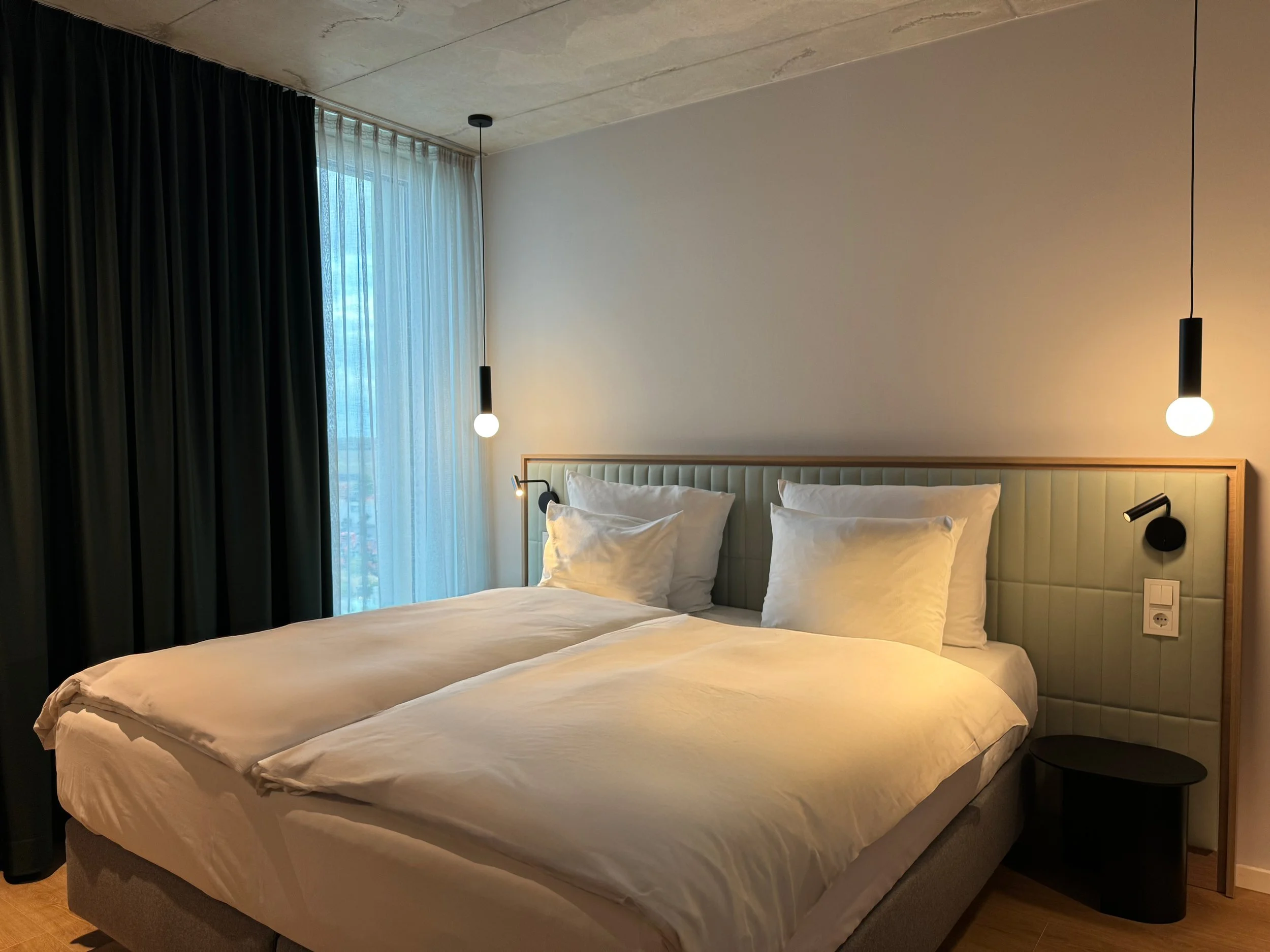
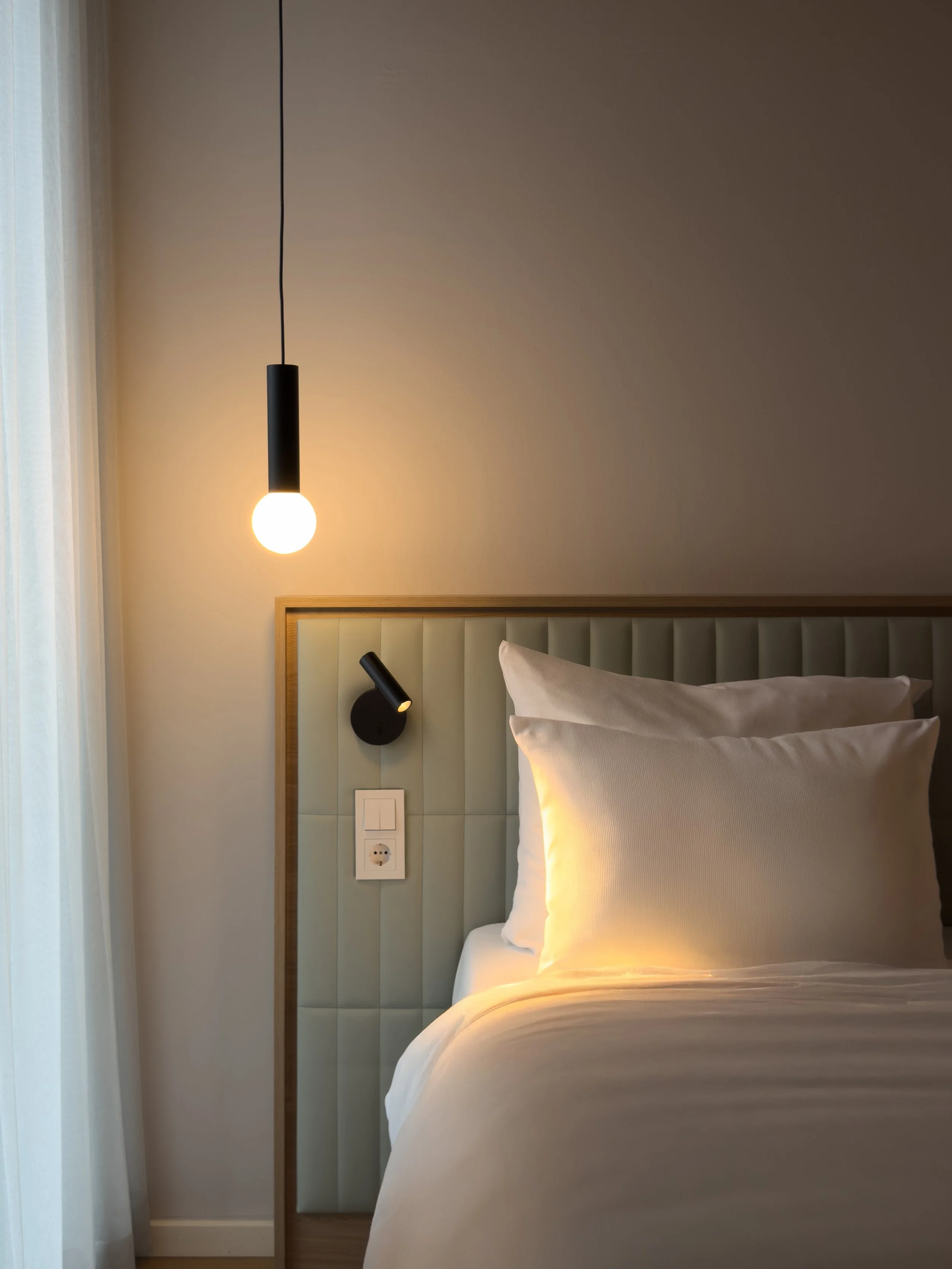
5. Visual comfort defines true calm
Glare is one of the most common sources of discomfort.
Especially when lying down, it becomes immediately noticeable.
Typical mistakes:
• Spots positioned directly above the bed
• Visible, unshielded light sources
• High luminance from small fixtures
Professional solutions:
• Recessed luminaires set back from the field of view
• Controlled beam angles
• Matte or microprismatic optics
• UGR values well below 19
Light should create an effect—not glare.
Only then does true relaxation emerge.
Plan Bedroom Lighting Professionally
At Studio De Schutter, we do not see lighting as an add-on.
But as an integral part of architecture.

Especially in the bedroom, it’s about creating spaces that do more than just function.
They should have an impact.
Calm the mind.
Give a sense of identity.
Contact Us:
