

Hallway Lighting Ideas: From the Perspective of a Lighting Designer
The hallway is often the most underestimated space in a house. It is planned as a passage. As a connection between rooms. As a purely functional zone.
And that is exactly why lighting here is often considered too late.
Yet the hallway defines the first spatial impression. It is the entrance of a home. The moment when architecture begins to take effect.
From the perspective of a lighting designer, the hallway is not a secondary space. It is a light axis.

1. Light as Orientation
A well designed hallway works like a visual guide.
Light shows direction. It structures movement. It creates a sense of security.
Instead of simply lighting the space evenly, we work with a clear hierarchy.
Typical elements include:
• glare free downlights with narrow beam angles
• linear light bands along the direction of movement
• wall lighting that emphasizes the edge of the space
• light points that define path and rhythm
The effect is subtle, but essential.
Light unconsciously tells the body where to move.
Especially in long hallways, this creates a kind of architectural choreography.
2. Light Along the Direction of Movement
Long, narrow hallways benefit especially from a clear and calm lighting strategy.
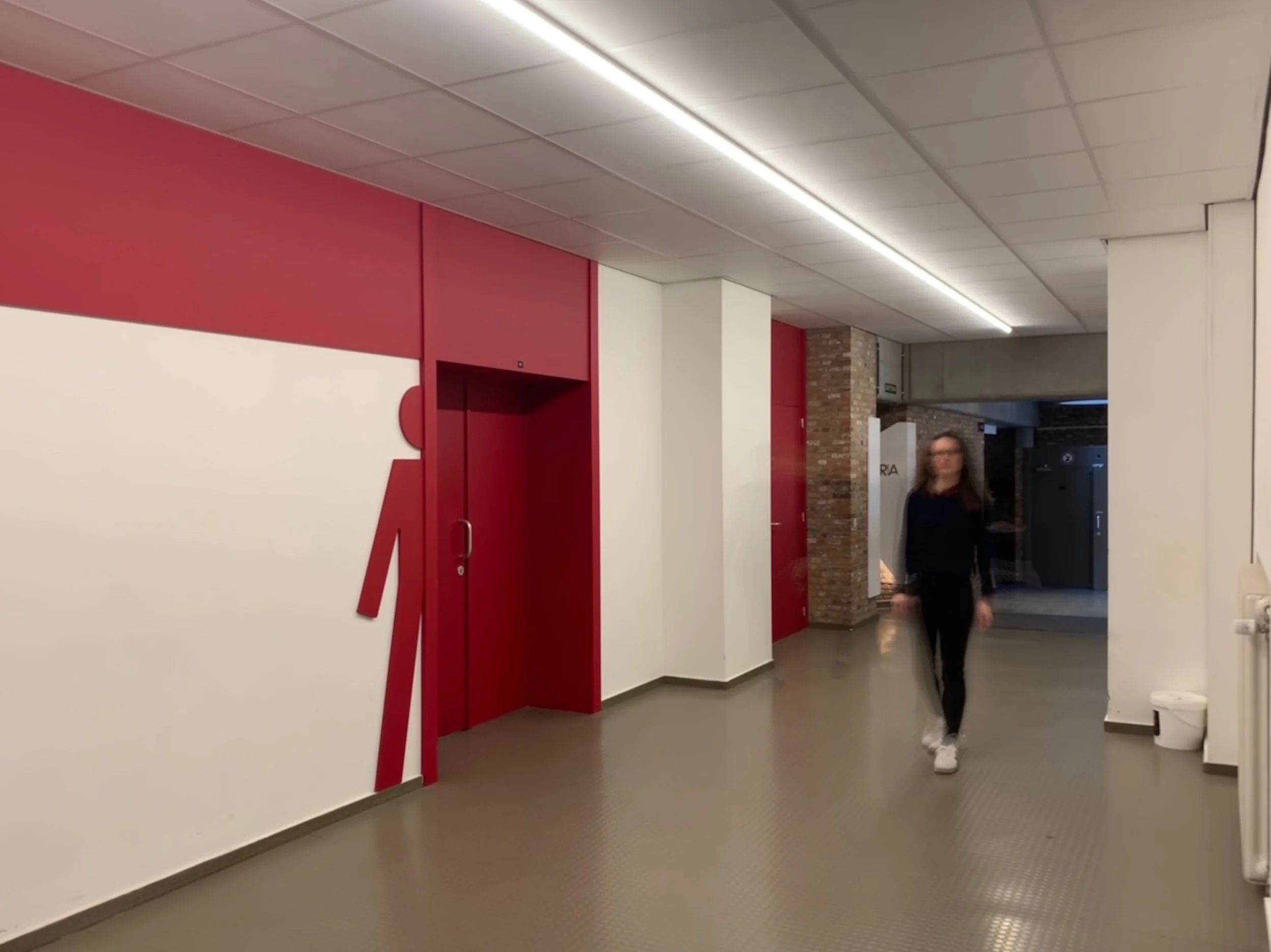
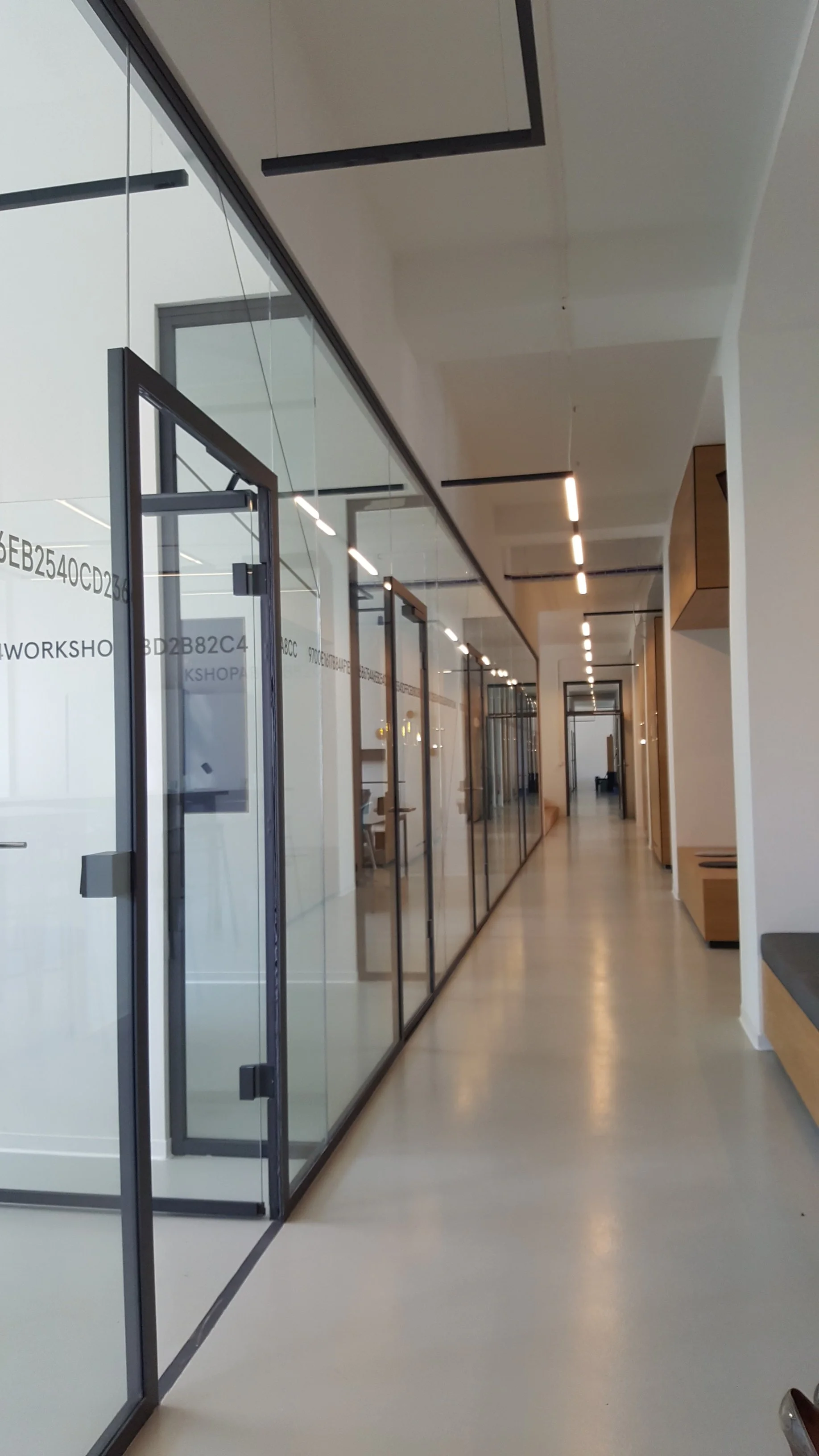
Instead of placing individual light points irregularly, a linear lighting approach along the length of the space often works much better. The light follows the movement through the hallway and reinforces the architectural direction of the room.
This creates a visual guide that provides orientation without feeling intrusive.
Typical examples include:
• slim light profiles along the ceiling
• linear LED bands running the full length of the hallway
• several small spots arranged in a clear line
• indirect light along one side of the wall
This gives the space rhythm and orientation.
At the same time, the hallway appears more structured, calmer, and distinctly architectural.
3. Indirect Light for Calm
The hallway is often the first space you enter.
And frequently the last one you leave in the evening.
That is why visual calm plays an important role here.
Indirect light creates exactly that.
Typical solutions in a lighting concept include:
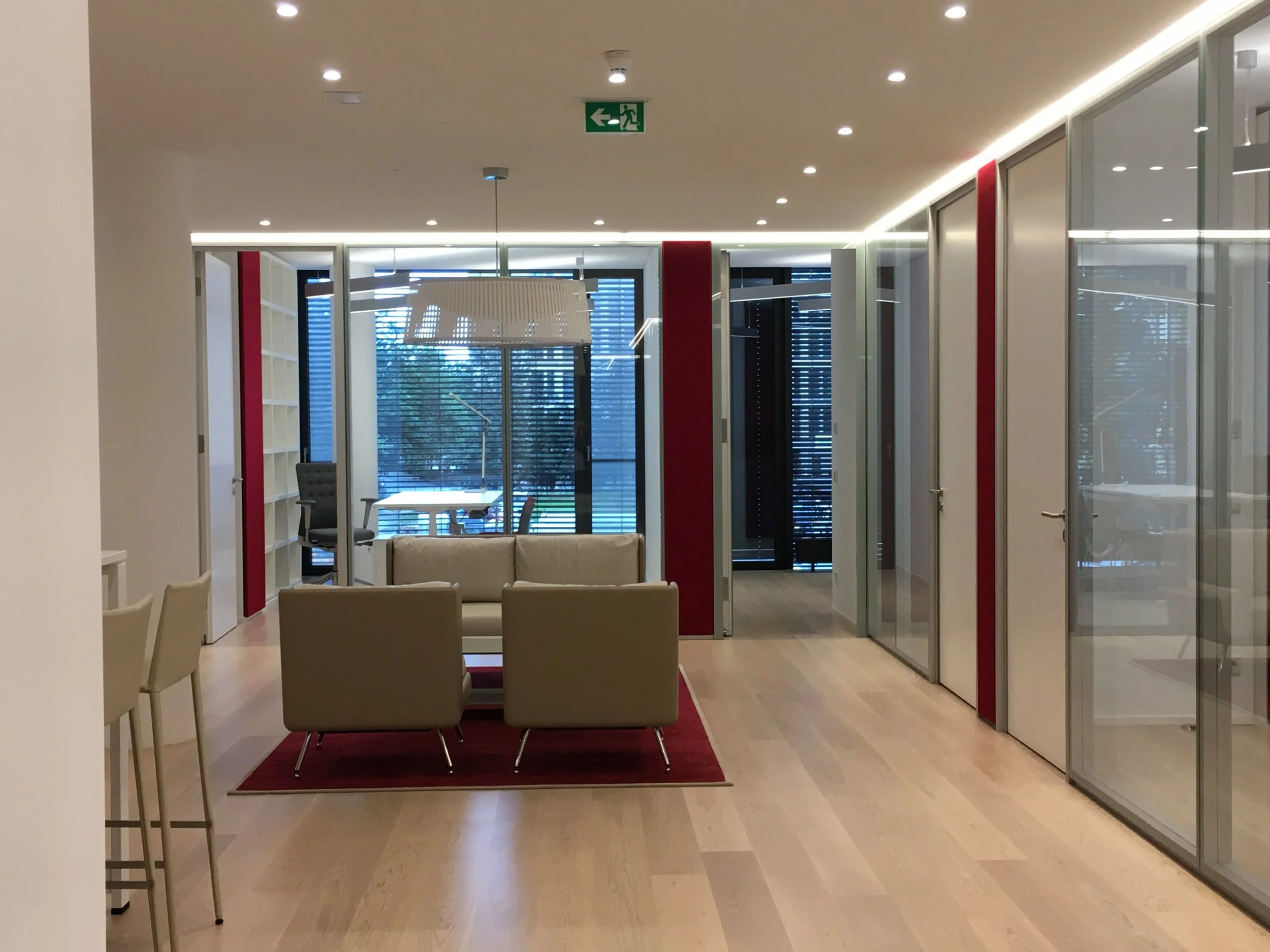
• cove lighting along the ceiling
• concealed LED profiles integrated into ceiling edges
• indirect light behind wall panels
• linear light lines along the axis of the space
Indirect lighting reduces glare and creates an even brightness.
The space appears calm, refined, and seamlessly integrated into the architecture.
4. The Interplay of Light Layers
Professional hallway lighting rarely relies on just a single light source.
Instead, lighting designers work with multiple layers of light.
General lighting
Accent lighting
Atmospheric lighting
Typical combinations in a hallway include:
General lighting
• glare free downlights
• linear ceiling profiles
Accent lighting
• spots for artwork or photographs
• directional wall lighting
Atmospheric lighting
• indirect light coves
• illuminated wall surfaces
Only the combination of these layers creates a hallway that feels both functional and atmospheric.
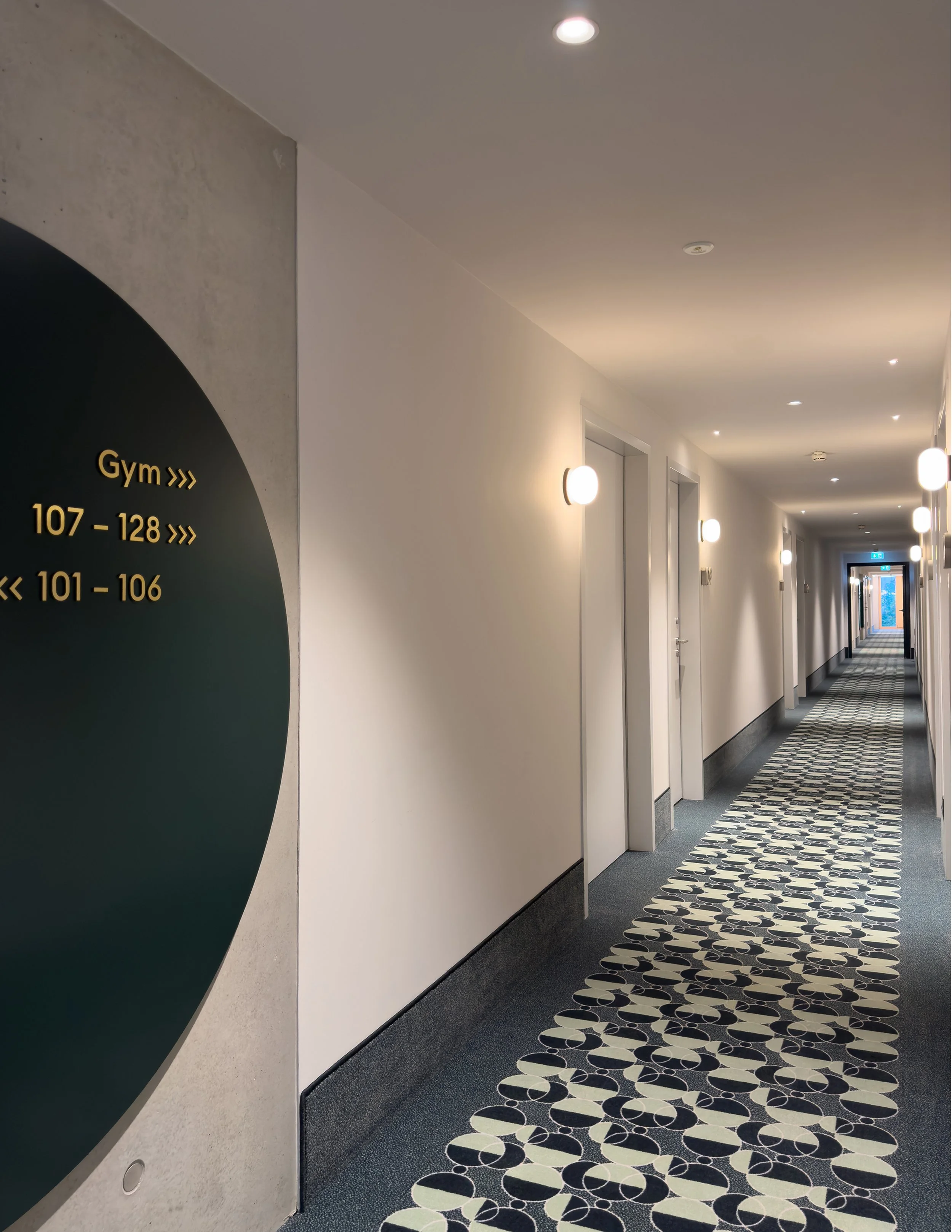
5. Small Wall Lights in Rhythm
Wall luminaires can work particularly well in hallways of older buildings.
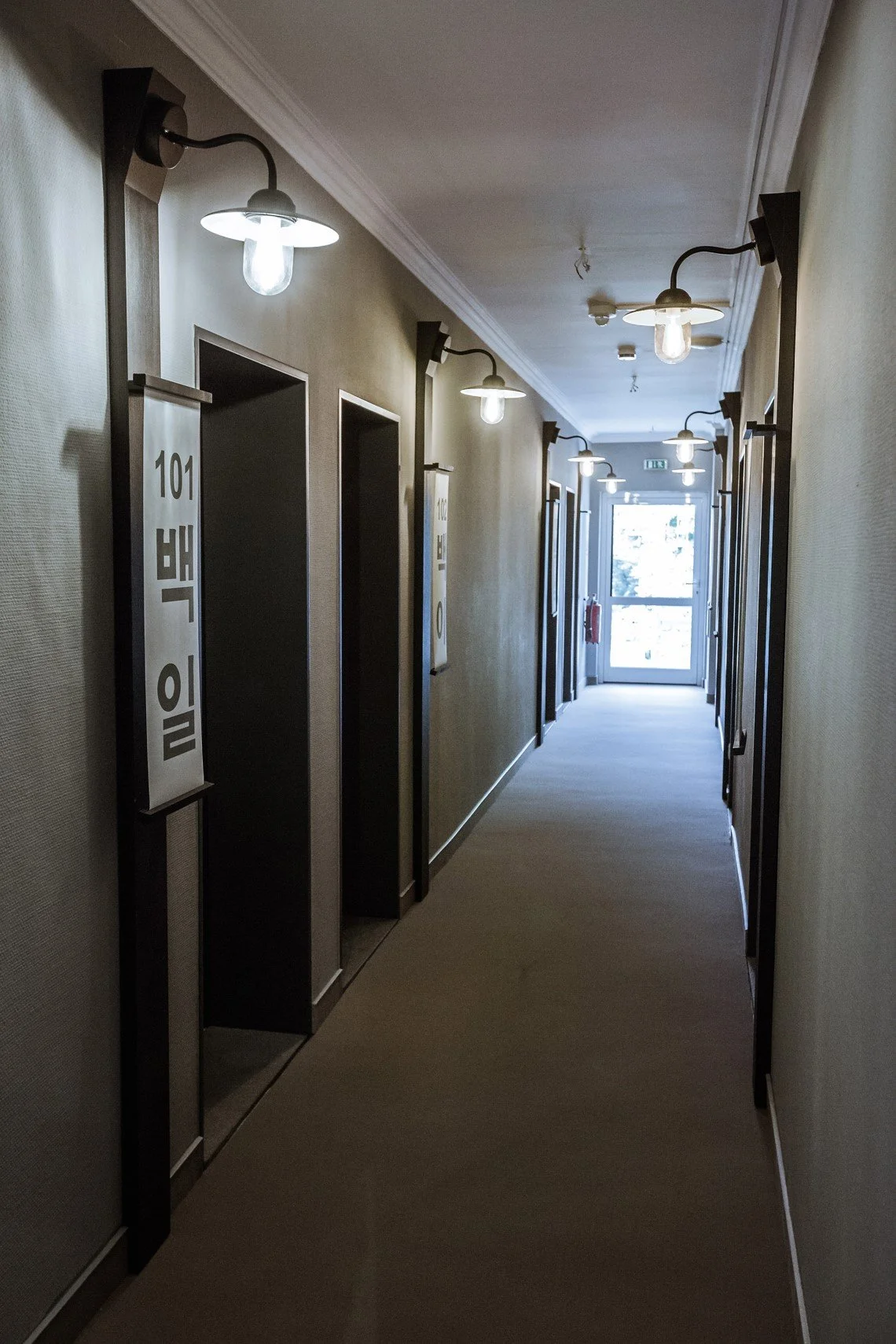
Hallways with higher ceilings or classic proportions benefit from lighting that does not come exclusively from above. Wall lights bring the light closer to the surfaces of the room and create a calm and balanced atmosphere.
They produce a soft, even light effect along the walls.
Typical applications include:
• small up and downlights
• minimalist cylindrical wall luminaires
• flat wall lamps with indirect light
When several luminaires are placed at equal distances, a rhythmic sequence emerges along the hallway.
The eye naturally follows the light points, which makes the space feel ordered and clear. At the same time, calm islands of light appear, adding depth to the corridor.
The hallway gains structure and a much stronger architectural presence.
6. Fewer Luminaires, Better Planning
A hallway does not need many luminaires.
It needs a clear concept.
Especially in narrow or smaller hallways, too much light quickly creates visual noise. Too many fixtures, scattered light points, or poorly positioned spots can make the space feel restless and overloaded.
Often, just a few well placed light sources are enough to create a clear and pleasant atmosphere.
Typical solutions include:
• two or three glare free downlights
• a linear lighting solution along the ceiling
• a small wall luminaire as a calm accent
• an indirect light band for even brightness
What matters is not the number of luminaires, but their position in the space and how they interact with architecture and materials.
When light is placed deliberately, structure, orientation, and atmosphere emerge at the same time.
The key point is not the number of luminaires, but the effect of light within the space.
Good lighting design does not mean more light.
It means better light.
Why Lighting Design in the Hallway Makes a Difference
The hallway is rarely the largest space in a home. But it is often the first.
This is where the journey through the architecture begins. This is where the first impression of a space is created.

At Studio De Schutter, we do not understand light as a decorative element added at the end of a project. Light is considered from the very beginning, together with the architecture.
This approach creates solutions that are precisely integrated. Luminaires that do not dominate. And spaces in which light guides perception.
Contact Us:
