
An exhibition can have the best exhibits.
The rarest objects.
The most compelling story.
And still fail.
Not because of the content.
But because no one understands where to look.
This is where exhibition lighting begins.
Not with the luminaire.
Not with the manufacturer.
But with one question:
How do many individual objects become a readable space?
What Technology Is Behind Exhibition Lighting?
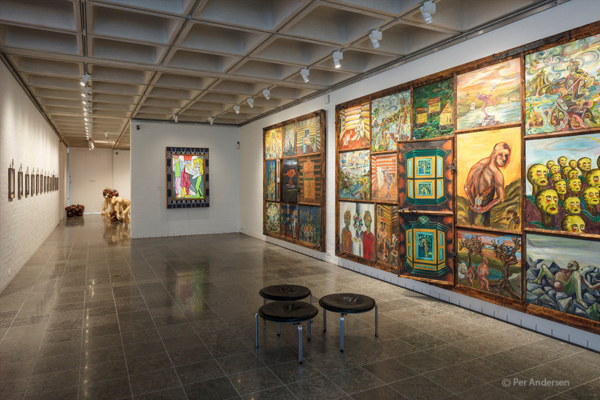
Exhibition lighting today is far more flexible than many people expect.
Mainly because exhibitions rarely stay the same for long.
New exhibits are added.
Objects are replaced.
Display cases move.
Themes change.
This is why track lighting systems are commonly used.
They allow luminaires to be repositioned later without opening walls or rebuilding entire installations.
Especially in temporary exhibitions, this saves both time and cost.
Another important aspect is adjustable optics.
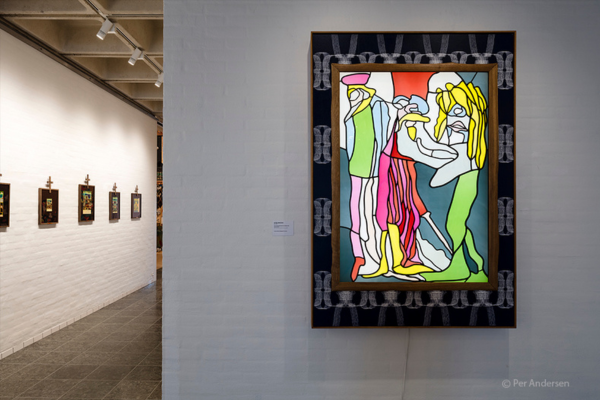
A small piece of jewellery requires a narrow beam angle to maintain focus.
A large wall object or installation, on the other hand, needs a much wider light distribution.
Modern zoom optics often make these adjustments possible without replacing the luminaire.
Colour rendering is another key topic.
This is commonly evaluated through the CRI value.
Most visitors never notice it directly.
Yet it strongly influences perception.
Low values can make materials appear flatter.
Red tones lose depth.
Wood appears less vivid.
Textiles lose structure.
This is why museums, galleries and high-end showrooms often work with CRI values of 95 or higher.
The difference becomes particularly visible with artworks, historical artefacts, fabrics and leather.

Lighting Control and Dynamic Scenes
Many people still think of exhibitions as having fixed lighting.
Today, this is often different.
An exhibition can be visitor operation in the morning.
Guided tour at midday.
Event in the evening.
Later perhaps a media staging.
For this purpose, different lighting scenes are created.
For example:
Day Operation
Clear orientation and even visitor guidance.
Event Operation
Stronger accentuation and reduced background lighting.
Presentation Mode
Focus on stage, speaker or media wall.
Staging
Dynamic lighting changes and time-controlled sequences.
Technically, systems such as DALI or DMX are often used for this.
Museum, Gallery or Showroom: Why the Planning Always Looks Different
A museum plans differently from a showroom.
And a showroom differently from a gallery.
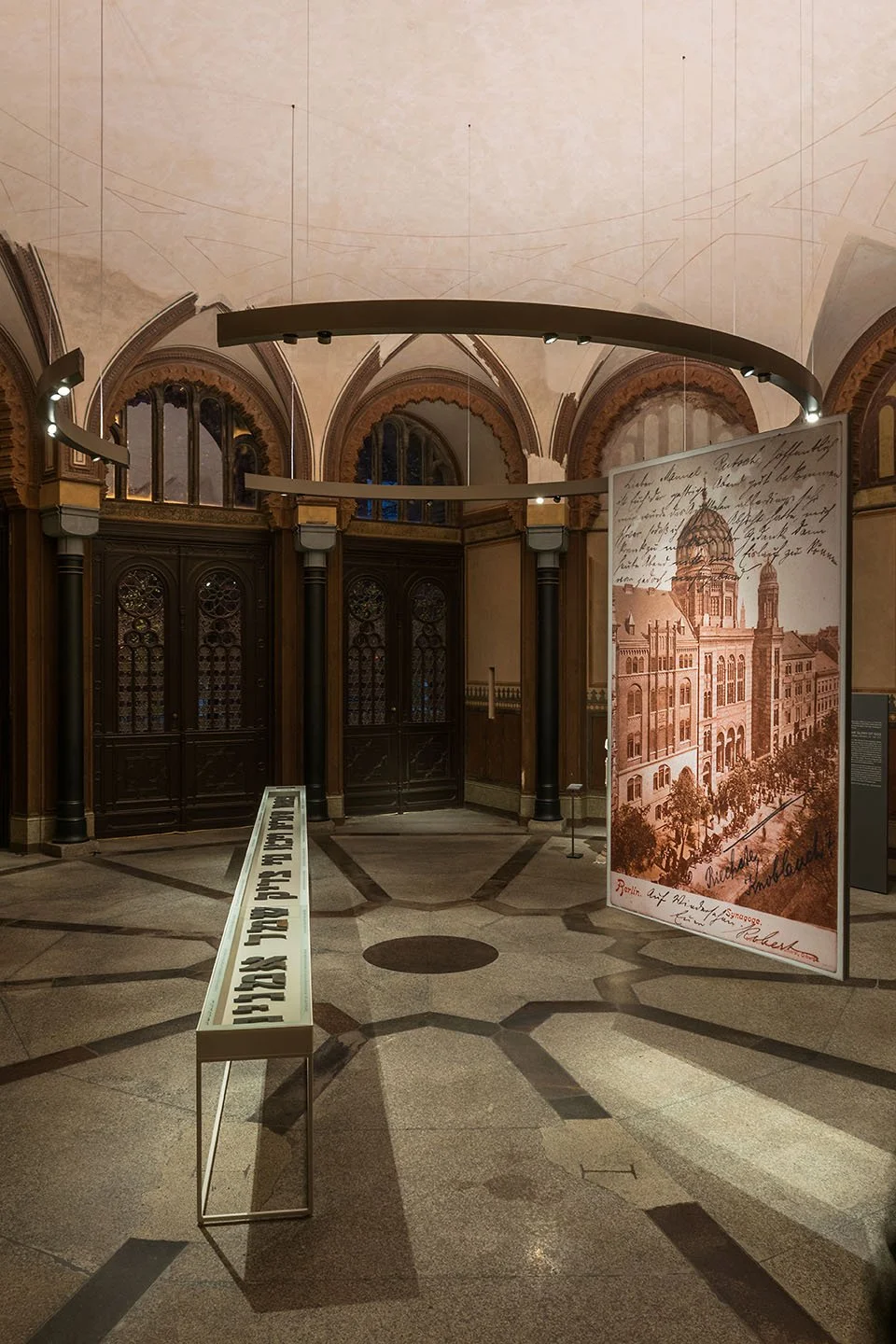
In museums, the focus is often on exhibit protection, visitor guidance and heritage conservation. Light must be precise while at the same time appearing restrained.
At Burg Vischering, for example, Studio De Schutter developed the lighting for permanent and temporary exhibitions within the historic castle complex. The goal was to make the architecture itself visible as part of the exhibition.
For this purpose, custom luminaires, reduced ambient brightness levels and DMX-controlled chandeliers in the Knights’ Hall were created.
Galleries often work with maximum flexibility.
The hanging changes.
Works are replaced.
An object moves only a few centimetres and the lighting design has to move with it.
Showrooms, on the other hand, work more strongly with materials.
Glass creates reflections.
Metal reacts to highlights.
Leather needs depth.
Wood lives through structure.
This makes the task considerably more technical than many expect.

Why Studio De Schutter?
Exhibition lighting often moves between contrasts.
Historic architecture and modern technology.
Sensitive exhibits and strong staging.
Permanent solutions and future changes.

Studio De Schutter works precisely within this field of tension.
From museum projects and cultural buildings to showrooms and brand environments.
It is not only about luminaires or light levels.
It is about visitor guidance.
Material impact.
Technical control.
Sustainability.
Contact Us:
