

Museum lighting always operates in the tension between atmosphere, conservation, and visitor guidance. Light determines how intensely exhibits are experienced, how historical spaces are perceived, and how easily visitors can orient themselves. For us, museum lighting means allowing architecture, the collection, and the curatorial idea to merge into a shared lighting narrative.
What good museum lighting must achieve
Unlike many galleries, museums are not only about strong presentation, but also about long-term protection and efficient operation. Light levels, operating times, and luminaire positions must be considered alongside emotional impact and orientation.
- Conservation: Limited lux levels, reduced UV and IR components, consciously defined operating times.
- Dramaturgy: A hierarchy of ambient light, accents, and deliberately darker zones.
- Ergonomics: Glare-free viewing and clear legibility of texts and objects.
- Flexibility: Track systems, interchangeable optics, and scene controls for new exhibitions.
- Sensitive objects: Plan textiles, paper, and graphics with low lux levels and the shortest possible exposure times.
- Material-appropriate lighting: Metals, glass, stone, and wood react very differently to glare, shadow, and reflections.
- Consistent atmosphere: Account for daylight contrasts and balance them with dimmable, controllable exhibition lighting.
- Maintenance: Integrate luminaires so that later adjustments and replacements remain simple.
Museum lighting and gallery lighting – a shared language
Gallery lighting and museum lighting share many principles: both guide attention, emphasise materiality, and shape atmosphere. While gallery lighting often responds strongly to changing displays and sales contexts, museum lighting must additionally consider conservation requirements, visitor flows, and the character of the institution.
In both cases, we understand light as a curatorial tool: it tells stories, creates order, and gives individual exhibits or spaces their own voice. Those interested in learning more about gallery lighting will find a deeper perspective in the related article.
Museum lighting in a historic monument: Burg Vischering
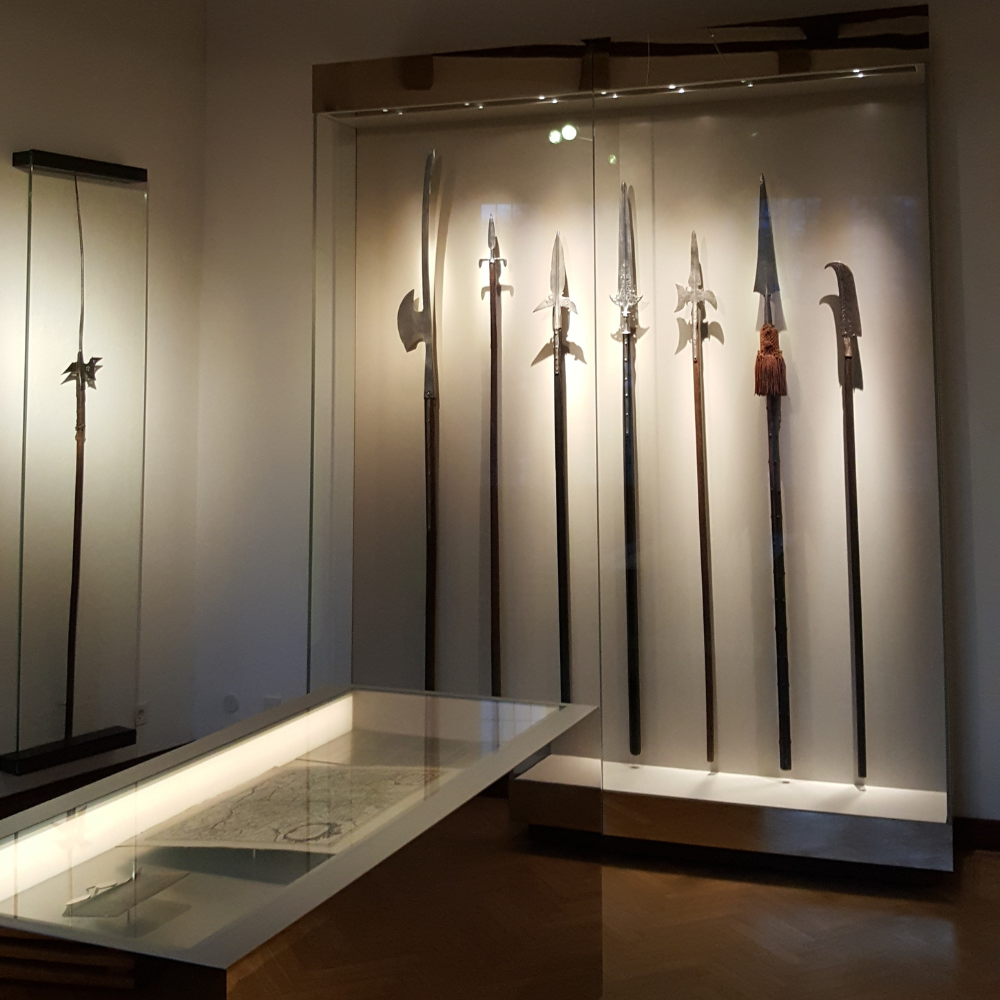
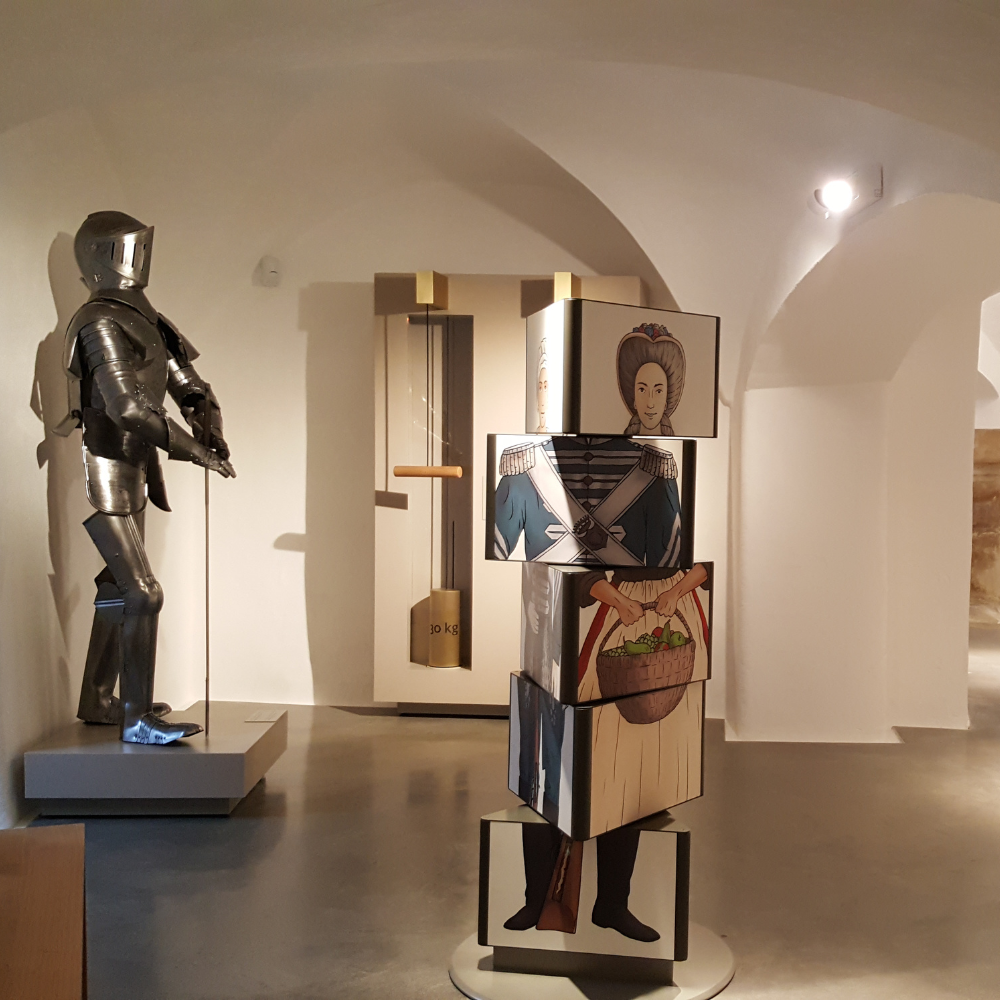
Burg Vischering is one of the oldest and best-preserved castles in the Münsterland region. The exhibition concept defined the castle itself as the main exhibit – with all its layers, materials, and traces of history. The museum lighting therefore had to support architecture, exhibition design, and visitor circulation at the same time.
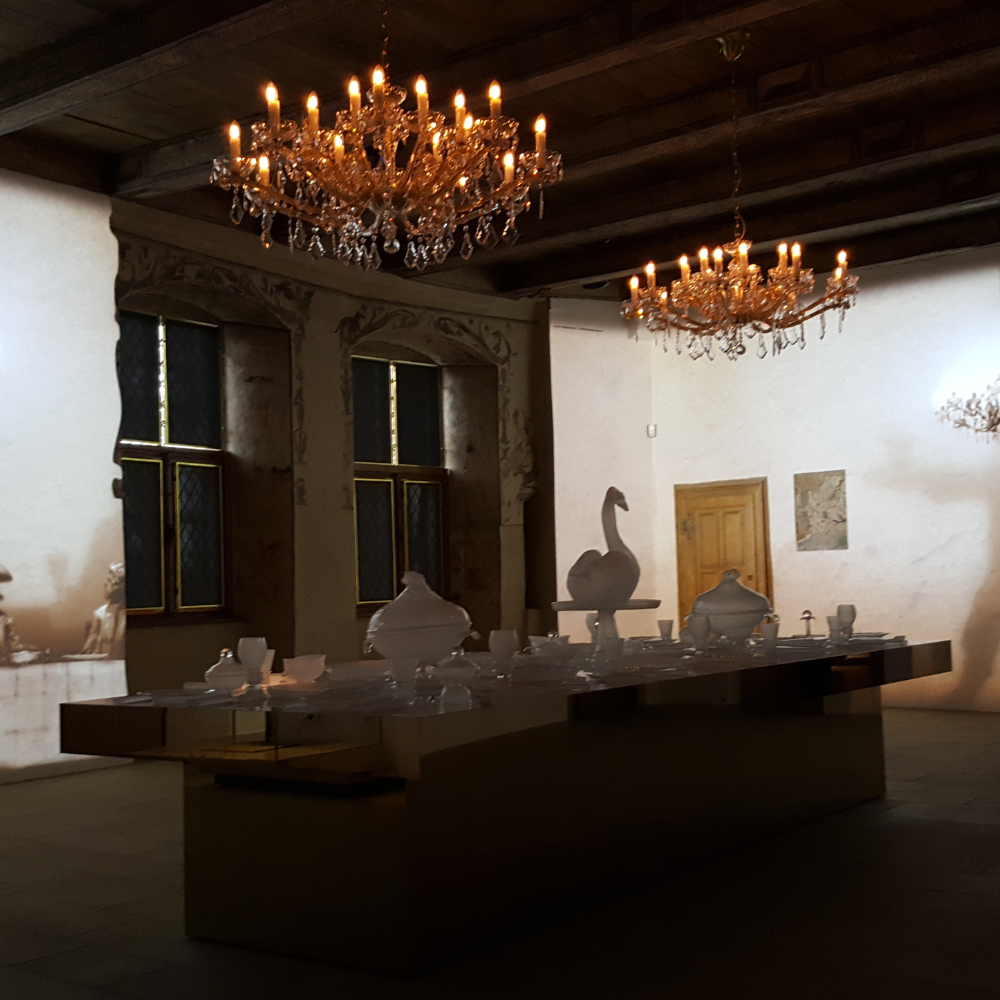
Our aim was lighting that is perceived through atmosphere rather than visible technology. Custom-designed luminaires blend into the historic fabric, while the Great Hall deliberately breaks with this restraint: here, two specially developed, DMX-controlled chandeliers were designed, based on historical references and forming part of a dynamic lighting scenography.
- Low ambient lighting for a soft, warm atmosphere.
- Targeted accents on exhibits to create a clear visual hierarchy.
- A “lighting family” of subtle, classical luminaires across all spaces.
- Integrated emergency lighting that respects the historic architecture.
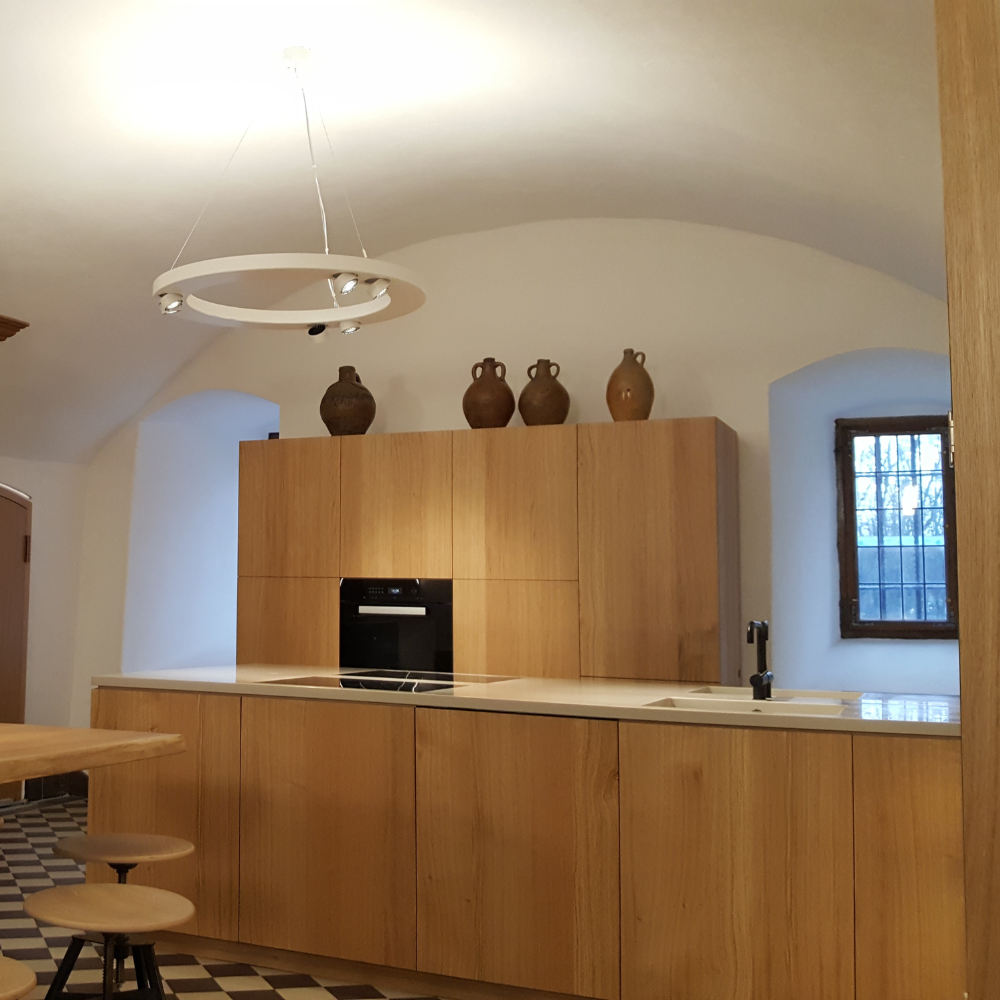
In the kitchen and workshop areas, a minimalist yet classical lighting solution was implemented, closely aligned with the existing architecture. For us, museum lighting here primarily means creating atmosphere, making the castle readable as the main exhibit, and intuitively guiding visitors through the spaces.
Museum lighting in Berlin: Centrum Judaicum
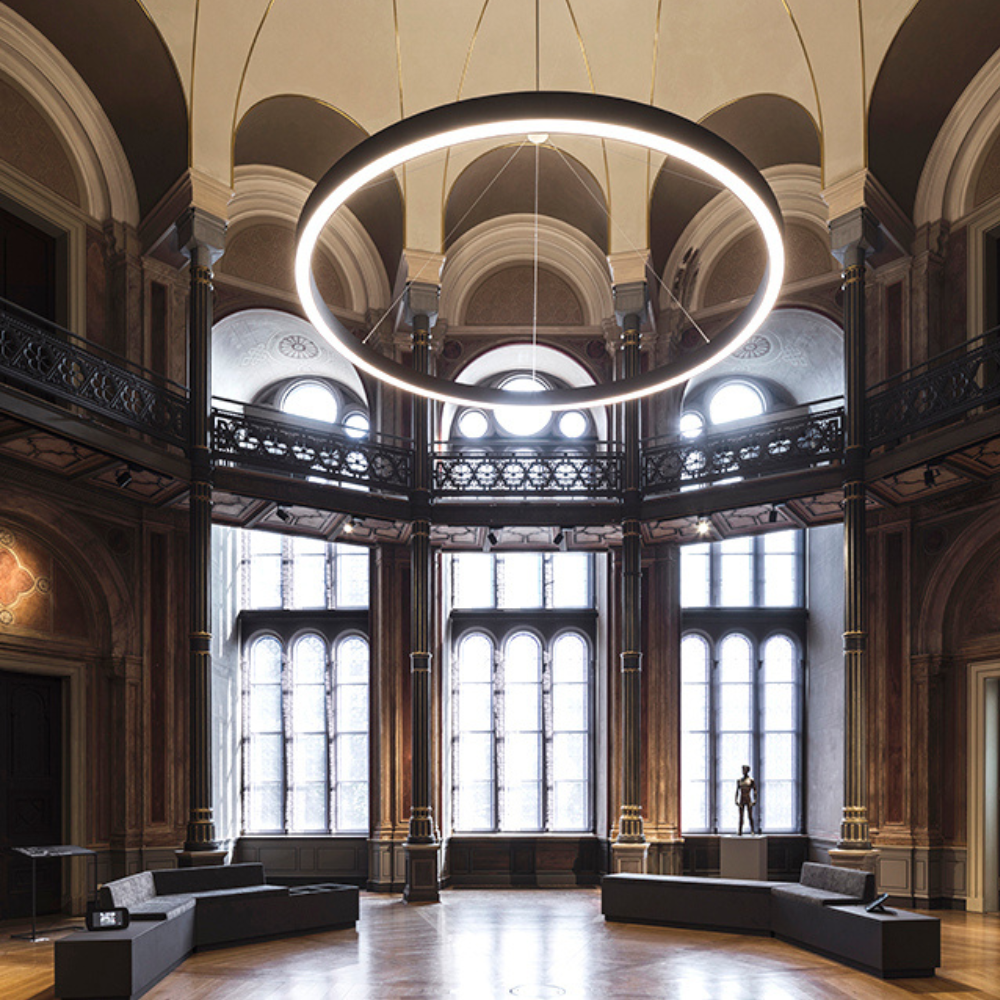
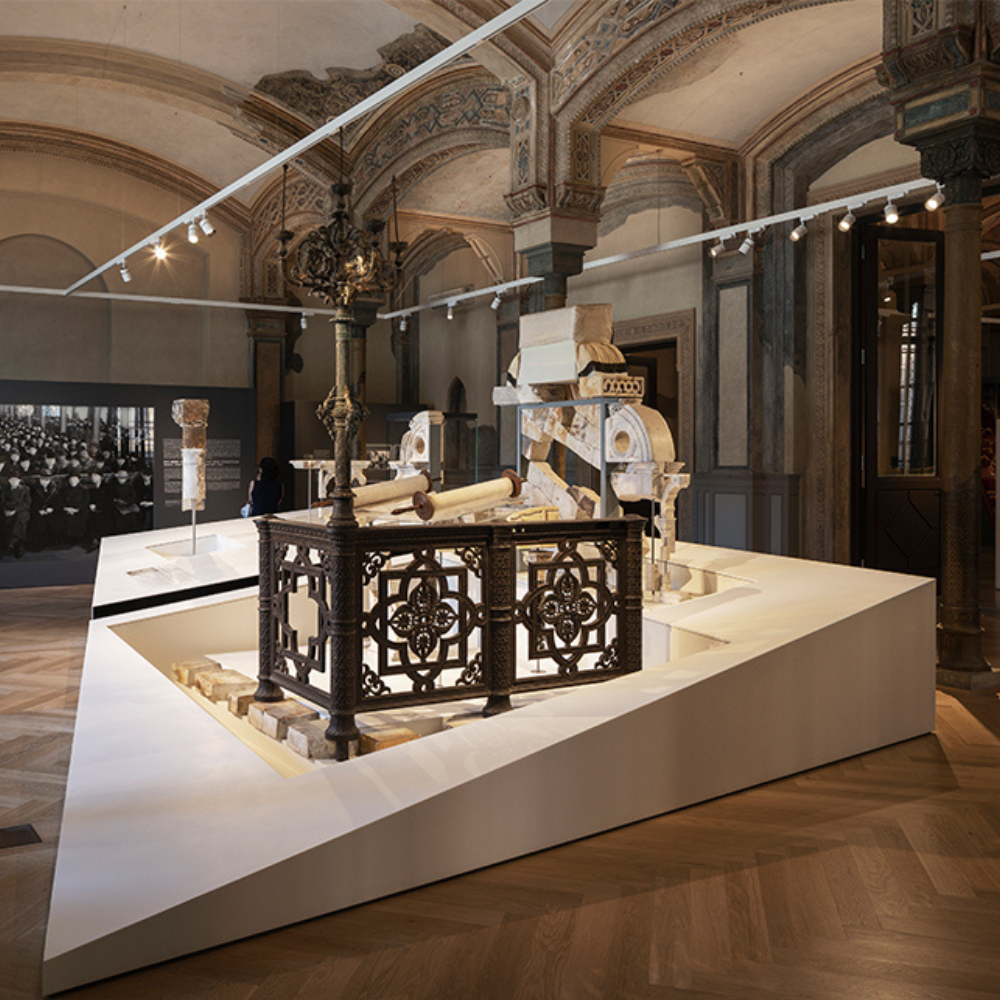
The former New Synagogue, now the Centrum Judaicum, is a powerful symbol of Jewish history in Berlin. The exhibition team decided to present the building itself as the main exhibit. The challenge was to transform an ageing lighting system based on halogen and compact fluorescent lamps into a contemporary, efficient LED system – without compromising the listed historic structure.
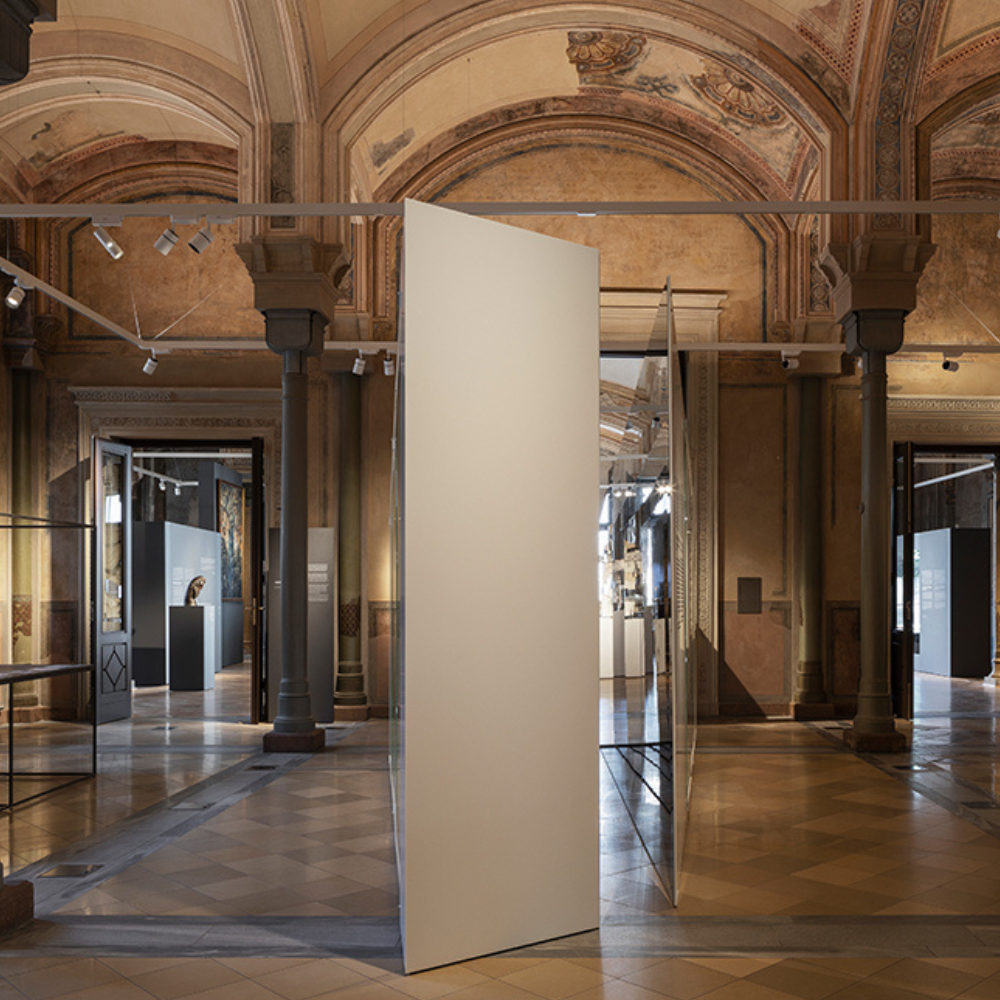
The new museum lighting pursues several goals at once: making the architecture legible, highlighting historical details, precisely staging the exhibits, and creating a lighting atmosphere that supports both temporary and permanent exhibition layers. In addition to standard track spotlights, contour spotlights and varying colour temperatures were used to give individual works greater depth.
- Conversion to LED technology, including DALI-controlled dynamic white light.
- Bespoke suspension solutions for vaulted ceilings, without interfering with historic fabric.
- A mix of warm and cooler light to differentiate paintings, metals, and surfaces.
- Special luminaires in the rotunda and the representative hall as lighting elements with symbolic meaning.
In the rotunda, a large chandelier divided into two parts creates dynamic white-light atmospheres that follow the course of the day. The fractured luminaire body simultaneously references the fragmented history of the site. In the representative hall, a large-format pendant takes on the dual role of spatial lighting and an outward-facing presence on the façade.
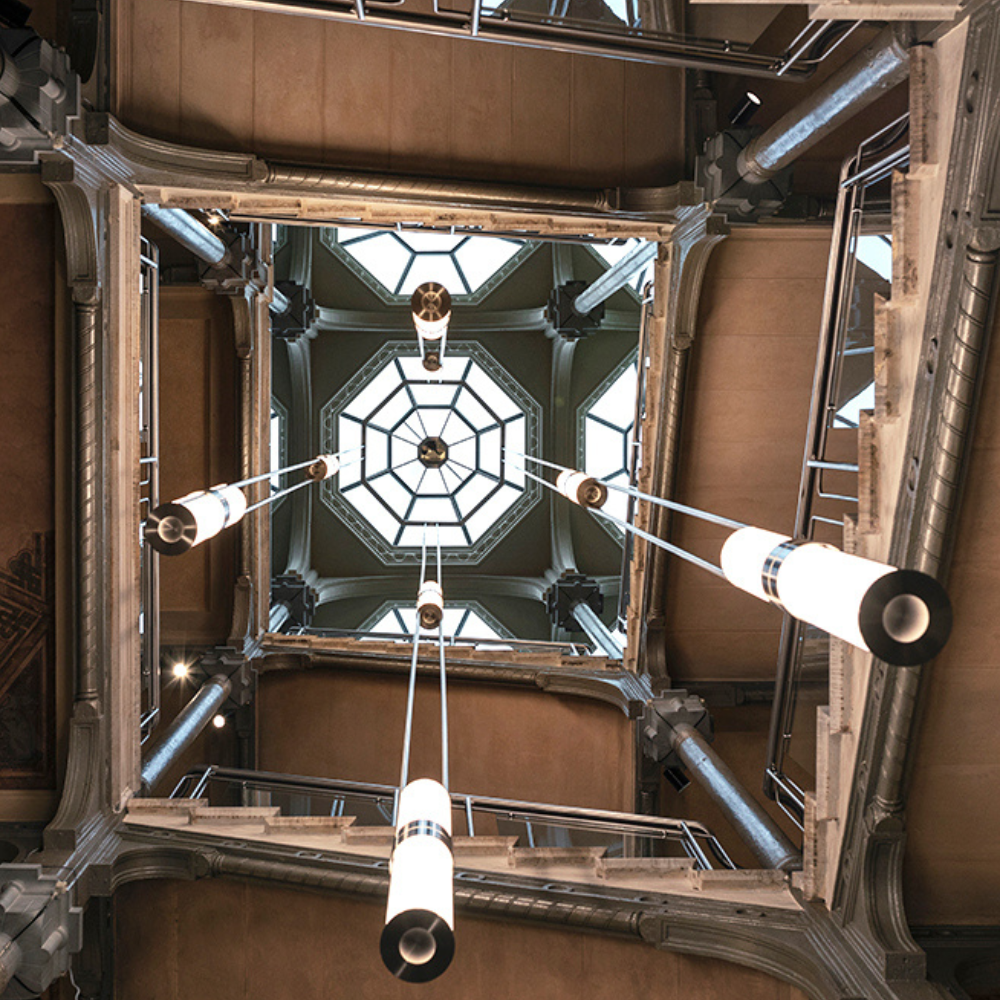
The staircase, originally conceived as a light well, was returned to this role through modernised pendants and dynamic white light. In this way, the museum lighting not only tells the story of the place, but also reconnects with the original ideas of the historic design.
Sustainability and operation in museum lighting
Museum lighting is always also a question of operation: energy consumption, maintenance intervals, and control systems determine how well a lighting concept performs in daily use. Modern LED technology, clear scenes, central control, and robust components help to combine atmosphere, conservation, and efficiency.
- Work with LED systems that are available long-term and easy to maintain.
- Use control systems that take daylight, opening hours, and events into account.
- Plan track layouts to support future re-hanging and changes in exhibitions.
- Fewer luminaires, but deliberately placed light points with a clear function.
Studio De Schutter as a partner for museum lighting
As lighting designers based in Berlin, we work on museum projects in which architecture, collection, and history play equally important roles. We develop lighting concepts that take conservation requirements seriously while creating strong atmospheres and intuitively guiding visitors through the space.
Whether a historic castle, synagogue, city museum, or a gallery with museum ambitions – we support you from the initial idea through lighting concepts and mock-ups to fine-tuning on site. With light that translates memory, space, and exhibits into a shared narrative.
