

Office Lighting Concept: Enhancing Productivity and Well-Being
You enter an office.
Even before the first conscious thought forms, something else defines the impression: the light.
It is this first, almost intangible feeling.
Before furniture, colors, or materials are consciously perceived, the body already reacts. To brightness. To contrasts. To direction.
If it is too harsh, the space immediately feels exhausting.
If it is too flat, orientation is lost.
If it is too dark, energy drops.
If it is too restless, a subtle tension emerges.
And this is exactly where the true quality of a well-designed lighting concept begins.
Because light does not only determine how a space looks.
It determines how it feels. How long you can stay focused.
How clearly you can think.
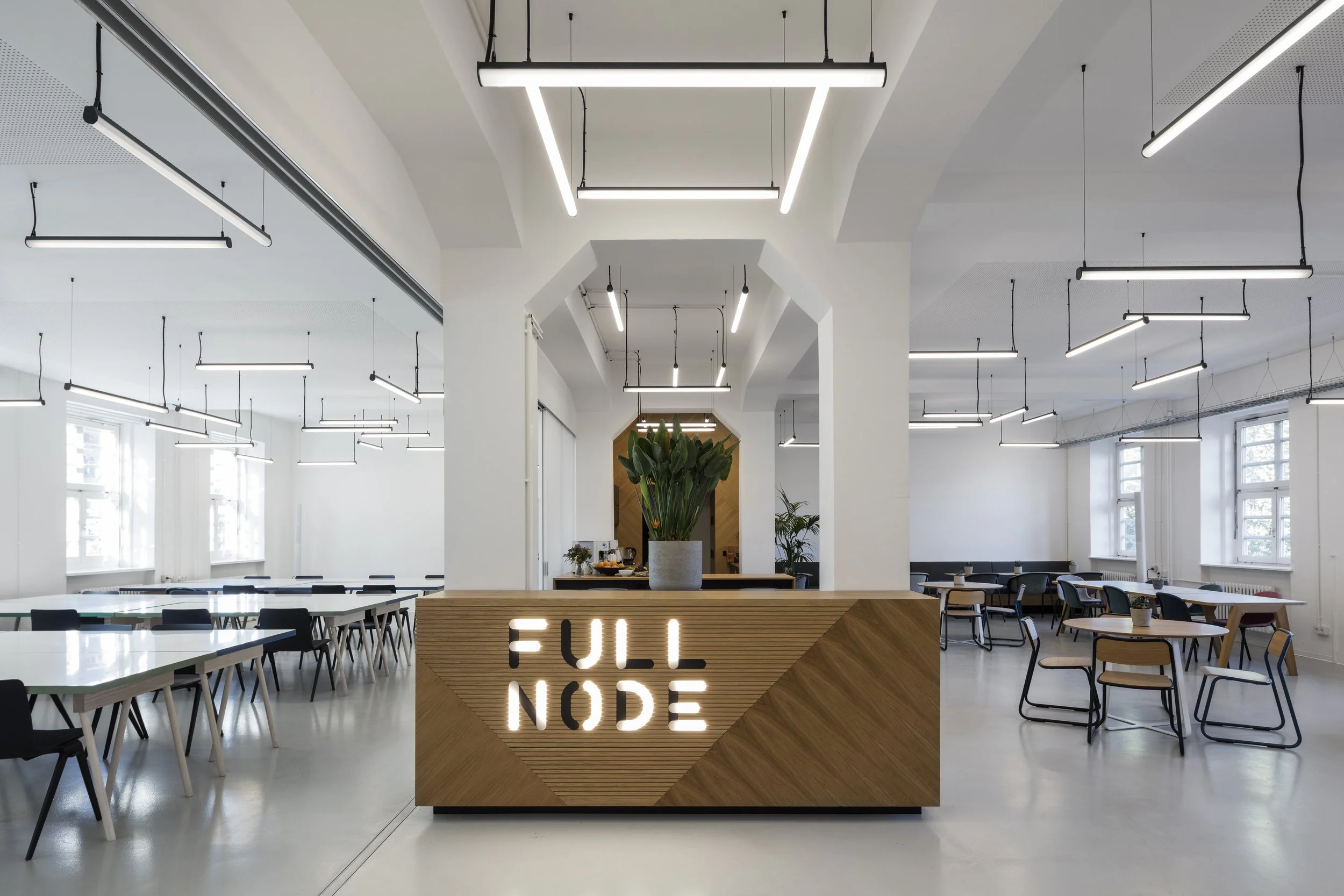
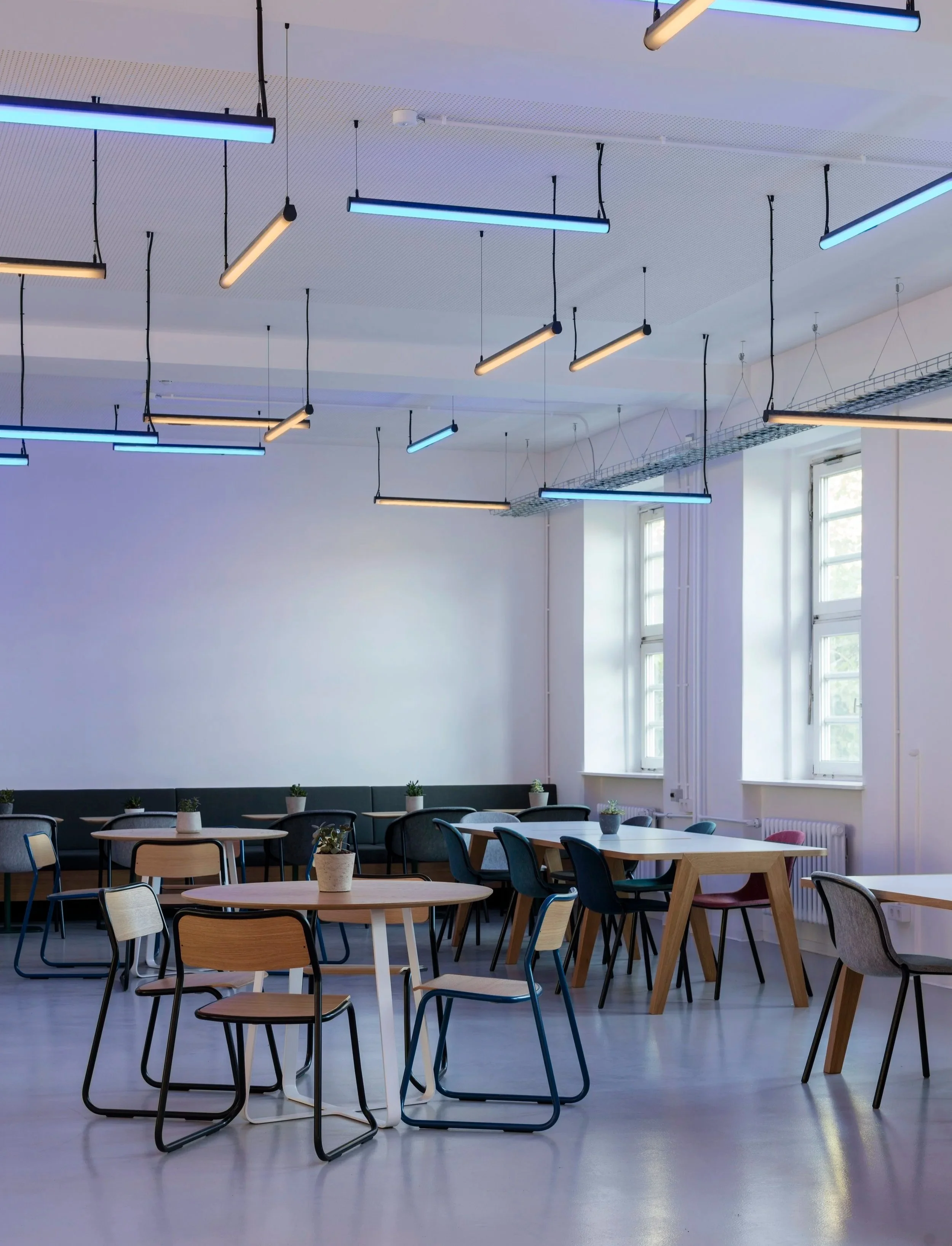
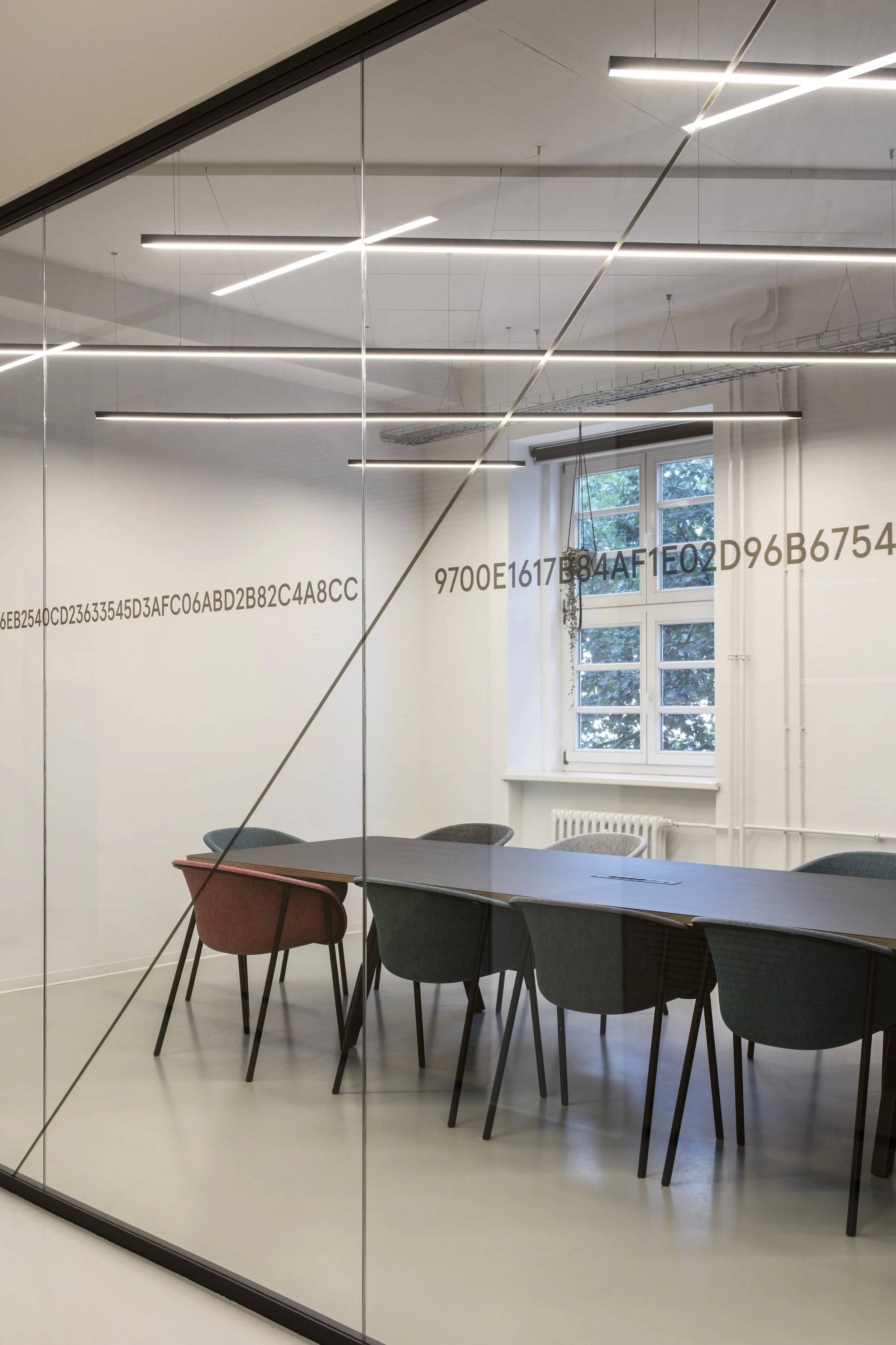
Pictures: Full Node Office designed by Studio de Schutter
Why Office Lighting Is More Than Brightness
From a user’s perspective, it is surprisingly simple:
you want to be able to focus.
You don’t want to feel tired.
And you want to feel comfortable in the space without thinking about it.
You don’t want to question whether the light is “good”.
You only notice it when it isn’t.
What is often underestimated is the psychology of light.
Our brain constantly reacts to:
brightness
contrasts
light color
direction of light
transitions between light and shadow
These factors directly influence:
concentration
stress levels
attention
energy throughout the day
visual fatigue
Good lighting is not static.
It responds to use, time of day, and spatial structure.
And that is exactly the difference between lighting and design.
Lux at the Workplace: The Invisible Foundation
A term that is rarely consciously perceived, yet influences everything:
lux at the workplace.
It describes illuminance – how much light actually reaches the working surface.
What many do not realize:
it is not just about being “bright enough”.
It is about how that light is perceived.
Too little light reduces performance.
Too much light creates stress.
Light that is too uniform can even make orientation more difficult.
Balance is key.
Typical reference values:
around 500 lux for standard screen-based work
higher levels for precise tasks
lower levels for communication areas
individually adjusted levels depending on use and time of day
But what truly matters is not just the value itself,
it is how light is distributed within the space.
A homogeneous layer of light often feels lifeless.
It flattens the room and removes any sense of hierarchy.
A differentiated concept creates depth.
It sets accents, guides the eye, and supports how the space is used.
Because good light is not only measured in lux.
It is experienced in space.
Zones Instead of Uniformity
A modern office no longer functions as a single, uniform space.
It is a system of different situations that constantly shift throughout the day.
At times, it is about focused work.
At others, about exchange.
And sometimes, just quick conversations in passing.
And this is exactly how lighting should be approached.
Not as an even layer of illumination.
But as a differentiated system that supports and reveals these situations.
Typical lighting zones in an office:
Focus areas → clear, glare-free lighting that supports concentration and visual calm
Communication zones → softer, more inviting light that encourages interaction
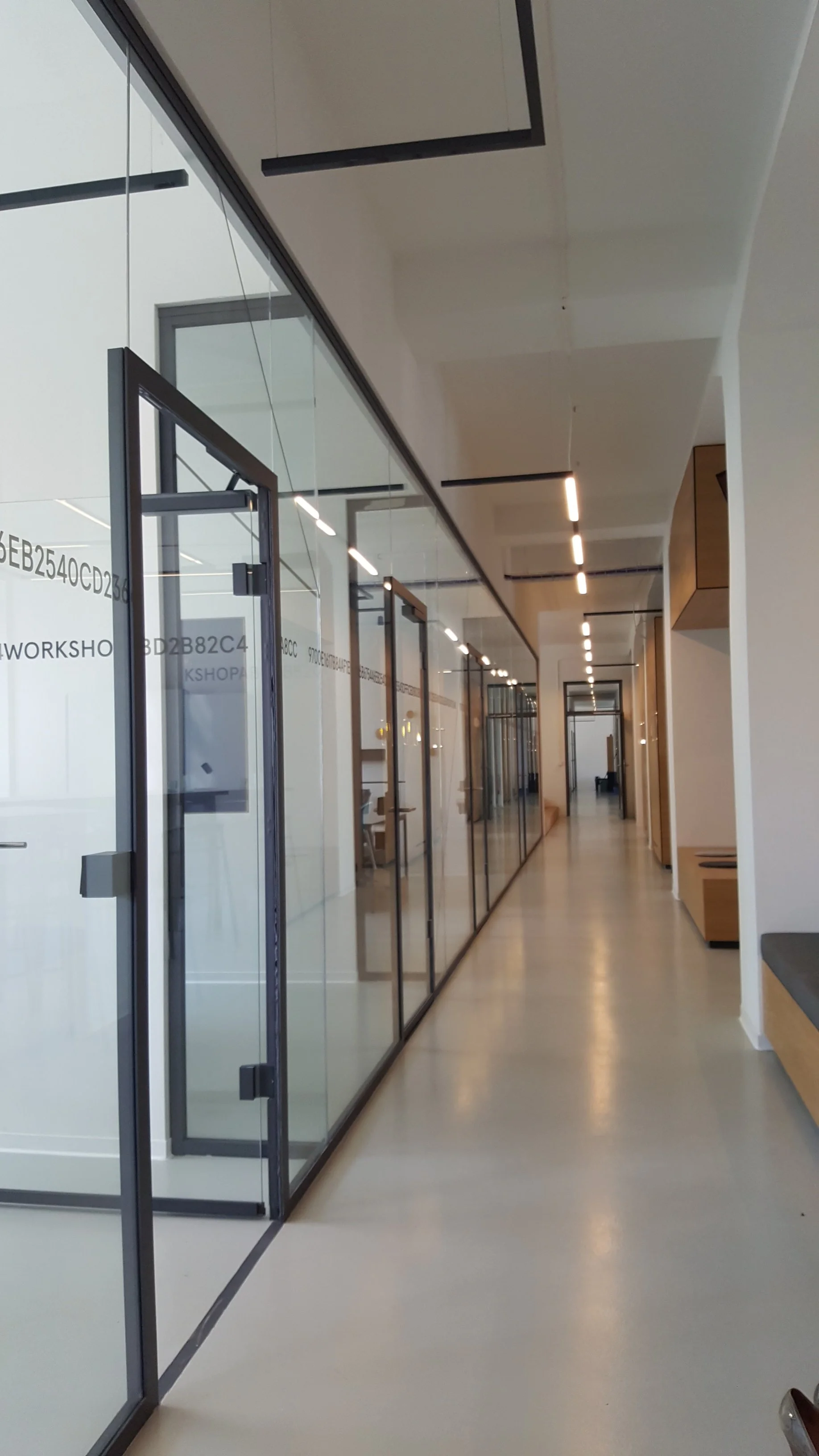
Circulation areas → guidance and orientation through defined light paths and gradients
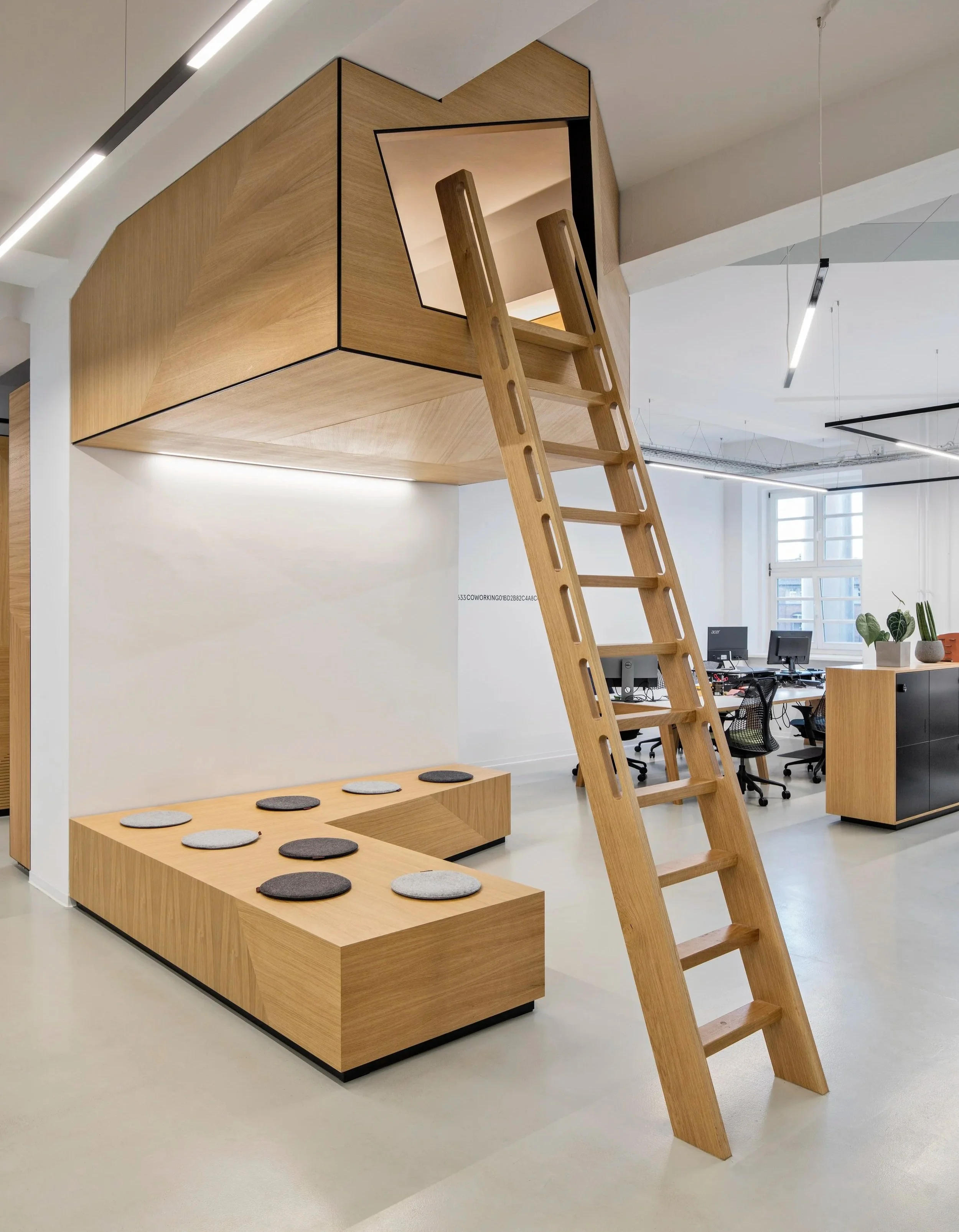
Retreat spaces → reduced, quieter lighting for relaxation and informal work
In addition, there are often transitional zones that combine multiple functions and therefore require flexible lighting solutions.
This differentiation allows the space to be understood intuitively.
Without signage. Without explanation.
You immediately know where you are – without thinking about it.
The Interplay of Direct and Indirect Light
Good office lighting never comes from a single source.
It is the result of a deliberate interplay between different types of light that complement and balance each other.
Direct light:
provides precision
brings clarity to the work surface
supports visual tasks
reduces eye strain during focused work
Indirect light:
opens up the space
softens harsh contrasts
creates atmosphere
makes surfaces feel calmer and more expansive
What matters is not just the presence of both types of light, but their relationship.
Too much direct light quickly feels technical and harsh.
Too much indirect light can appear diffuse and lacking in strength.
Only the right balance creates visual calm while maintaining functional clarity.
At the same time, spatial geometry, materials, and surfaces play a crucial role.
Reflections, ceiling heights, and wall finishes all influence how light is distributed within the space.
In the end, it is the combination that makes the difference.
Common Mistakes in Office Lighting
Many offices do not fail because of budget or space,
but because of missing planning.
Lighting is often considered too late – and that is exactly when problems begin.
The most common mistakes seem subtle at first,
yet have a significant impact on everyday use:
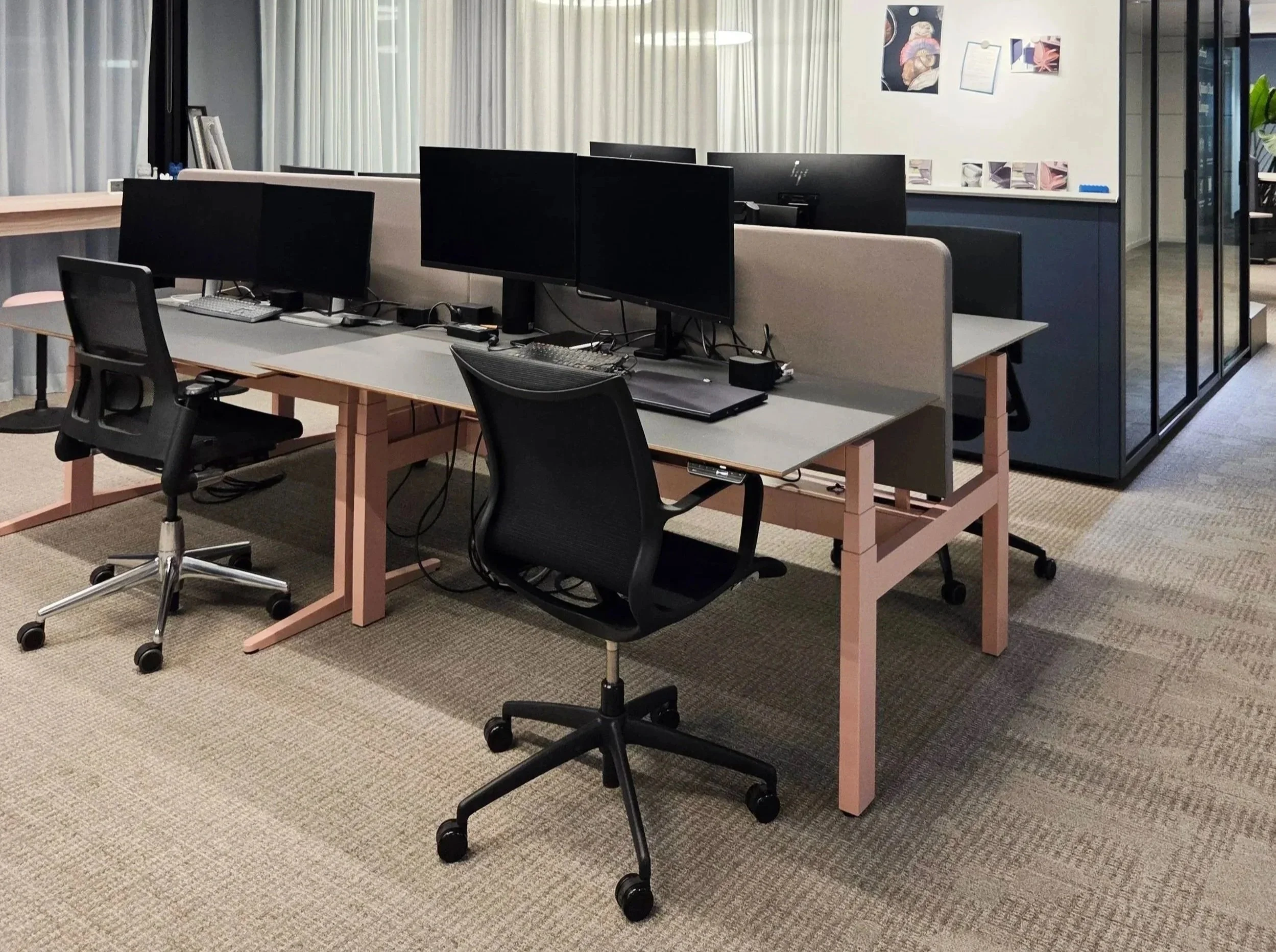
uniform grid lighting without differentiation
excessive contrast between screen and surroundings
incorrect light color
glare caused by poor positioning
no adaptation to different uses
In addition, there is often a lack of flexibility.
Once defined, the lighting remains unchanged
—even though working styles and requirements are constantly evolving.
Our Approach at Studio De Schutter
For us, light does not begin with the luminaire.
It begins with the space.
At Studio De Schutter, we consider lighting from the very beginning. Not as a technical addition, but as an integral part of architecture. This is how we create concepts that do not just function, but shape atmosphere, identity, and orientation.

We do not plan for the moment.
We plan for use, change, and perception over time.
Contact Us:
