

Home Lighting Concept: Planning, Impact and Common Mistakes
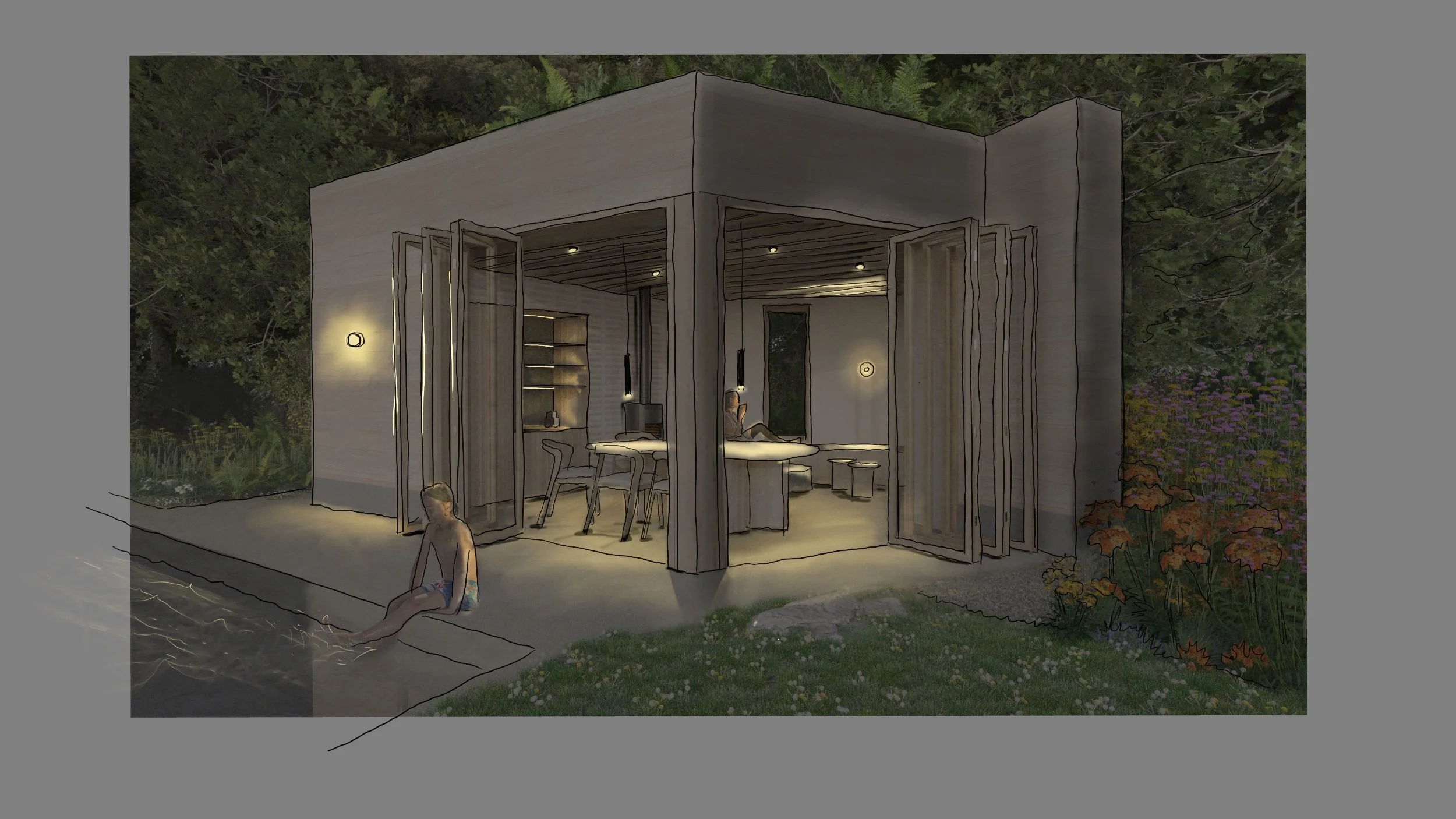
A house is not created by walls.
But by what you perceive within it.
And that perception is shaped by light.
Not the light that is simply “there”.
But the light that is deliberately placed.
That guides. That calms. That connects.
That creates transitions and links spaces together.
It defines where a space begins and where it ends.
What comes into focus – and what recedes into the background.
You often only notice it too late.
When everything is finished – and still doesn’t feel right.
When the furniture fits, the materials are high quality – but something is missing.
Light does not decide how a house looks.
It decides how it feels.
Planning does not start with luminaires
The biggest misconception:
A lighting concept starts with products.
It does not.
It starts with questions.
How is the space used?
When is it used?
Who uses it – and how?
A living room in the evening works differently than in the morning.
A kitchen is both a workspace and a place to gather.
A hallway is more than just a connection.
A good lighting concept considers exactly these situations.
Not abstractly.
But concretely.
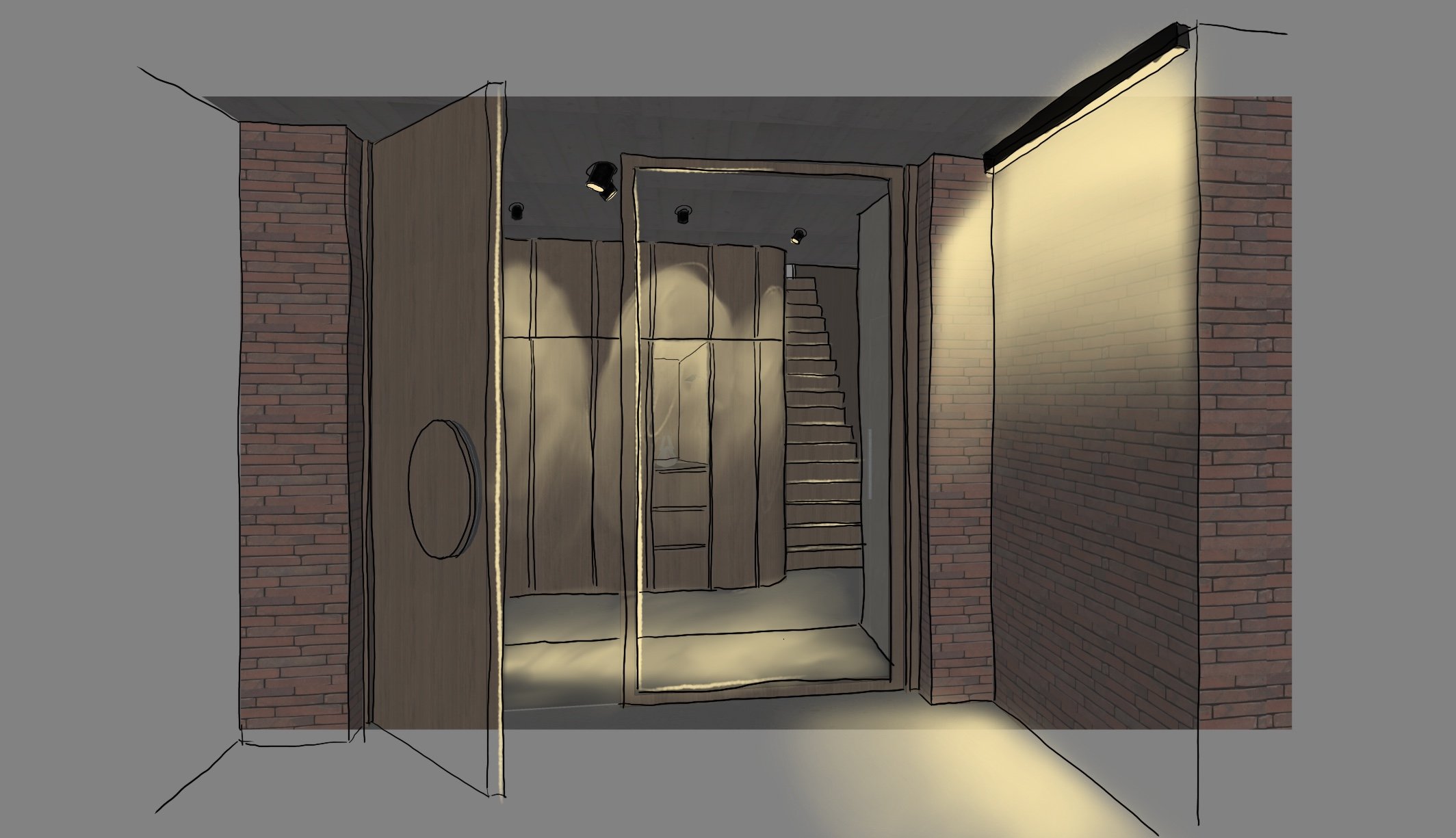
Pictures: Villa Schilde designed by Studio De Schutter
Reading spaces
A house is not a floor plan.
It is a sequence of moods.
And light is the medium that connects them.
| Area | Lighting Effect | Goal |
|---|---|---|
| 🚪 Entrance | clear, inviting | Arrival |
| 🛋️ Living Area | soft, zoned | Relaxation + Communication |
| 🍳 Kitchen | precise, bright | Function + Clarity |
| 🛏️ Bedroom | reduced, warm | Rest |
| 🛁 Bathroom | balanced, glare-free | Clarity + Comfort |
What stands out:
It is never just about brightness.
It is always about impact.
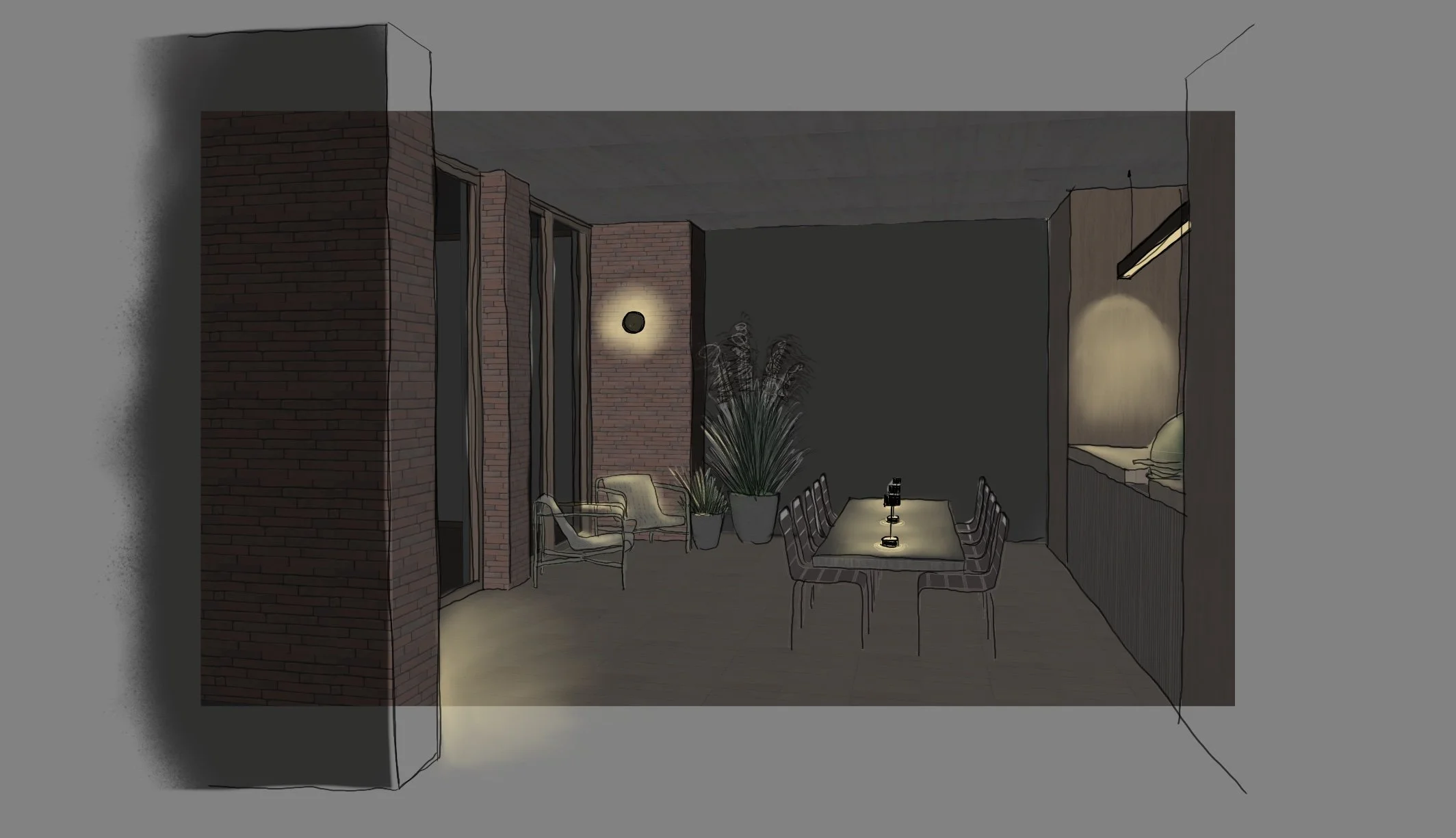
Light Creates Hierarchy
Many homes share the same problem:
everything is equally bright.
At first glance, this seems logical.
After all, you want to see clearly everywhere.
But that is exactly the mistake.
Without differences, there is no orientation.
Without contrast, no tension.
Without gradation, no spatial depth.
A space loses its structure.
Everything appears equally important – and therefore ultimately arbitrary.
A good lighting concept works consciously with hierarchies:
bright zones that activate and create focus
dimmed areas that calm and allow retreat
accents that guide attention and provide orientation
transitions that connect spaces
What emerges is an interplay between foreground and background.
Between activity and calm.
Between clarity and atmosphere.
This is how depth is created.
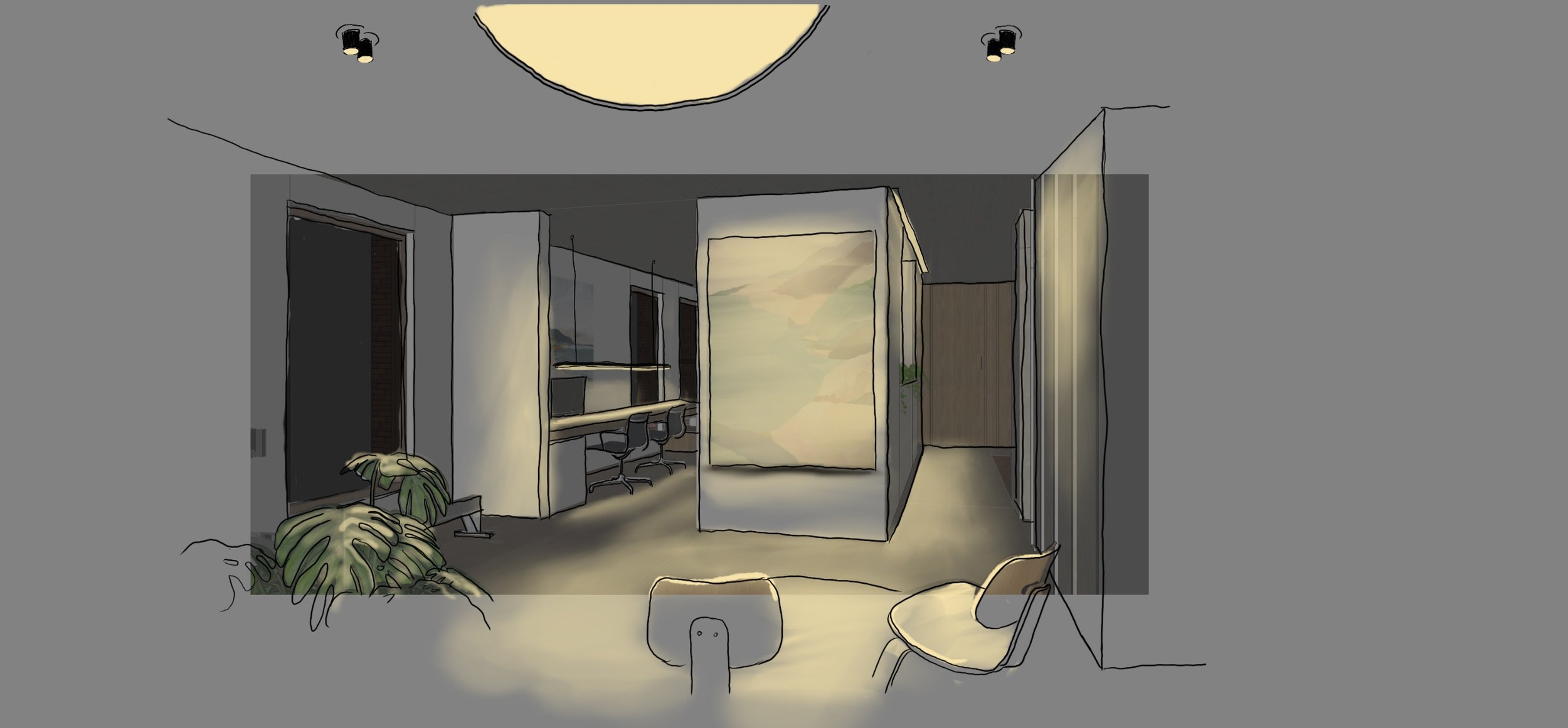
The Role of Shadows
An often underestimated element:
shadow.
Not as a problem.
But as a design tool.
Shadow defines form.
It makes surfaces readable.
It gives materials their depth.
Without shadow, no depth.
Without contrast, no tension.
Without darkness, no light.
A space that is evenly illuminated everywhere loses character.
It appears flat. Almost two-dimensional.
Everything is visible – but nothing has meaning.
Perfect light is not perfectly uniform.
It is intentionally uneven.
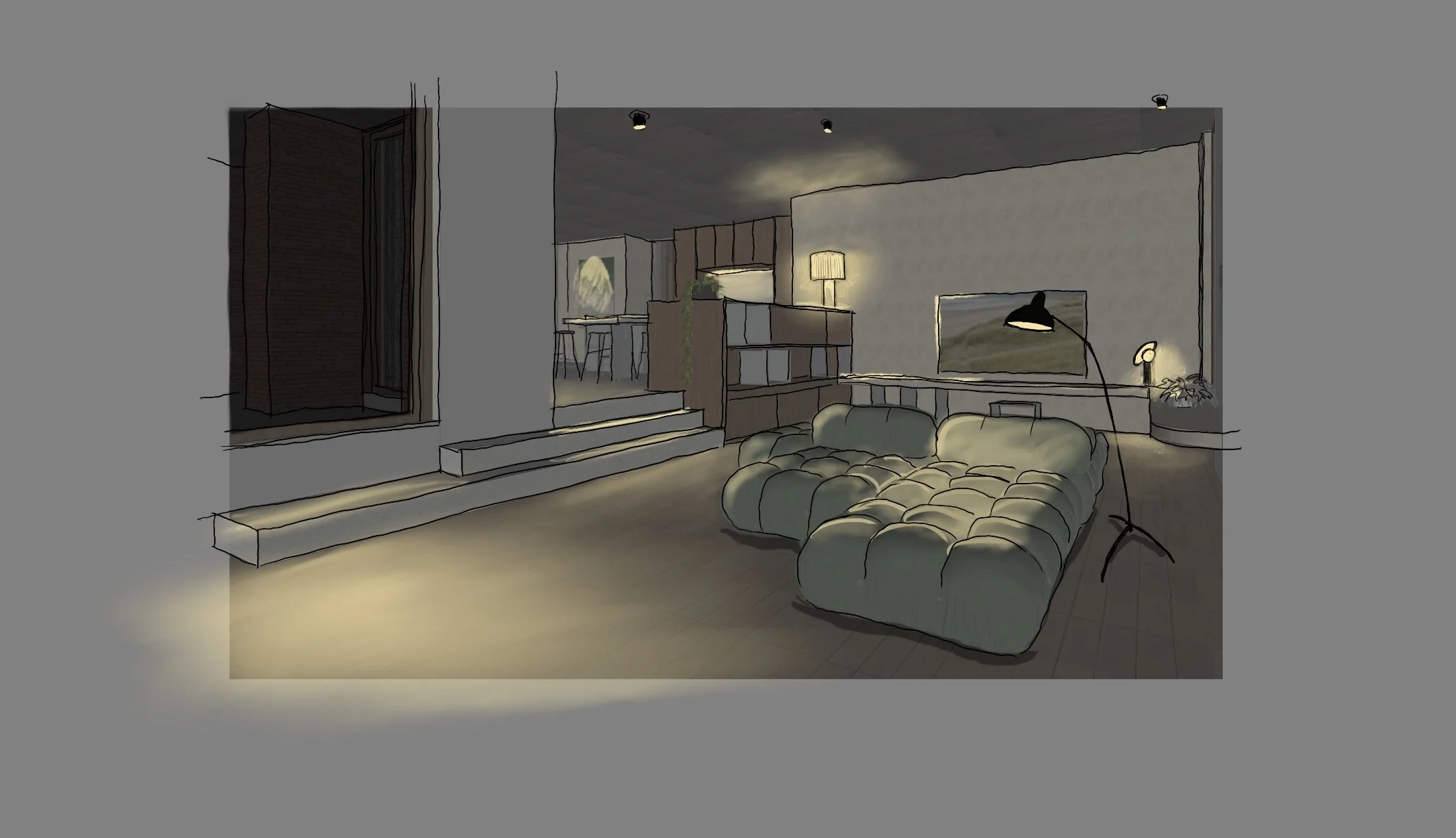
Common Mistakes in Residential Lighting
Many problems are not caused by the wrong products.
But by the wrong principles.
The most common ones:
a single central ceiling light as the only light source
lack of coordination between rooms
light that is too cold in living areas
missing dimming options
lighting is considered too late in the process
And then exactly this happens:
The house is finished.
But something is missing.
The atmosphere.
Why Studio De Schutter
We do not develop lighting as an afterthought.
We develop it together with the space.
For us, it is not about individual luminaires or short-term solutions.
It is about perception and the way a place feels.

This is how spaces are created that do not just function.
But develop a clear identity and resonate on an emotional level.
Contact Us:
