

Light and Health: Why Lighting Influences Our Wellbeing
Light makes spaces visible.
We know that.
The more interesting question is:
What does light do to people?
Because light does not only influence vision.
It influences rhythm.
Alertness.
Performance.
Recovery.
And sometimes even when we become tired.
Or why we still feel exhausted despite getting enough sleep.
The Problem with Modern Interior Spaces
Today, many people spend most of their day indoors.
Office.
Home office.
Meetings.
Coworking spaces.
Hotels.
Apartments.
This often creates a contradiction:
Too little natural light during the day.
Too much artificial light in the evening.
The body loses orientation.
The effects do not have to become visible immediately.
They often appear more subtly:
Concentration becomes more difficult.
Fatigue shifts.
Energy levels feel uneven.
Daily rhythms begin to change.
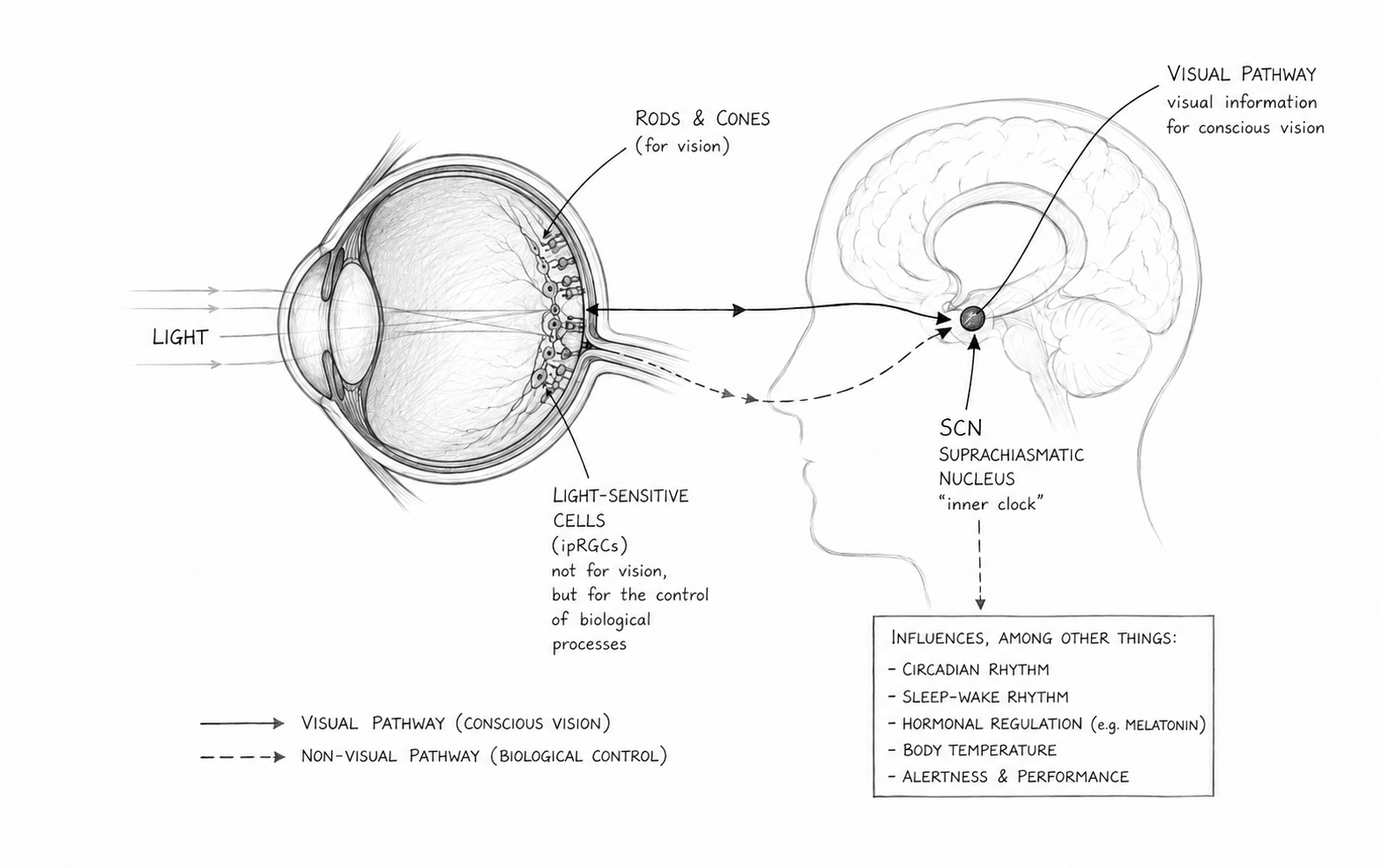
Humans do not only see light. They process it.
The eye contains more than receptors for vision.
There are additional light-sensitive cells that transmit information to areas involved in regulating the body’s daily rhythm.
This means:
Light is processed biologically.
Not only psychologically.
That is why the same space can feel energizing in the morning and suddenly exhausting in the evening.
Not because the space has changed.
But because the person has changed.
Brightness Alone Is Not Enough
Many lighting concepts are still designed almost exclusively around lux levels.
But important layers are often missing:
✓ Direction of light
✓ Vertical illumination
✓ Contrast
✓ Glare control
✓ Dynamics
✓ Changes throughout the day
A very bright space can still feel visually exhausting.
A calm space with balanced transitions can feel significantly more comfortable.
More light does not automatically mean better light.
The Overlooked Factor: Vertical Surfaces
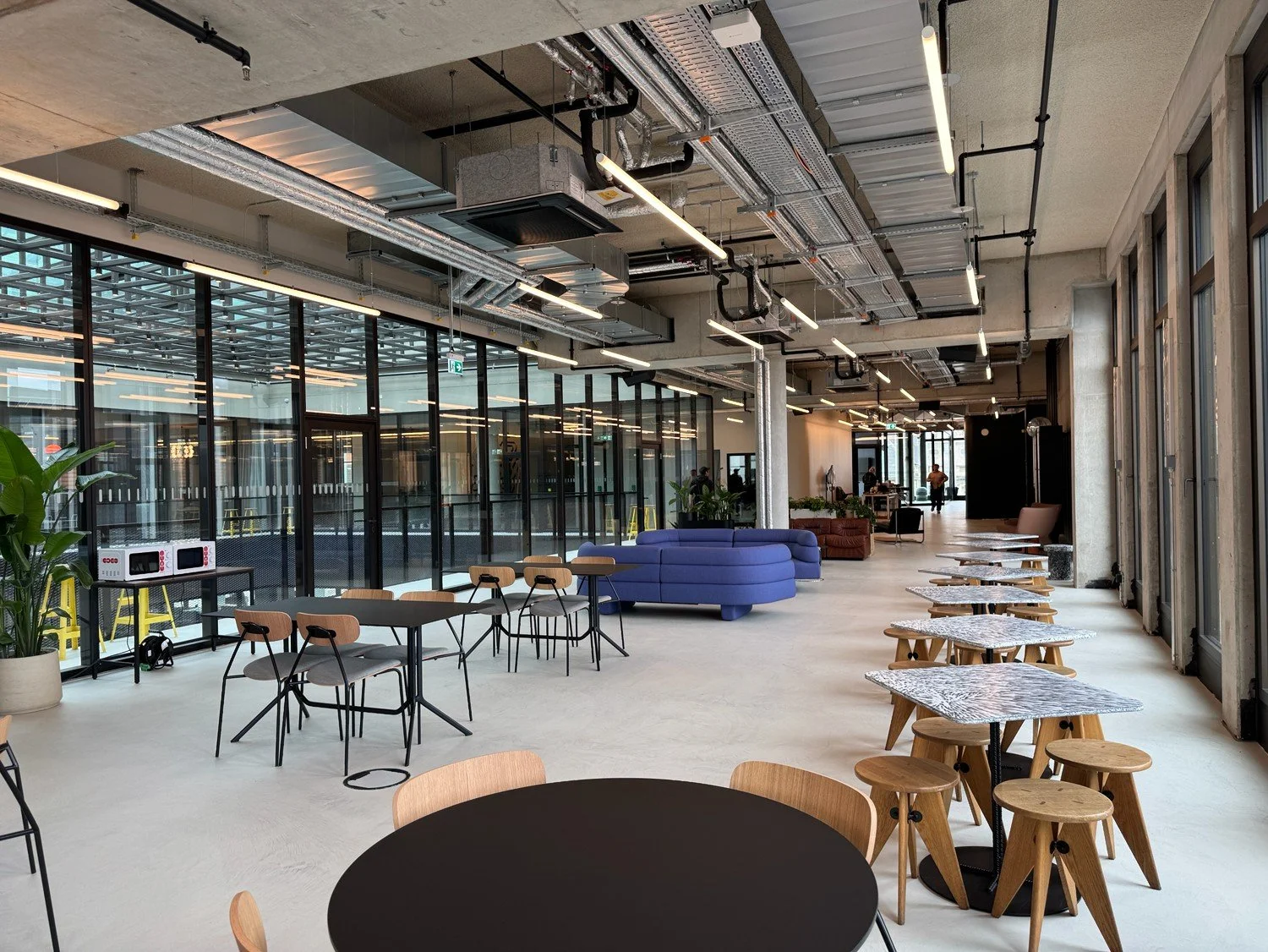
People rarely move through spaces while looking at the floor.
They see:
Faces.
Walls.
Surfaces.
Spatial boundaries.
That is why the lighting of vertical surfaces often influences perception more strongly than additional ceiling brightness.
Many projects invest in more luminaires.
When in some cases, a different light distribution would have a greater impact.
Light Changes Behaviour
Lighting becomes most interesting where it works subconsciously.
It can:
• Guide attention
• Define zones
• Improve orientation
• Reduce visual strain
• Change the quality of the experience
That is why lighting today is increasingly no longer understood only as a technical element.
But as part of human use and experience.
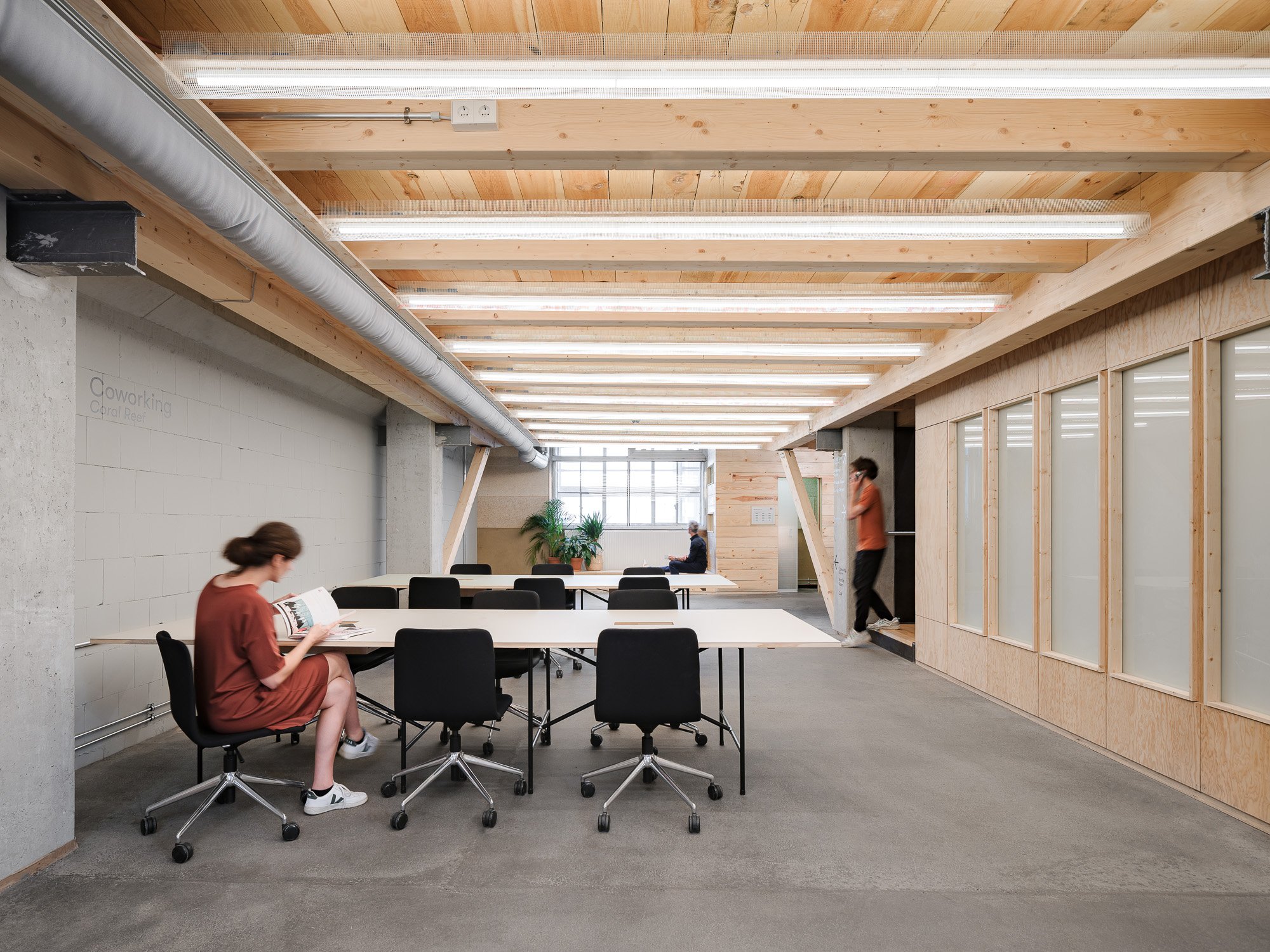
Light and Health Will Need to Be Considered Together
The conversation is already changing.
Moving away from:
“How bright is a space?”
Towards:
“How does lighting support people in everyday life?”
This affects work.
Living.
Education.
Hospitality.
And architecture as a whole.
Because good lighting makes spaces visible.
Great lighting supports people.
Why Studio De Schutter
At Studio De Schutter, we do not look at lighting only through technology or illumination levels.
We design from the human perspective.
From use.
From daily rhythms.
From architecture.

And from one question:
What should this space achieve?
Because lighting can do more than illuminate.
It can make spaces more intelligent.
Contact Us:
