

Kitchen Lighting: Typical Mistakes and How to Avoid
The kitchen is no longer just a functional space.
In high-end private residences, open-plan kitchens, as well as in office projects, show kitchens, or restaurant kitchens in luxury hotels, it has become a visible and representative place. A space that is used, observed, and experienced.
This is exactly where the precision of lighting design becomes apparent.
Or where its absence is felt.
Light determines whether materials feel refined,
whether spaces are read calmly,
and whether working in the kitchen feels effortless or demanding.
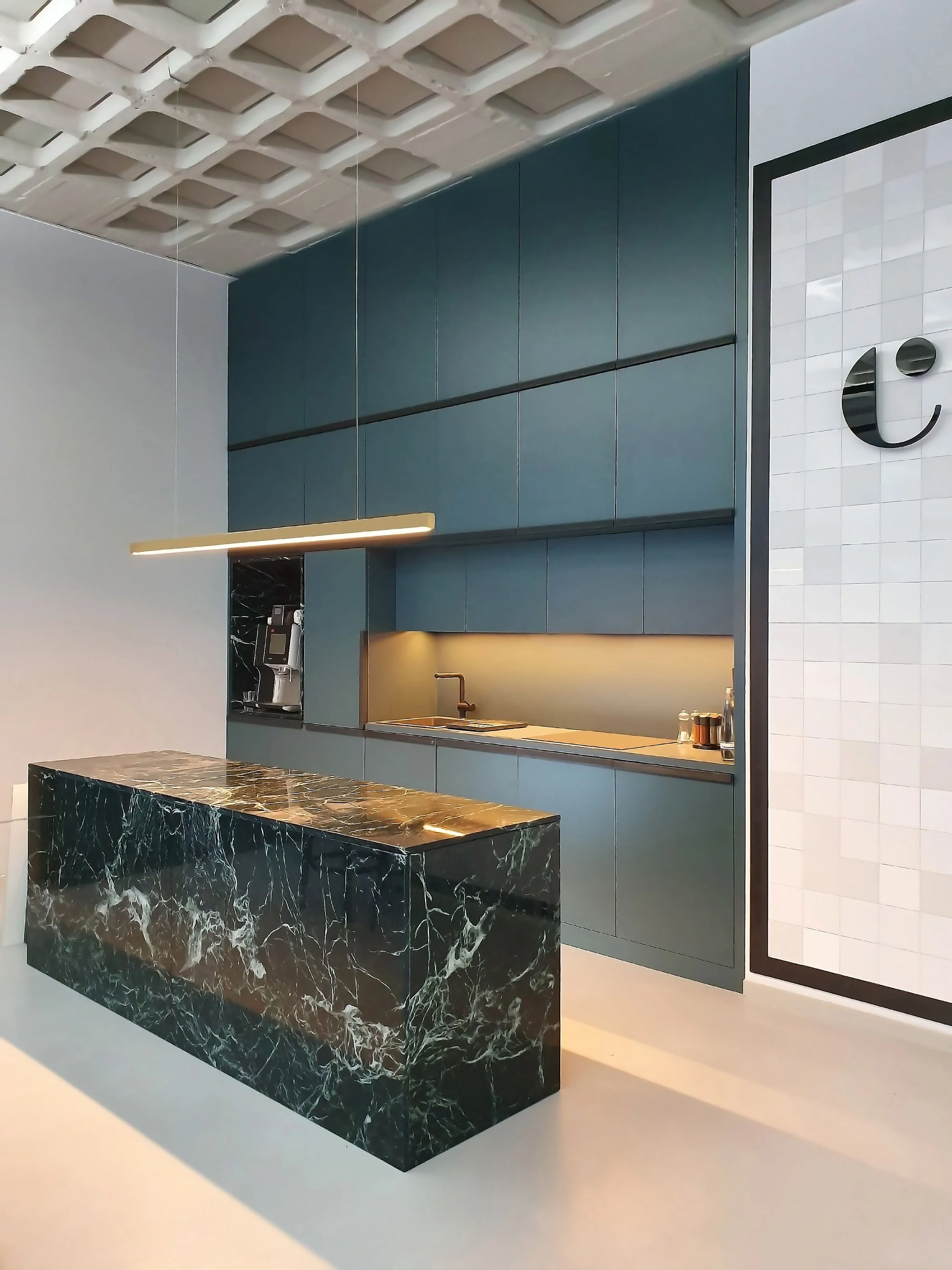
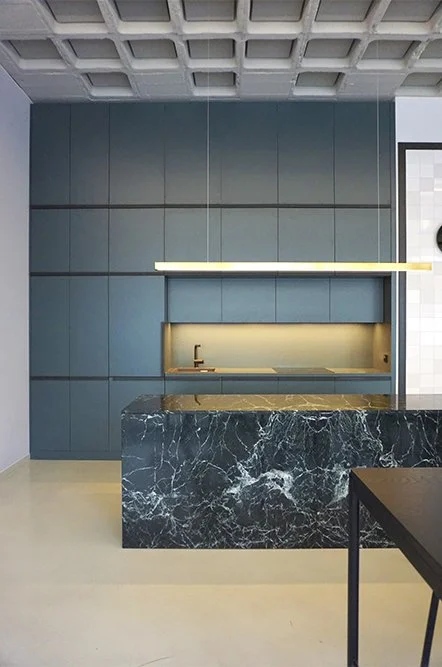
Why Kitchen Lighting So Often Falls Short
Many clients invest in top-tier appliances, custom-built cabinetry, and premium materials. When it comes to lighting, however, decisions are often reduced to standard solutions. Bright enough, dimmable, done.
What is frequently underestimated is that the kitchen combines more demands than almost any other space. It requires precision for tasks, clear orientation, a high level of comfort, and often a direct connection to living or guest areas.
Without a conceptual lighting approach, mistakes emerge that can make even the most high-end kitchens feel restless, exhausting, or generic.
Kitchen Lighting Error Checklist ✓
If you can tick off the following points for your kitchen, you have already avoided the most common and most impactful mistakes in kitchen lighting. This checklist is not about perfection, but about awareness. Each point represents a typical weak spot that directly affects comfort, functionality, and perceived quality.
01One single light for the entire space
One central ceiling light is expected to do everything: task lighting, orientation, atmosphere. This does not work.
Kitchens require different lighting zones. Work surfaces, circulation areas, transitions to living spaces, and calm background lighting all have distinct requirements.
Typical consequences of a one-light solution:
- shadows on work surfaces
- harsh contrasts within the space
- lack of depth and structure
Good kitchen lighting works in layers. Direct light where precision is required. Indirect light where calm should emerge.
02Task lighting without spatial awareness
Task lighting is often planned purely from a technical perspective. Bright spots, high output, as uniform as possible.
The problem: kitchens are not laboratories. Light interacts with people, bodies, and lines of sight.
Common mistakes:
- spots positioned directly above head height
- light that causes glare instead of illuminating surfaces
- hard light cones on glossy materials
Professional lighting design aligns task lighting not only with standards, but with perception and movement within the space.
Precision in lighting comes from restraint, not from intensity.
03Glare treated as a minor issue
Glare destroys spatial quality instantly. Yet it is repeatedly overlooked in kitchens.
High-end materials amplify the problem. Stone, glass, metal, and lacquer reflect light mercilessly when beam angles and positioning are not right.
This becomes particularly critical:
- in open-plan kitchens
- in visible restaurant kitchens
- in hotel projects with direct guest views
Glare-free lighting is not a comfort feature. It is a prerequisite for visual calm.
04Lighting is introduced too late in the process
When lighting is considered only after the kitchen and architecture are already defined, compromises are inevitable.
Typical consequences:
- missing installation depths
- visible luminaires where they were never intended
- indirect lighting cut due to lack of detailing
High-quality projects integrate lighting from the very beginning. Into ceilings, furniture, transitions, and spatial edges.
05The light colour does not match the materials
Light colour is often chosen generically. Warm or neutral, depending on taste. But materials react very differently to light.
What often goes wrong:
- wood appears grey or flat
- natural stone loses depth
- food looks unnatural
In high-end kitchens, light colour is not a stylistic choice, but a precise design tool.
Materials only tell their story when the light knows how to read them.
06No scenes, no transitions
Many kitchens know only two states. On or off. Bright or dark.
What is missing is adaptation to the rhythm of the day and to different modes of use.
Without lighting scenes, this is what happens:
- unnecessary restlessness in the evening
- lack of flexibility in everyday use
- a kitchen that never quite feels right
Good kitchen lighting changes. Subtly, intuitively, and situation by situation.
How to Do It Better
High-quality kitchen lighting is not the result of more technology, but of more precise planning. What matters most is that light is understood as an integral part of the space from the very beginning, not as an afterthought. Good kitchen lighting follows clear principles that prove effective across projects, regardless of scale or context.
What truly makes the difference:
Clear lighting zones instead of uniform brightness
Work surfaces, circulation areas, and transitions to living spaces require different lighting qualities. Zoning creates orientation, depth, and a calm spatial reading.Glare-free, well-positioned light sources
Light should illuminate surfaces, not cause glare. Visible light sources, incorrect beam angles, or harsh contrasts introduce visual unrest and reduce perceived quality.Coordinated light colours and brightness levels
Materials react sensitively to light. Wood, stone, and finishes only appear refined when colour temperature and intensity are chosen deliberately.Integration into architecture and furniture
Light works best when it does not draw attention to itself. In high-end kitchens, it is integrated into ceilings, cabinetry, and spatial edges—subtle, not decorative.Flexible scenes for different uses
Cooking, working, socialising, or cleaning each demand different atmospheres. Lighting scenes allow smooth transitions throughout the day.
Whether it is a private luxury kitchen, an office project, or an open restaurant kitchen, the principles remain the same.
Only their expression changes.
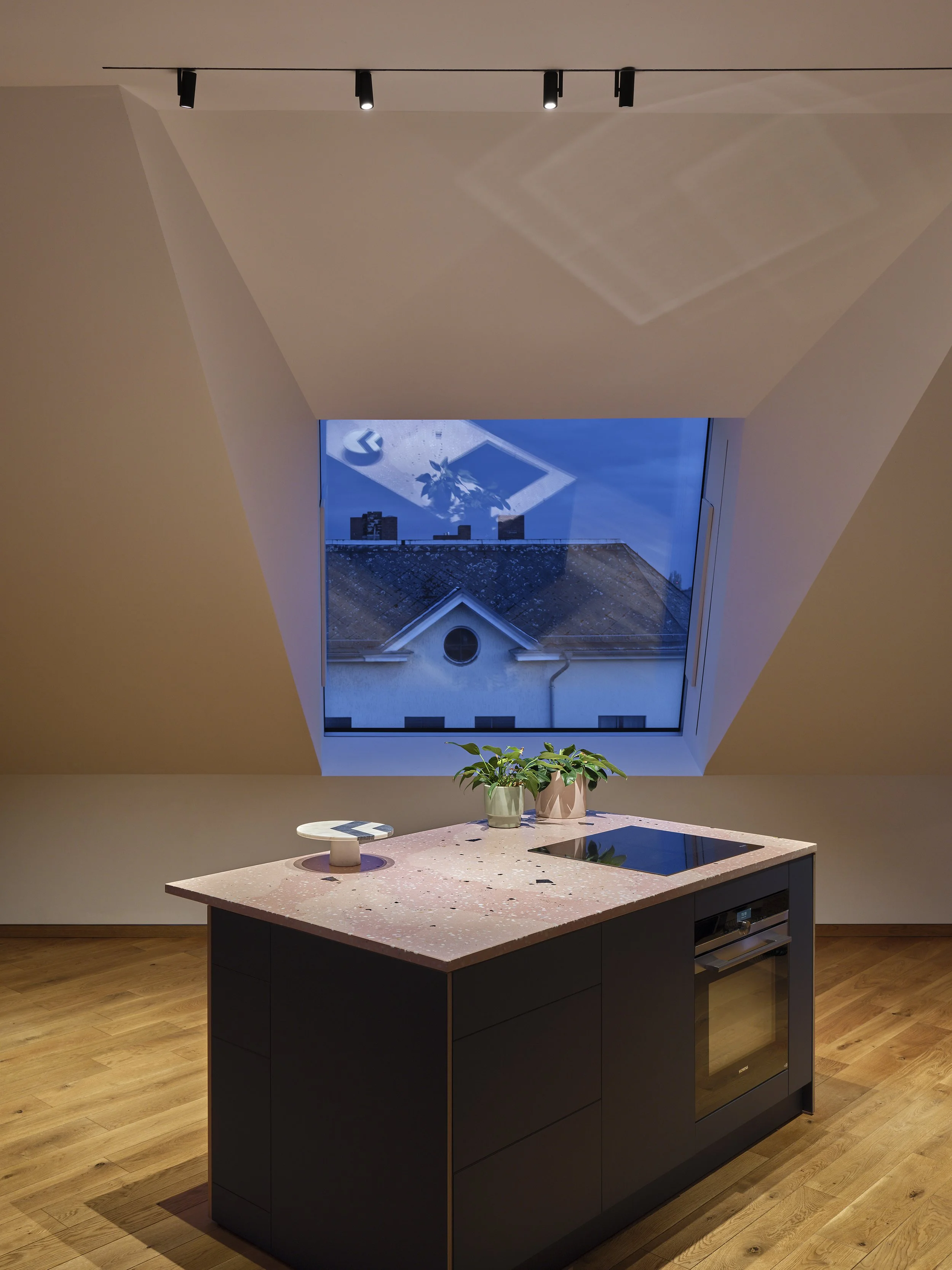
Private Proect: - Eisenbahnstrasse:Designed by Studio De Schutter
Studio De Schutter designs kitchen lighting
Our lighting concepts are guided by use, materiality, and perception. They create clarity for work and calm within the space. And they perform wherever kitchens become visible—within private residences as well as in professional contexts.

Lighting design at Studio De Schutter does not begin with products.
Each space is understood as its own context, not as a repeatable formula—especially in the kitchen.
Contact Us:
