

Home Office Lighting: More Than a Desk Lamp and a Ceiling Light
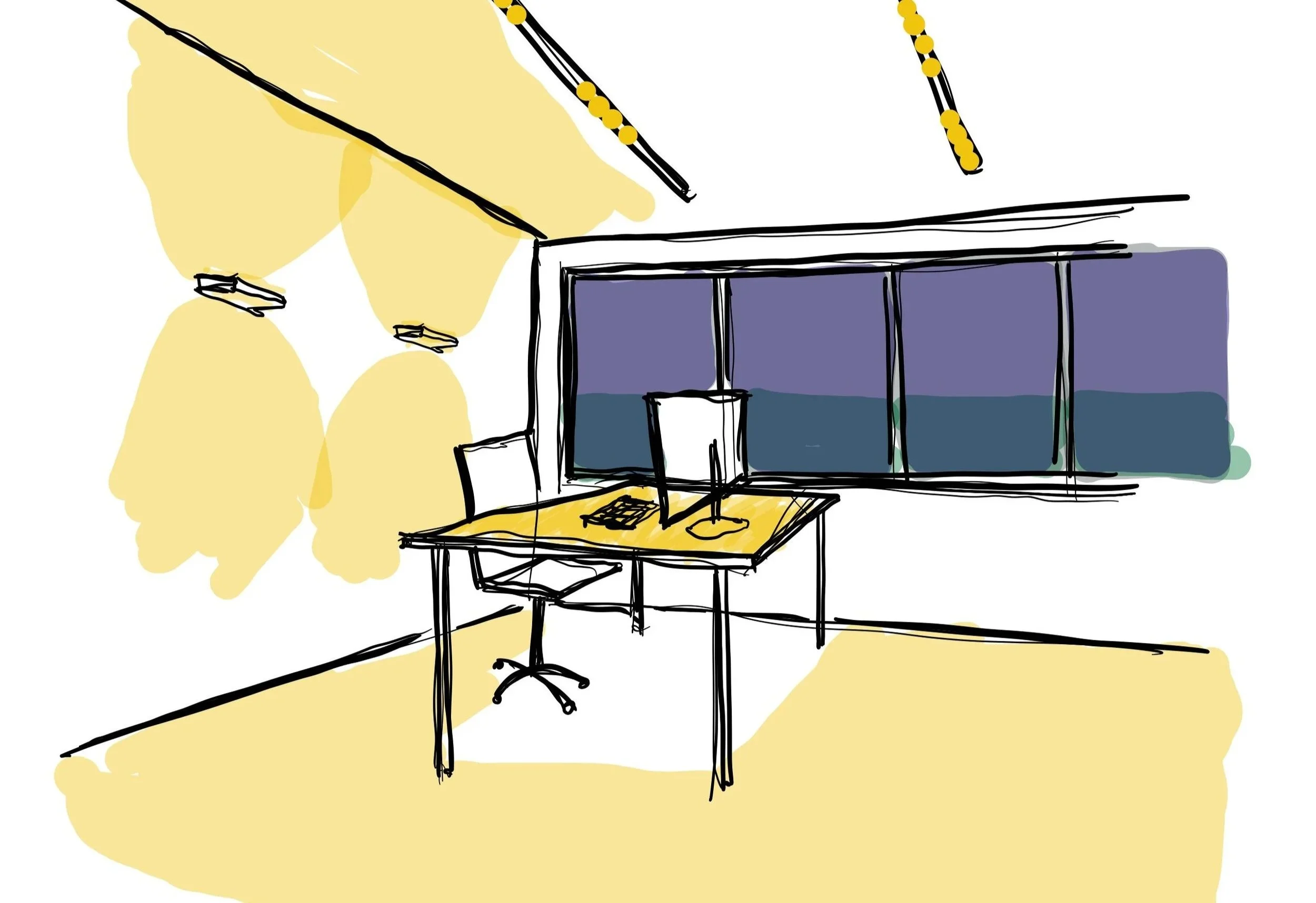
The home office does not begin with the laptop.
And it does not end with the last email.
It begins with light.
With the first moment in which the space says:
You can stay here.
You can think here.
You can work here.
Many home offices are furnished.
But not designed.
Work Is a Visual State
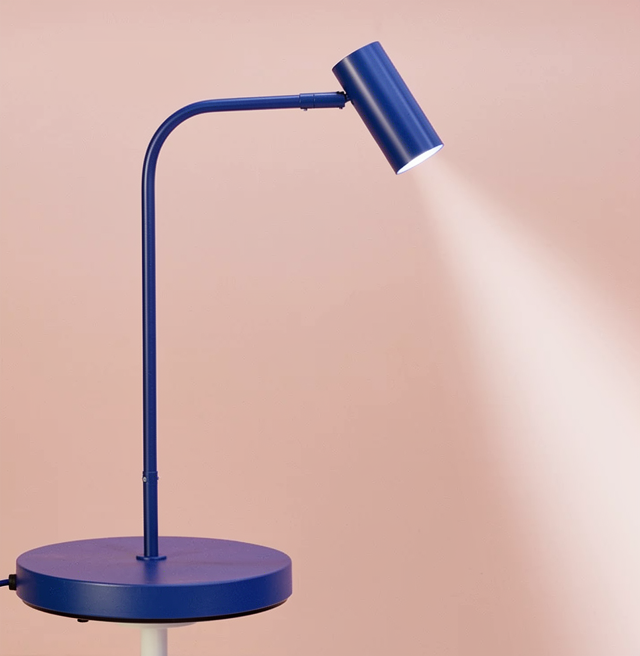
Working from home requires focus, but also constant shifts. Between video calls and quiet work, reading and writing, typing, leaning back, and thinking, visual demands change continuously.
A single light cannot accommodate this dynamic.
Relying solely on a desk lamp and a ceiling light reduces a complex workspace to mere brightness—and sacrifices what matters most: visual calm.
Good light supports without drawing attention to itself.
More Than Brightness: The Layers of Home Office Lighting
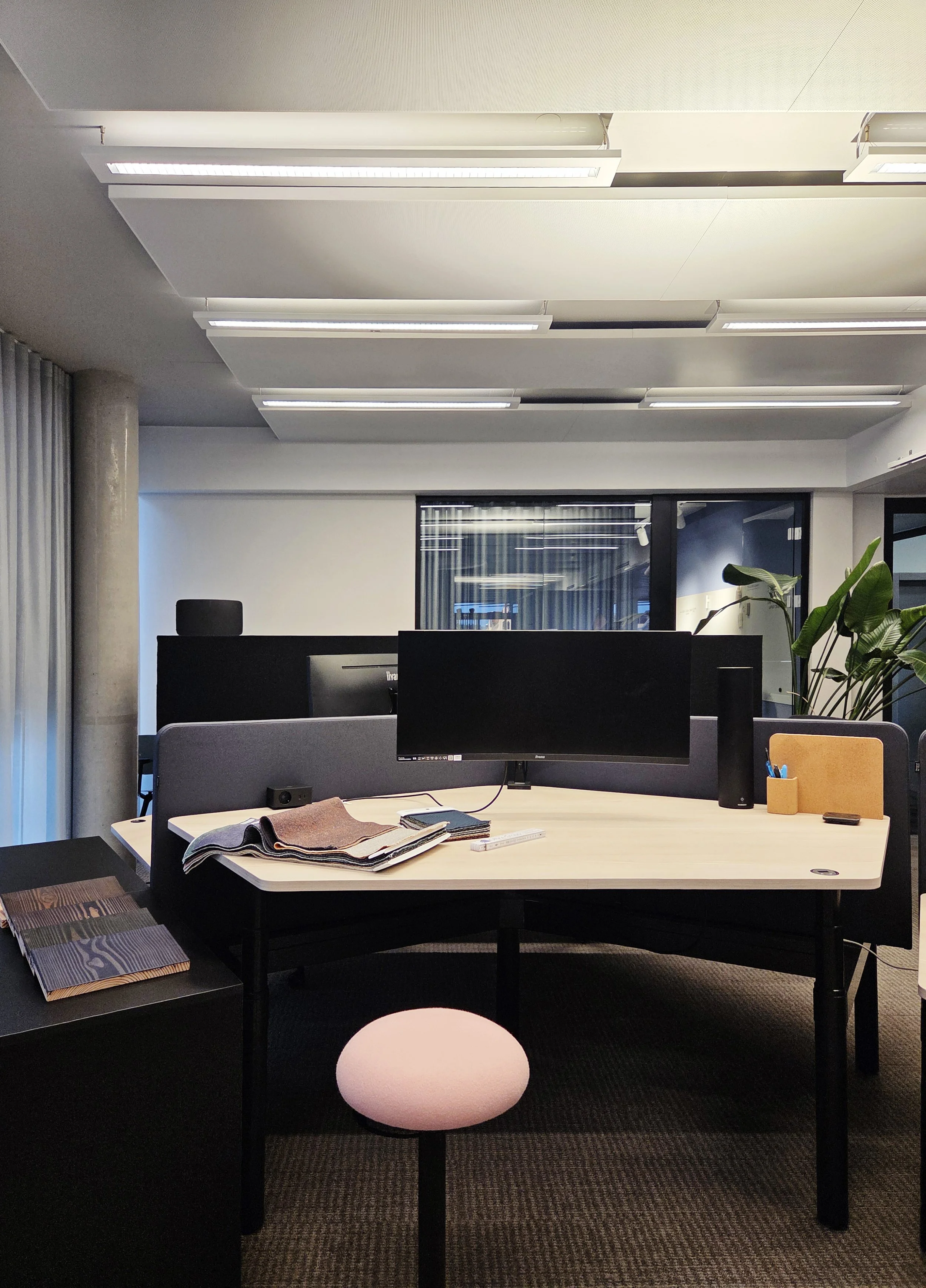
Professional home office lighting does not think in individual luminaires, but in carefully coordinated layers that together create orientation, focus, and atmosphere.
Ambient lighting
Ambient lighting forms the calm foundation of the space. It is even, restrained, and non-dominant. Its role is to give the room orientation and make it legible as a whole—not to highlight the workstation.
Task lighting
Task lighting is planned with precision and intent. It supports reading, writing, and focused work without causing glare or harsh shadows. When positioned correctly, it creates clarity without visual disturbance.
Indirect lighting
Indirect lighting provides balance. It reduces contrast, relieves the eyes during screen work, and adds depth to the space. In the home office, this layer is essential for maintaining concentration over longer periods.
Accent lighting
Accent lighting is used deliberately and sparingly. It serves no primary function, but adds structure, depth, and identity to the room.
When set correctly, it marks the difference between a simple workspace and a thoughtfully designed working environment.
When Light Makes the Difference
Whether a home office is perceived as a true added value or merely as an extra room is often decided in the details. Not by its size. Not by the furniture. But by how effortlessly the space works.
Light plays a central role in this. It shapes concentration, perception, and the emotional quality of a workplace—often without being consciously noticed.
In the next section, we take a closer look at the key do’s and don’ts of home office lighting,
from the perspective of use, perception, and long-term value.
Do’s
Do: Think of light as part of the spatial concept
A well-designed home office lighting concept is developed together with the floor plan, furniture, and sightlines. It supports the way the space is used and integrates naturally into the room.
Do: Plan multiple light sources
Ambient lighting, task lighting, and indirect lighting create flexibility. This allows the space to function just as well during the day as in the evening—and remain adaptable for different users.
Do: Prioritise glare-free lighting
Glare-free light feels refined, calm, and professional. Especially with screen-based work and open layouts, this is a key quality criterion.
Do: Consciously complement daylight
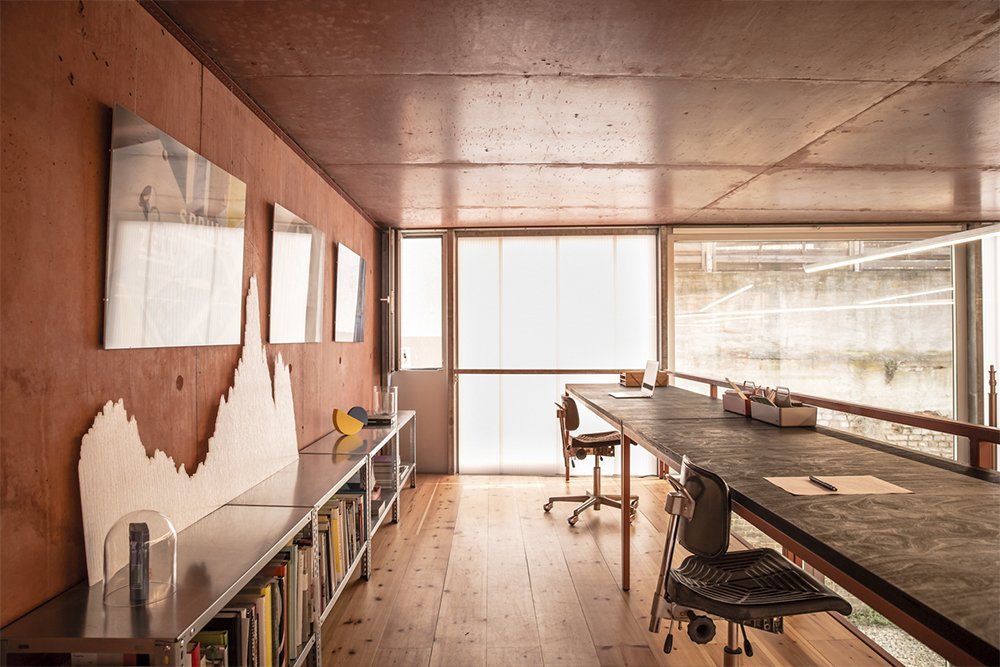
Artificial light should support daylight, not replace it or overpower it.
Don’ts
Don’t: Rely only on ceiling lighting
A single, central ceiling light quickly feels generic and technical. It reduces the home office to pure function and wastes spatial potential.
Don’t: Treat task lighting as an afterthought
Temporary desk lamps feel restless and poorly integrated. Especially in real estate contexts, it is the overall impression that counts—not the individual component.
Don’t: Consider lighting in isolation from the living space
A home office is rarely a fully enclosed room. Lighting that does not relate to the surrounding living areas feels disruptive and out of place.
Don’t: Underestimate glare
Visible light sources, incorrect beam angles, or reflections on screens quickly feel cheap. Glare-free lighting is not a comfort detail, but a clear marker of quality.
Don’t: Let the screen work against darkness
A bright display set against dark walls or corners causes visual strain. The space loses balance and quickly feels provisional.
Don’t: Overuse lighting accents
Too many spots, light lines, or effects create visual noise. Especially in compact layouts, spatial clarity suffers.
From Overview to Concrete Recommendation
The do’s and don’ts make it clear what truly matters in a home office and where lighting often loses quality. They highlight which decisions strengthen a space—and where potential is quietly wasted.
But good lighting design does not stop at rules.
It begins where individual principles come together to form a coherent whole.
Studio De Schutter: Work as a Spatial Quality
As Berlin-based lighting designers, Studio De Schutter does not view the home office as a technical exception, but as a natural part of living. Our concepts are shaped by use, daylight, materiality, and perception. They are precise, restrained, and designed with long-term value in mind.

Light is not added.
It is integrated.
For spaces where work does not feel exhausting, and concentration becomes effortless.
Contact Us:
