

Living Room Lighting Concept Inspired by Professional Lighting Design
Light as an Invisible Luxury
A well-designed living room is not defined by the number of luminaires, but by the atmosphere you feel the moment you enter the space. Professional lighting design works quietly. It does not demand attention — it guides perception, creates calm, and gives the room depth. A thoughtfully developed living room lighting concept translates architectural ideas, whether in a private home or in high-quality commercial living environments such as serviced apartments, lounges, or showrooms.
Light is not an object.
Light is a feeling.
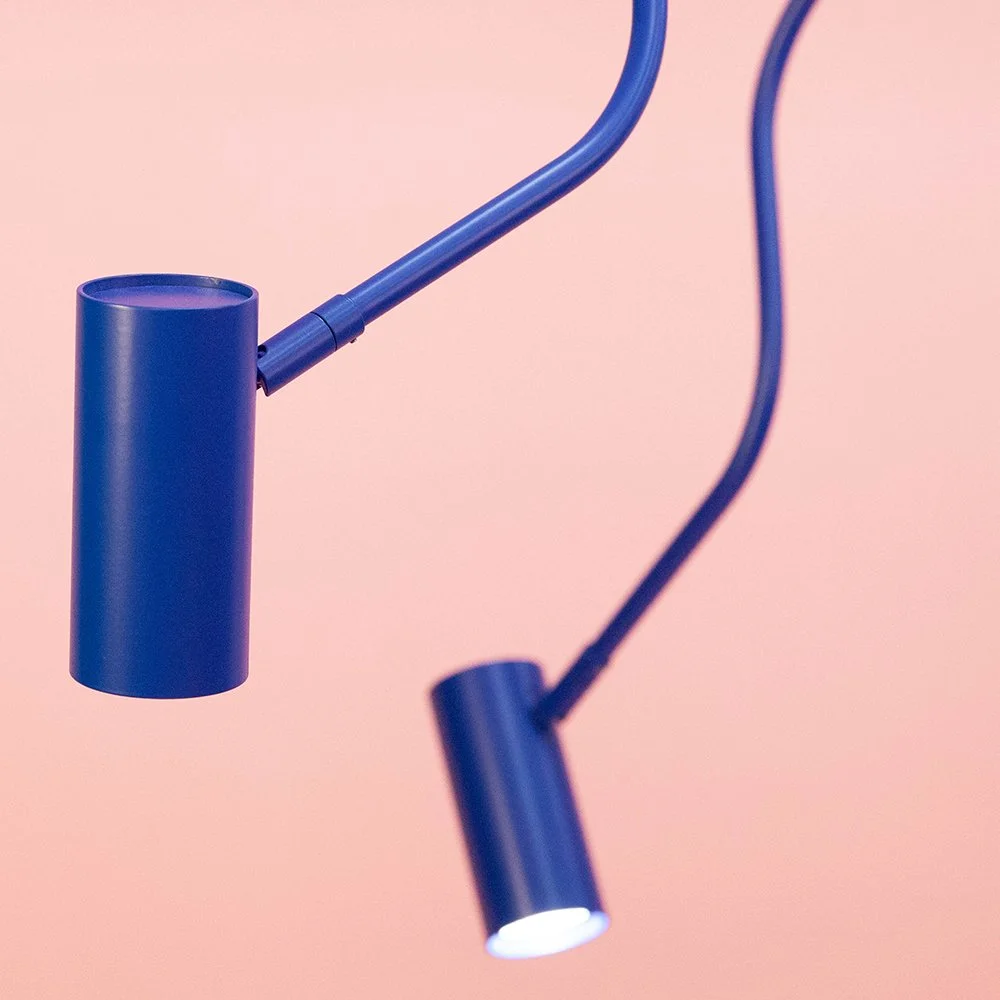
Thinking from the Space, Not from the Luminaire
Professional lighting design never begins with the question of a fixture, but with the space itself. Proportions, sightlines, materials, and patterns of use define where light is needed — and where it is deliberately not. A living room lighting concept follows this logic. It views the space as a whole and places light precisely where it has impact.
Instead of asking “Where does the lamp go?” the real question is:
What should this area evoke?
Light Zones Instead of Uniform Lighting
Living rooms today are more than places to spend time. They are retreat, meeting point, workspace, and stage at once. A professionally inspired lighting concept responds to this with clearly defined light zones. Each zone receives its own light quality — calm, focused, or atmospheric.
Typical zones include:
the seating area as a warm focal point
transitions and pathways with subtle orientation lighting
accent surfaces for art, shelving, or materials
Living quality emerges when light provides orientation without creating boundaries.
The Power of Indirect Light
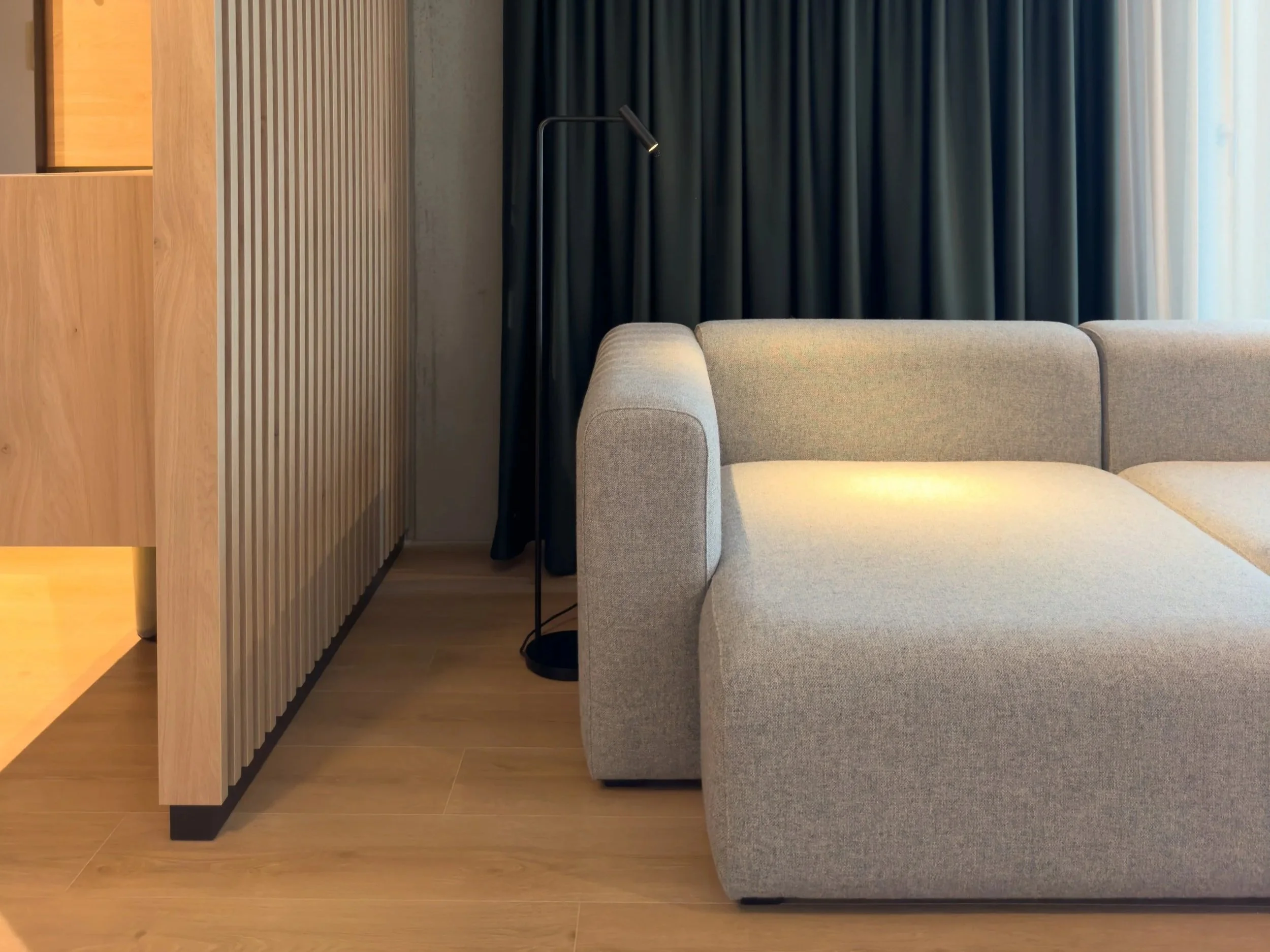
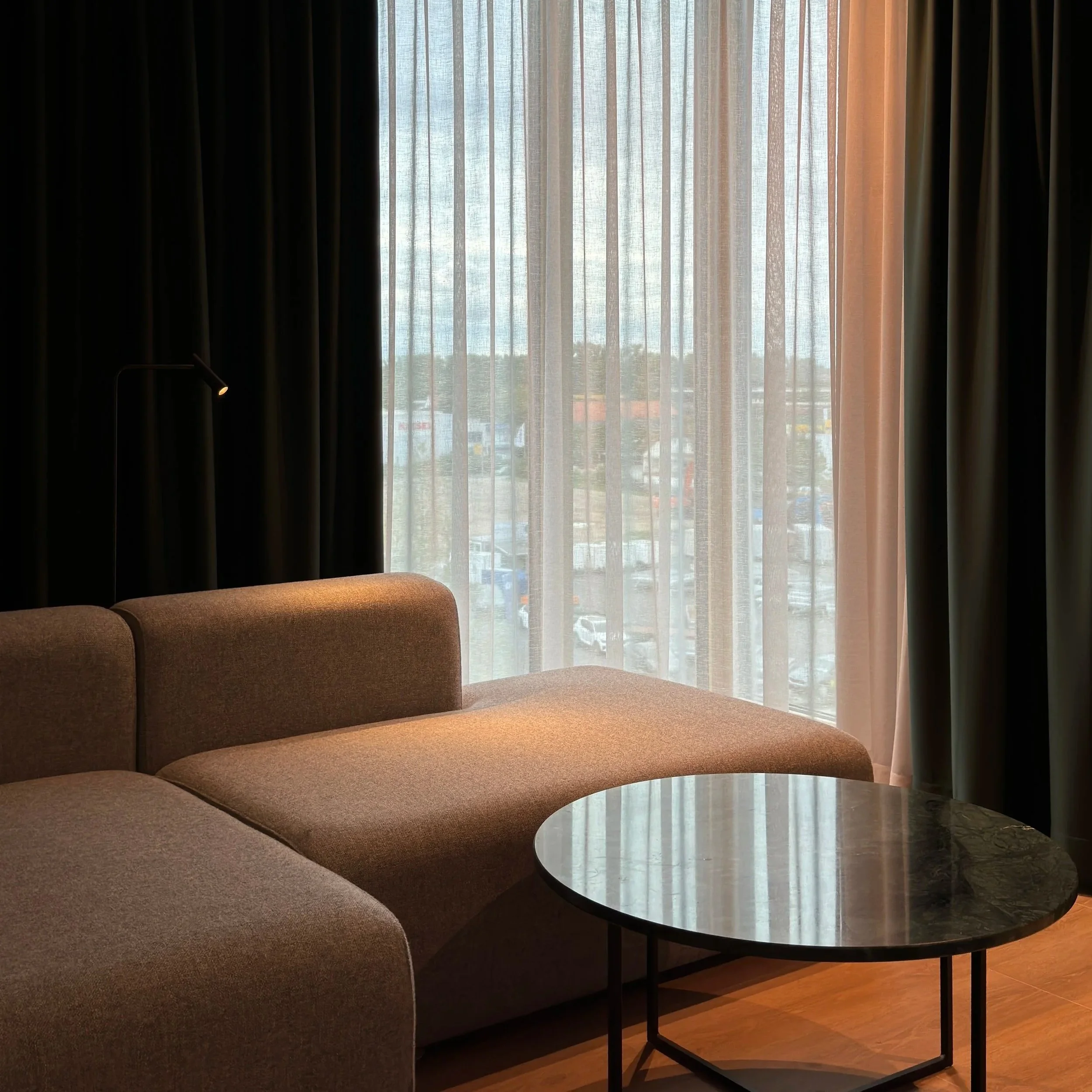
Indirect light is one of the most effective tools in professional lighting design — especially in living spaces. It works quietly in the background, yet fundamentally shapes how a room is perceived. Through indirect lighting, ceilings appear higher, walls calmer, and the space as a whole more generous. Shadows become softer, contrasts more balanced, and visual noise is noticeably reduced.
In the living room, indirect light forms the atmospheric foundation. It creates an even base mood that provides orientation without drawing attention to itself. Instead of emphasizing individual light points, indirect lighting connects the space into a coherent whole. Glare is avoided, the eye can relax, and the atmosphere feels natural and calm.
Typical elements include subtle light lines, concealed light sources behind furniture or curtains, and gently illuminated wall and ceiling surfaces. These forms of light are deliberately not perceived as fixtures, but as light effects. They enhance architecture and proportions and support spatial clarity.
Indirect light creates atmosphere — without demanding attention.
Reduction as a Design Principle
High-end lighting design does not mean more technology, more luminaires, or more effects. Above all, it means one thing: less randomness. Every light source serves a clear purpose. Every luminaire is consciously chosen and precisely positioned. Nothing is decorative for its own sake, nothing exists without function or impact.
Reduction creates order within a space. It lowers visual noise and directs attention to what truly matters — proportions, materials, architecture, and use. A reduced lighting concept feels calm, timeless, and refined because it does not try to demand attention.
Typical principles of reduced lighting design include:
as few luminaires as possible, as many as necessary
clear tasks for every light source
conscious decisions against unnecessary effects
calm lighting compositions instead of visible technology
focus on effect rather than on the object
In this approach, light is not understood as a decorative element, but as a design tool. The luminaire recedes into the background, while the effect of light moves to the foreground. This creates spaces that do not look “lit,” but feel natural and self-evident.
Reduction is not a limitation, but an attitude. It requires planning, precision, and a clear understanding of space and use. The result is a lighting concept that convinces in the long term — calm, clear, and of high living quality.
When light does not draw attention to itself, it works.
Light as Part of the Architecture
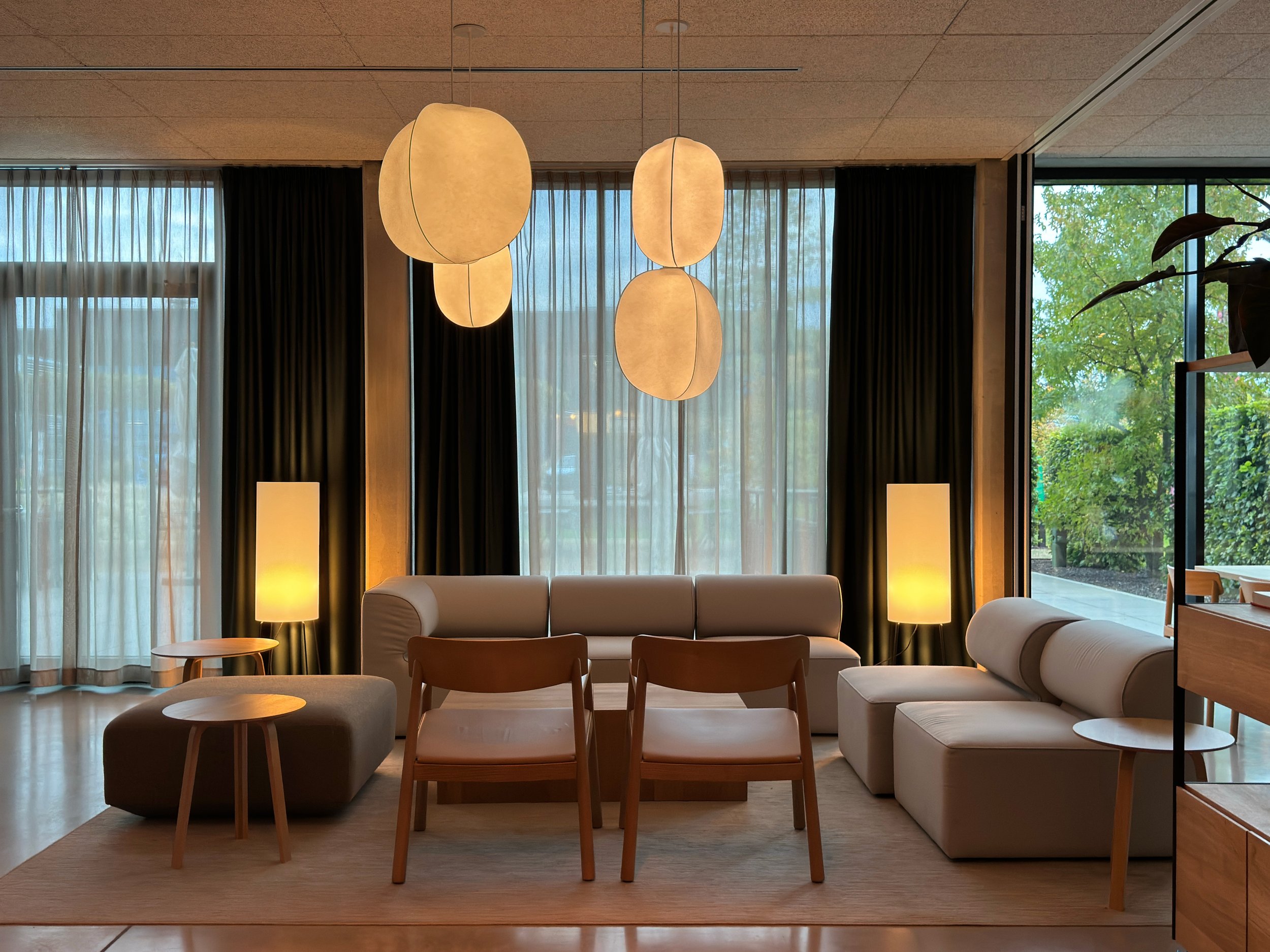
In professional lighting design, light is not an afterthought and not a decorative add-on. It is an integral part of the architectural idea. Light is considered from the very beginning and influences how spaces are read, used, and experienced. A high-quality living room lighting concept therefore does not focus on individual luminaires, but on lines, surfaces, spatial edges, and sightlines.
Light follows architecture and reinforces its qualities. It emphasizes proportions, guides the eye, and makes spatial transitions legible. Instead of isolated effects, a continuous lighting composition emerges — one that holds the space together and gives it depth.
Typical characteristics of an architecturally driven lighting concept include:
light along spatial edges and transitions
evenly illuminated wall and ceiling surfaces
restrained integration of luminaires into furniture or architectural elements
emphasis on lines rather than individual objects
a clear hierarchy between ambient light, accent lighting, and functional light
Living Quality That Lasts
A professional living room lighting concept is not a passing trend. It is based on perception and use. It creates spaces that feel right — today, tomorrow, and for many years to come.

This is exactly where Studio De Schutter comes in. Our lighting design takes a long-term perspective and is guided by how spaces are truly used and experienced.
We understand light as a design medium that makes architecture legible and sustainably shapes living quality. Every project begins with the space itself — its proportions, materials, and patterns of use. Building on this, we develop lighting concepts that are calm, clear, and precise — and feel entirely natural.
Contact Us:
