

Commercial Lighting: From Office to Restaurant
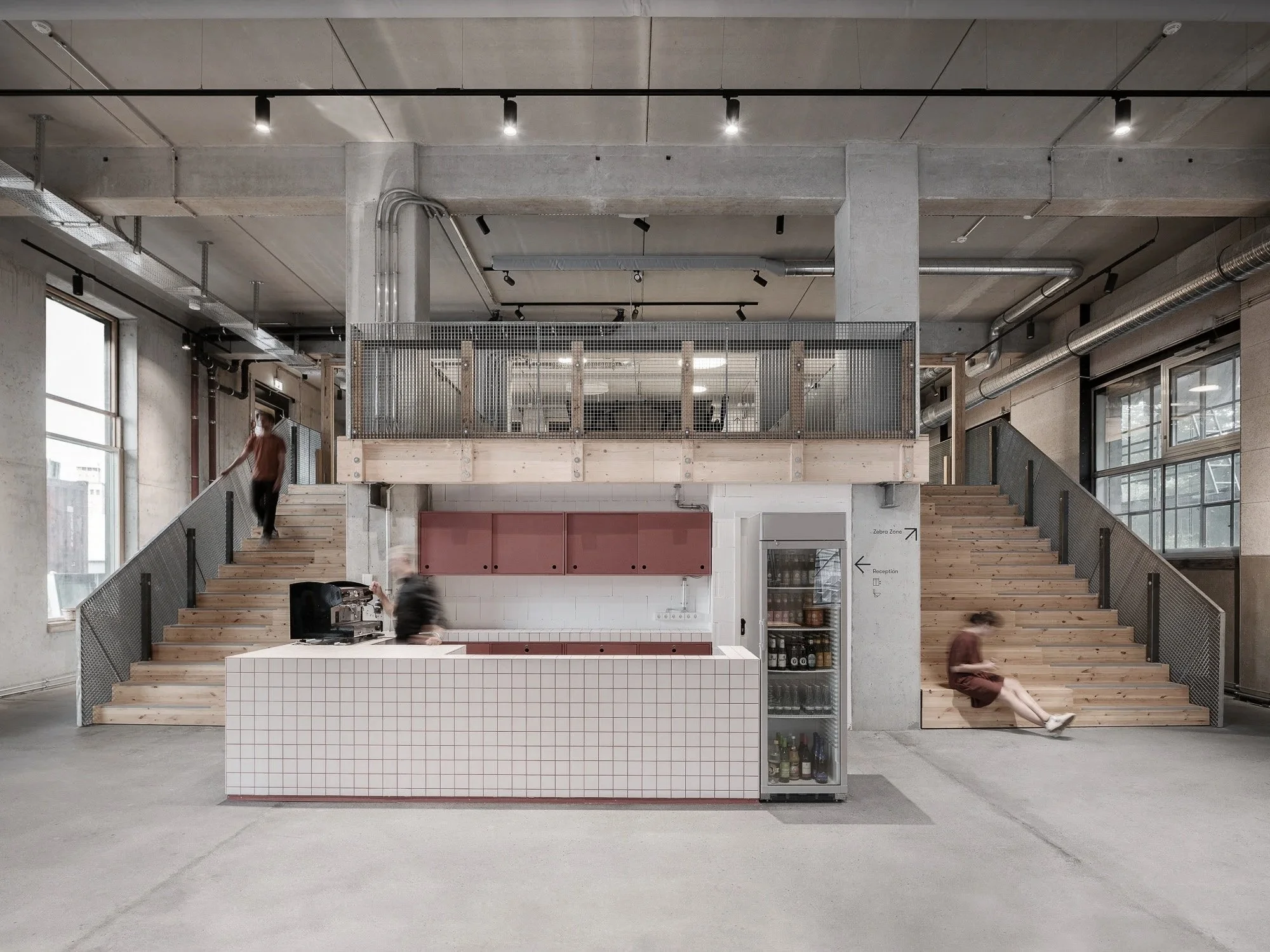
Commercial spaces operate differently. They have to perform. Support. Represent.
An office needs focus.
A restaurant needs tension.
A hotel needs orientation and calm.
An event space needs adaptability.
A showroom needs radiance.
And yet, everything begins the same way: with light.
Not as technology.
But as a mindset.
Light as a Strategic Tool
In commercial environments, light determines far more than visibility. It influences productivity, length of stay, brand perception, and ultimately economic success. It structures spaces, guides movement, and sets priorities.
Good lighting works in the background — and performs in the foreground.
Light defines how a space is read.
Those who see commercial lighting merely as compliance with standards miss its potential. Those who understand it as an integral part of architecture gain clarity, identity, and long term quality.
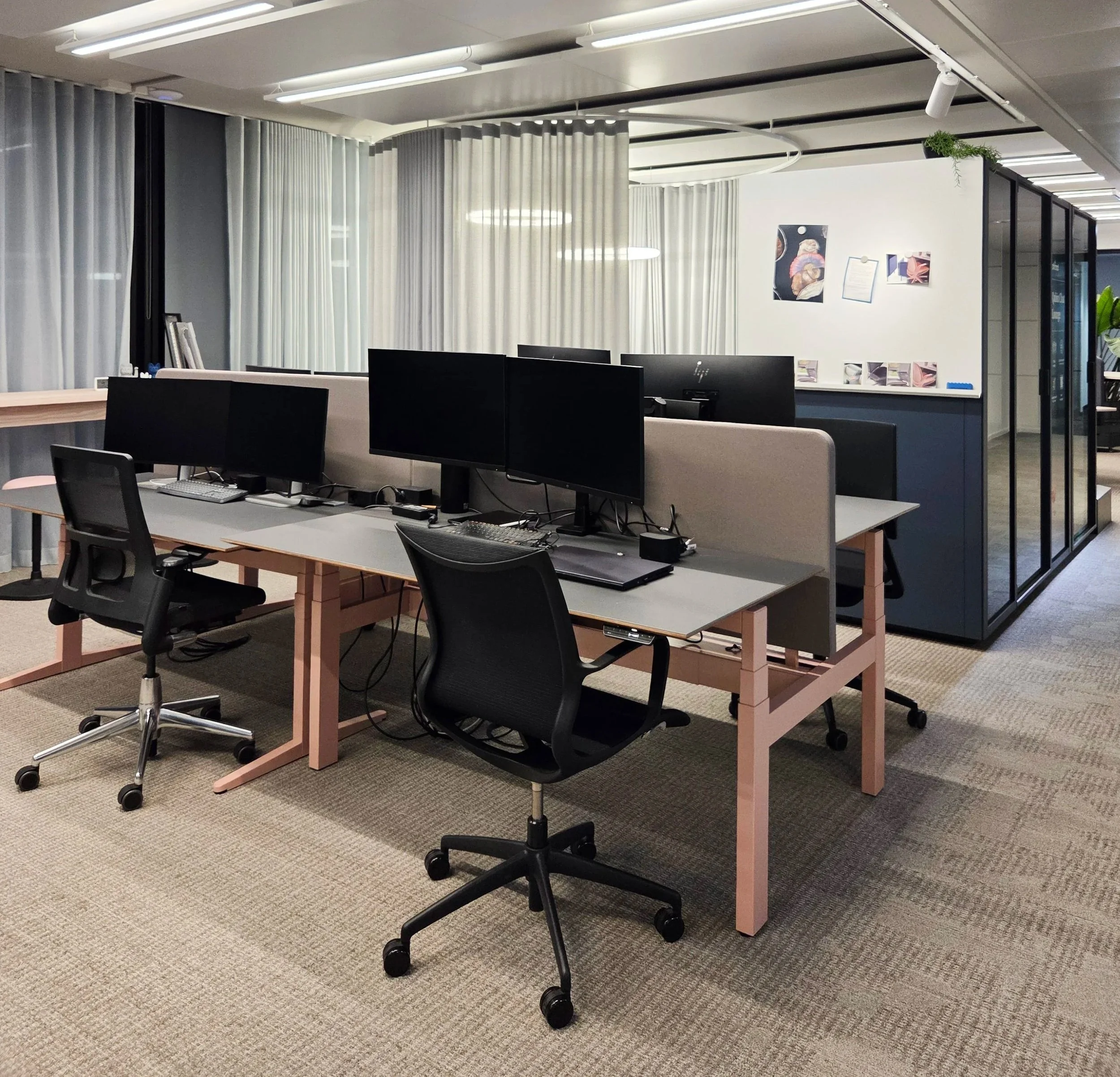
Office Lighting: Focus Without Harshness
An office is not an evenly illuminated container.
It is a working tool. And every tool must function with precision.
At the core are:
visual ergonomics
reduction of glare
clear hierarchies between workstations and circulation areas
support of the circadian rhythm
a balanced interplay between activation and calm
Concentration is not created by maximum brightness. It emerges through carefully controlled contrasts and precise light guidance that directs the eye without distracting it. Work surfaces require direct light with clear definition so that text, screens, and details can be perceived without fatigue. At the same time, illuminated vertical surfaces add spatial depth and a sense of openness.
In hybrid work environments, lighting increasingly becomes a structural element. Different zones — focus areas, collaborative spaces, retreat areas — require differentiated lighting signatures. A concentrated workstation functions differently from a lounge area for informal exchange. Light defines these distinctions subtly, yet unmistakably.
Good office lighting supports thinking without drawing attention to itself.
Restaurant Lighting: Tension and Intimacy
In restaurants, light determines atmosphere, the perception of food, and the length of stay. Long before the first dish is served, the space has already sent a message.
Too bright — it feels like a cafeteria.
Too dark — it feels uncertain.
The art lies in the transition. In the subtle interplay between visibility and restraint. Between presence and privacy.
Tables receive focused accents that render faces naturally and make dishes appear vibrant. Circulation paths remain subtly guided so orientation feels effortless. Walls are softly illuminated to create depth and spatial generosity. The bar is allowed to glow — a social magnet. The open kitchen can be precise — clear, honest, functional.
Materials play a leading role here: wood, fabric, glass, metal. Light must be able to read these surfaces. It must not overpower them, but carefully articulate textures, reflections, and tones. In gastronomy especially, lighting quality determines whether a space feels refined or generic.
A restaurant begins in the eye.
One space.
Multiple identities.
One carefully considered lighting concept.

Hotel Lighting: Orientation and Identity
Hotels are complex systems. Lobby. Corridor. Guest room. Spa. Bar. Restaurant. Conference area.
Each zone has its own requirements — and yet everything must feel cohesive. Light becomes the connecting element that translates architecture, interior design, and brand attitude into one consistent language.
The lobby is stage and meeting point. This is where the first impression is formed. Vertical illumination enhances spatial presence and adds generosity. Accents communicate brand values, guide the eye, and define zones. Reception desks require clear light guidance — precise, welcoming, confident. Guests must intuitively understand where they arrive.
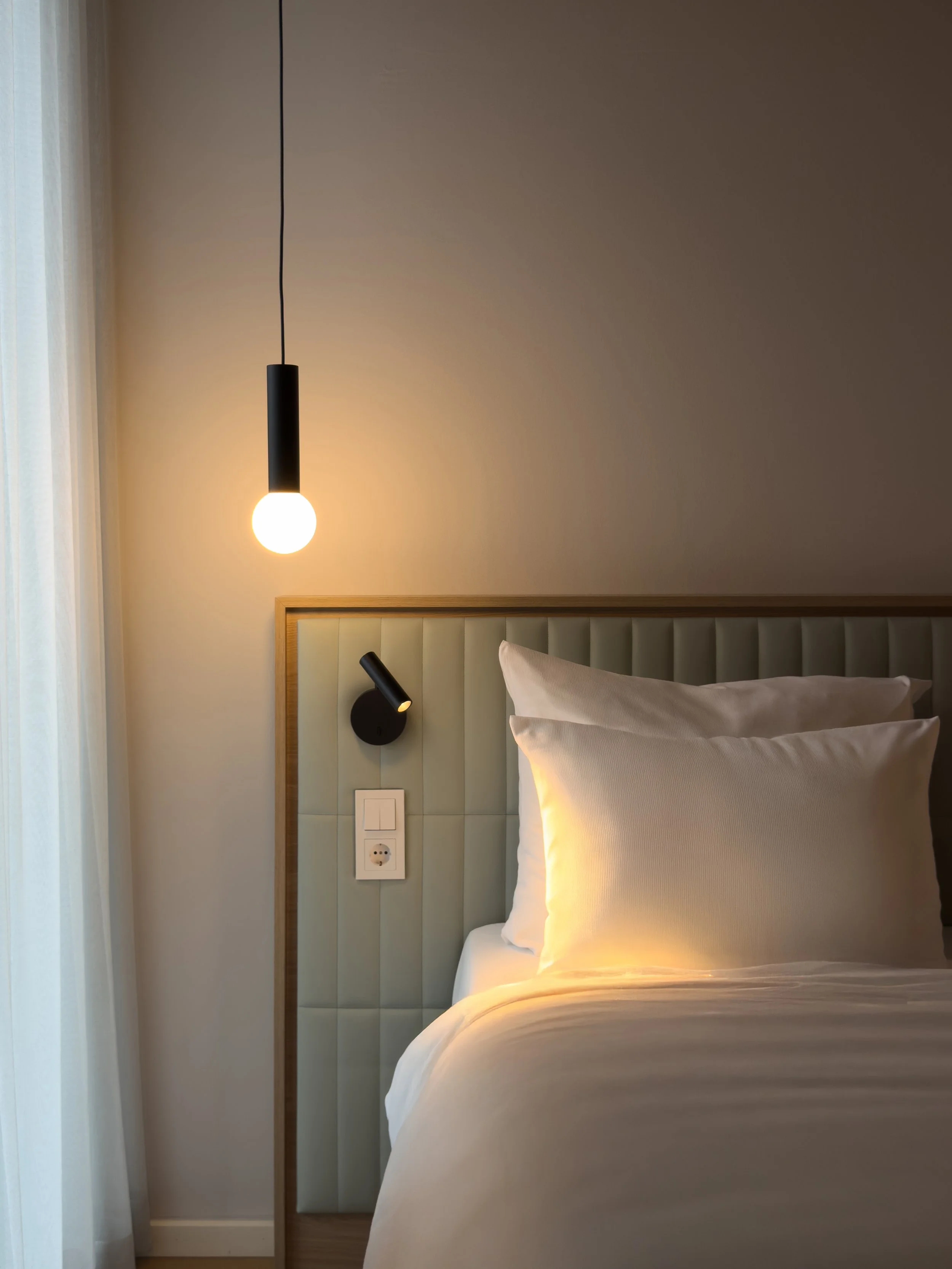
In the guest room, the logic shifts.
Here, it is about control.
The guest wants to decide: read. work. unwind. wake up. sleep. Different light sources and carefully composed scenes allow exactly this freedom. Warm, restrained light in the evening. Clearer, activating light in the morning.
Scenes are not a luxury here.
They are an expectation.
Corridors, in contrast, require safety and orientation. Consistency without monotony. Efficiency without coldness. Rhythmic accents prevent endless hallways and introduce structure.
Hotel lighting is brand leadership in space.
Every lighting decision communicates what the hotel stands for.
Showrooms: Staging as a Core Discipline
Showrooms are built arguments. They are not neutral spaces, but clear statements.
This is where product presentation, brand identity, and emotional connection converge. Light establishes hierarchy. It determines what is seen first — and what is discovered only on a second look. It separates background from object and creates visual clarity.
Three layers are essential:
ambient lighting for orientation
accent lighting for product focus
vertical lighting for spatial depth
Only in combination does structure emerge. Ambient lighting stabilizes the space. Accent lighting defines relevance. Vertical lighting expands the perception of the room and adds generosity.
Colours must be accurate. Materials must appear credible. Textures must retain their depth. Glare is a break in quality — especially with glass, metal, or high gloss surfaces.
A showroom must never feel accidental. It requires dramaturgy, clear sightlines, and deliberate contrasts.
Radiance is created through precision, not through quantity.
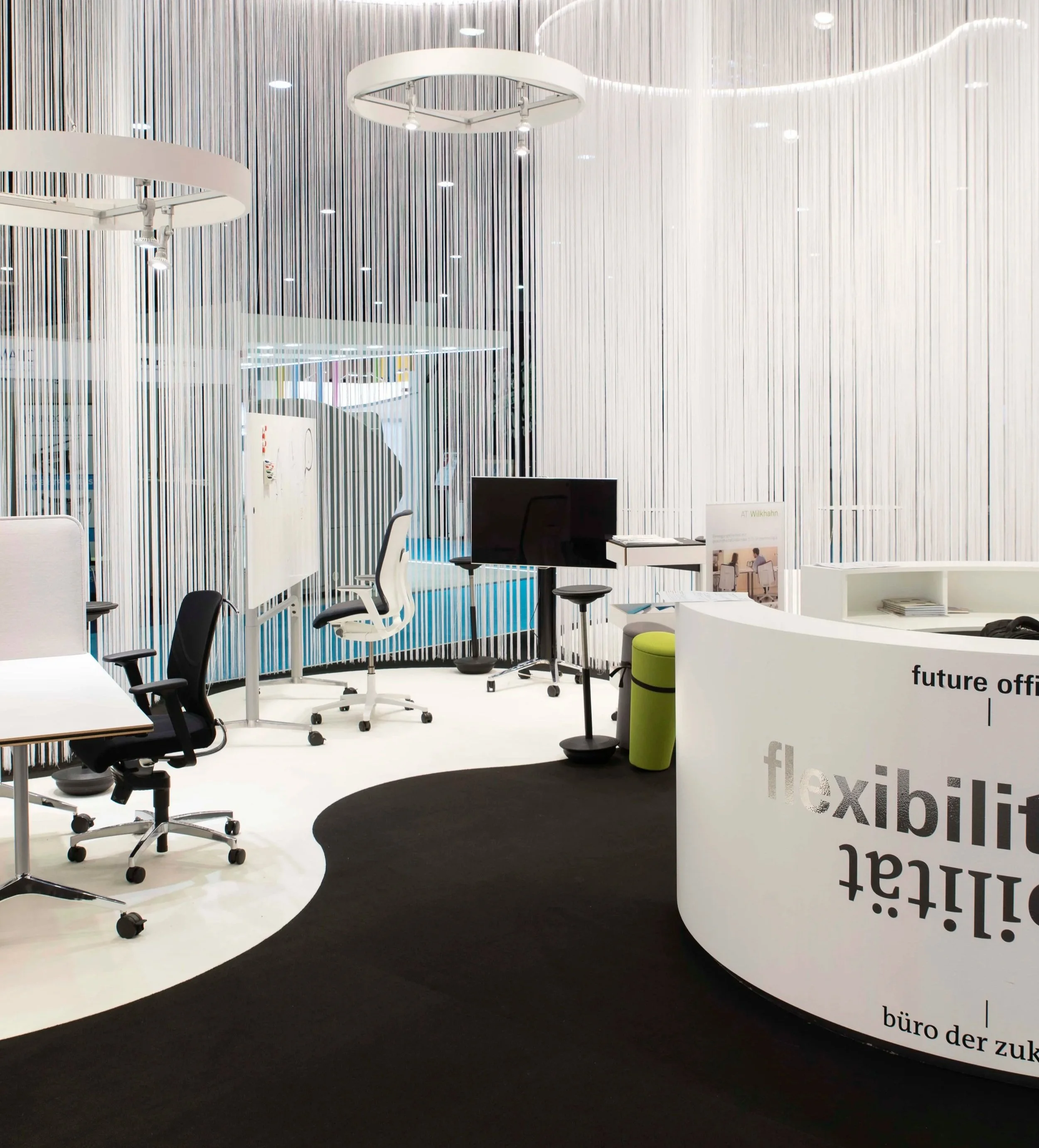

Event Spaces: Adaptability as a Principle
Event spaces are not static rooms.
They are platforms. Stages. Fields of possibility.
Conference. Product launch. Gala. Panel talk. Aftershow.
The same space — entirely different requirements.
Lighting has to move with it. Fast. Precise. Intuitively controllable. It must not slow things down; it must enable momentum. Often, only minutes lie between a factual daytime presentation and an emotionally charged evening format.
Ambient lighting provides overview and spatial stability. Accent lighting defines stage and focus. It directs attention to speakers, products, or performances. Dynamic elements introduce energy when desired — or remain consciously restrained when concentration is key.
The crucial factor is the ability to transform.
An event space must be able to shift its identity within seconds.
What matters is not maximum technology, but intelligent structure. Scenes instead of isolated solutions. Clearly defined layers that can be combined seamlessly. Lighting zones that are independently controllable without feeling complex. Technology should support — never dominate.
Light also reshapes spatial perception. Ceilings can appear higher. Surfaces calmer. Transitions between stage and audience can be softened or sharply defined. Even in large, open halls, light creates orientation and spatial coherence.
Flexibility is the result of planning — not coincidence.
An event space must never feel rigid.
It should radiate potential. Openness. Adaptability.
And the confidence to accommodate any format.
Shared Principles of Commercial Lighting
As different as the applications may be — the underlying principles remain consistent:
lighting is conceived in layers
contrasts are set deliberately
vertical surfaces are integrated
glare is carefully controlled
scenes enable adaptation
sustainability is considered long term
Commercial lighting is never isolated. It is part of the architecture, the material language, and the brand strategy.
Studio De Schutter
As lighting designers based in Berlin, we develop concepts for commercial spaces that unite function and impact. Office, restaurant, hotel, event space, or showroom — every project begins with one central question:

What should this space achieve?
And how should it be perceived?
Contact Us:
