

Tunable White sounds like technology at first.
Like controls. Like a Kelvin slider. Like light that becomes cool in the morning and warm in the evening.
All true. And still too simplistic.
Tunable White becomes interesting when it is not only the light that changes — but the way the room is used.
That is where the subject starts to become genuinely useful.
does not simply mean:
warm or cool.
It means:
light can respond to time, use and spatial character.
Tunable White refers to lighting systems in which the colour temperature can be adjusted within a defined range.
Typical ranges might extend from 2700 to 6500 Kelvin or from 3000 to 6000 Kelvin.
This allows light to appear warmer, more neutral or cooler.
This shift is often combined with dimming.
That matters.
Because light is never experienced as colour temperature alone. It is also experienced through intensity, direction, distribution and its relationship with the room.
Tunable White is therefore not an effect. It is a tool within a lighting strategy.
Adjustable colour temperature does not automatically improve a room.
What it changes first is how the light is read.
Can feel softer, more residential and more restrained. Often interesting for hospitality, retreat areas or evening settings.
A range that can work both architecturally and functionally. Warm does not automatically mean unprofessional.
Often appears clearer and more matter-of-fact. Widely used in work environments — but not a universal standard for every application.
Usually used more selectively. Not every space benefits from it. Very high colour temperatures can quickly feel technical or overly staged.
When workplaces, meetings, workshops, presentations or events share the same space, variable colour temperature can help define different states more precisely.
Particularly in spaces with long operating hours, Tunable White can help manage the relationship between artificial light and the changing exterior environment more sensitively.
When users intentionally switch between focus, conference or event modes, colour temperature can become part of that scene logic.
In environments where people spend long periods of time or move between different activities, a more differentiated lighting system can be useful.
Not every architecture responds well to strong changes in colour temperature. Tunable White makes most sense where the room can support that transformation aesthetically.
A variable lighting system is only good if people can use it. Complexity without a clear purpose rarely creates better spaces.
Not necessarily.
Tunable White makes adjustable colour temperatures possible.
Human Centric Lighting is considerably more complex.
Relevant factors include intensity, spectral composition, time of day, duration and the light that actually reaches the eye.
Tunable White can be part of an HCL strategy. But it is not automatically the strategy itself.
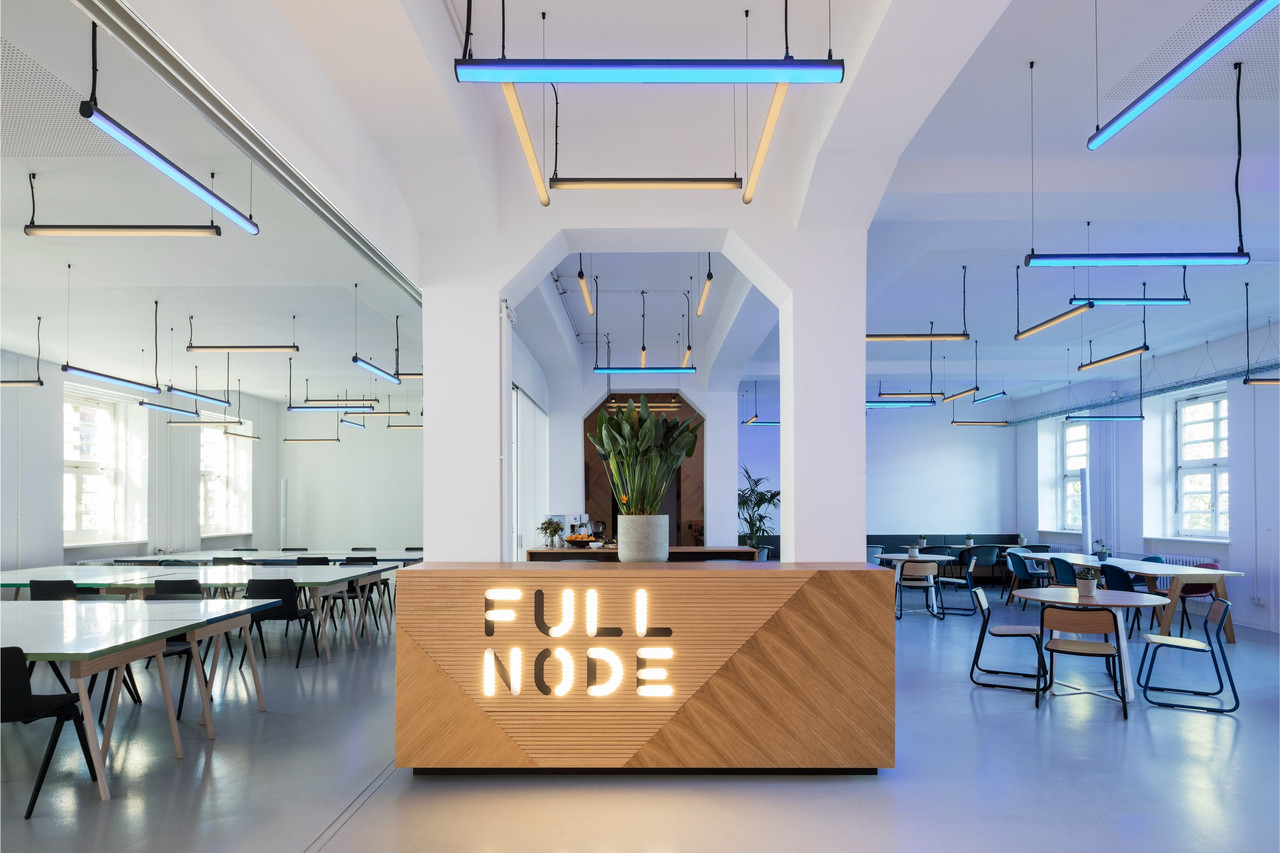
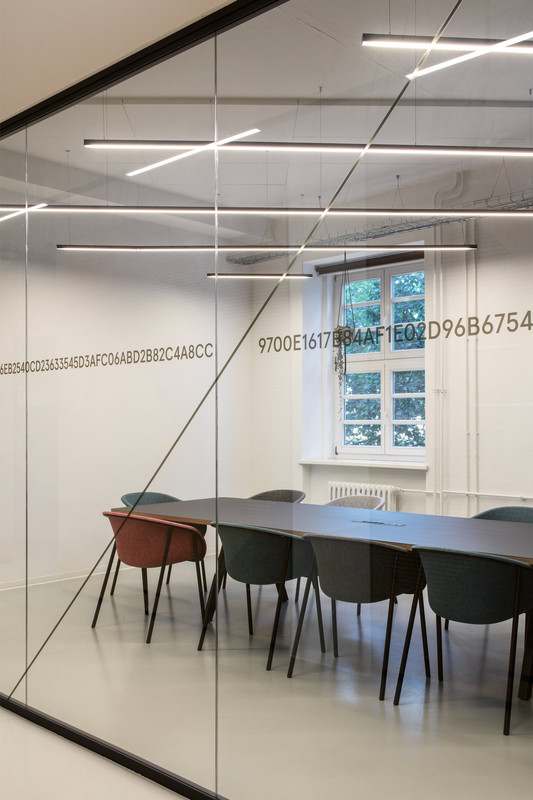
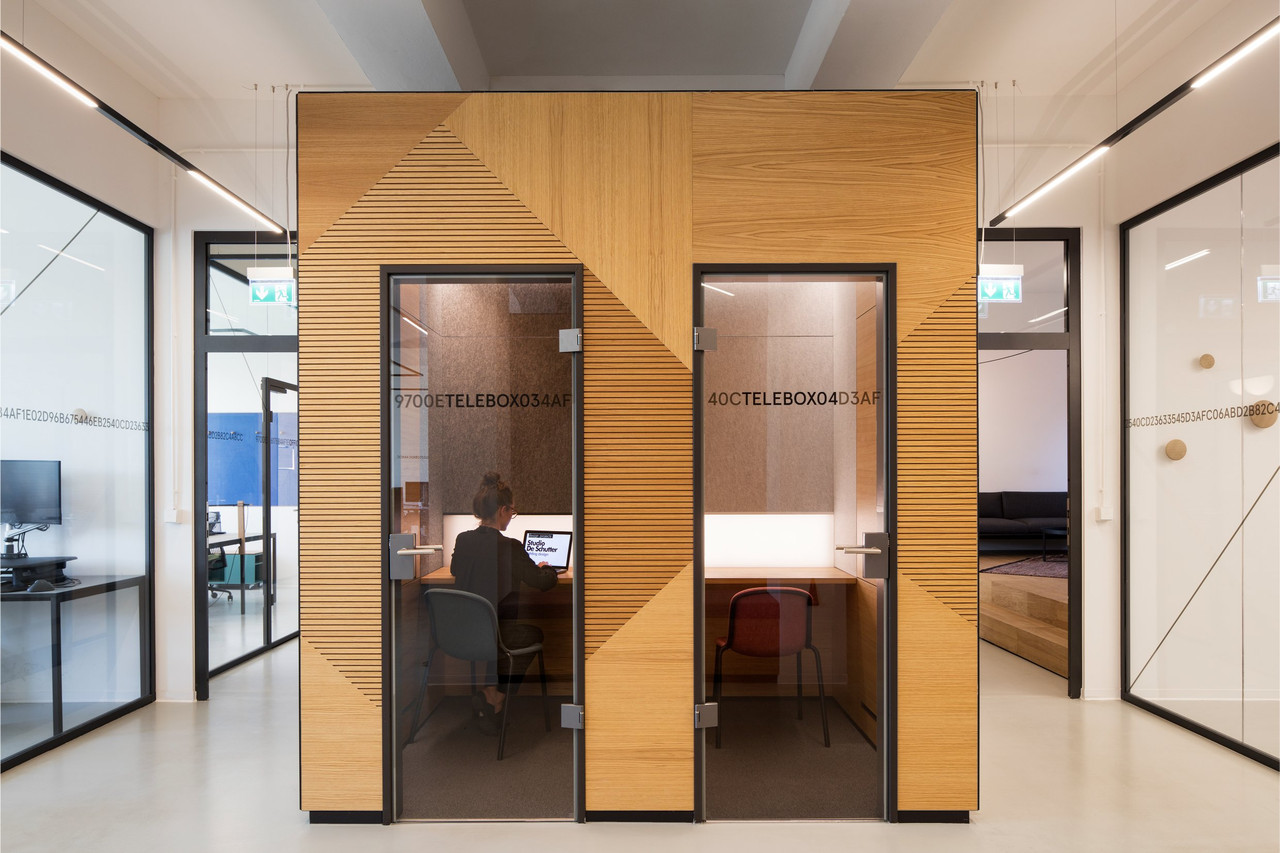
The Full Node project shows why rigid lighting solutions can quickly become limiting in contemporary work environments.
The spaces are not only workplaces.
They are also places for exchange, retreat, conferences, meetups, workshops and events.
This becomes particularly clear in the meetup and café area.
There, prepared scenarios can be recalled for conferences, workshops and events.
The central idea is transferable: a room does not always need simply more or less light. Sometimes it needs a different lighting state.
This is exactly what many articles overlook.
Not every room needs adjustable colour temperatures.
And not every lighting problem is solved by Tunable White.
Lighting faces for video conferences is a good example.
Other questions are often much more important:
- From which direction does the light come?
- How soft or hard are the shadows on the face?
- How even is the vertical illumination?
- How much glare does the light source create?
In other words: sometimes light direction matters more than colour temperature.
good lighting system
needs
Tunable White.
And not every Tunable White system automatically creates good light.
This is often a more useful question than “Do we need Tunable White?”
Because sometimes the better answer is: no.
Multiple uses, long operating hours, scene-based requirements and a clear control strategy are good reasons to seriously consider dynamic colour temperature.
Not every room benefits from more technical options. A high-quality static solution can be more coherent, robust and user-friendly.
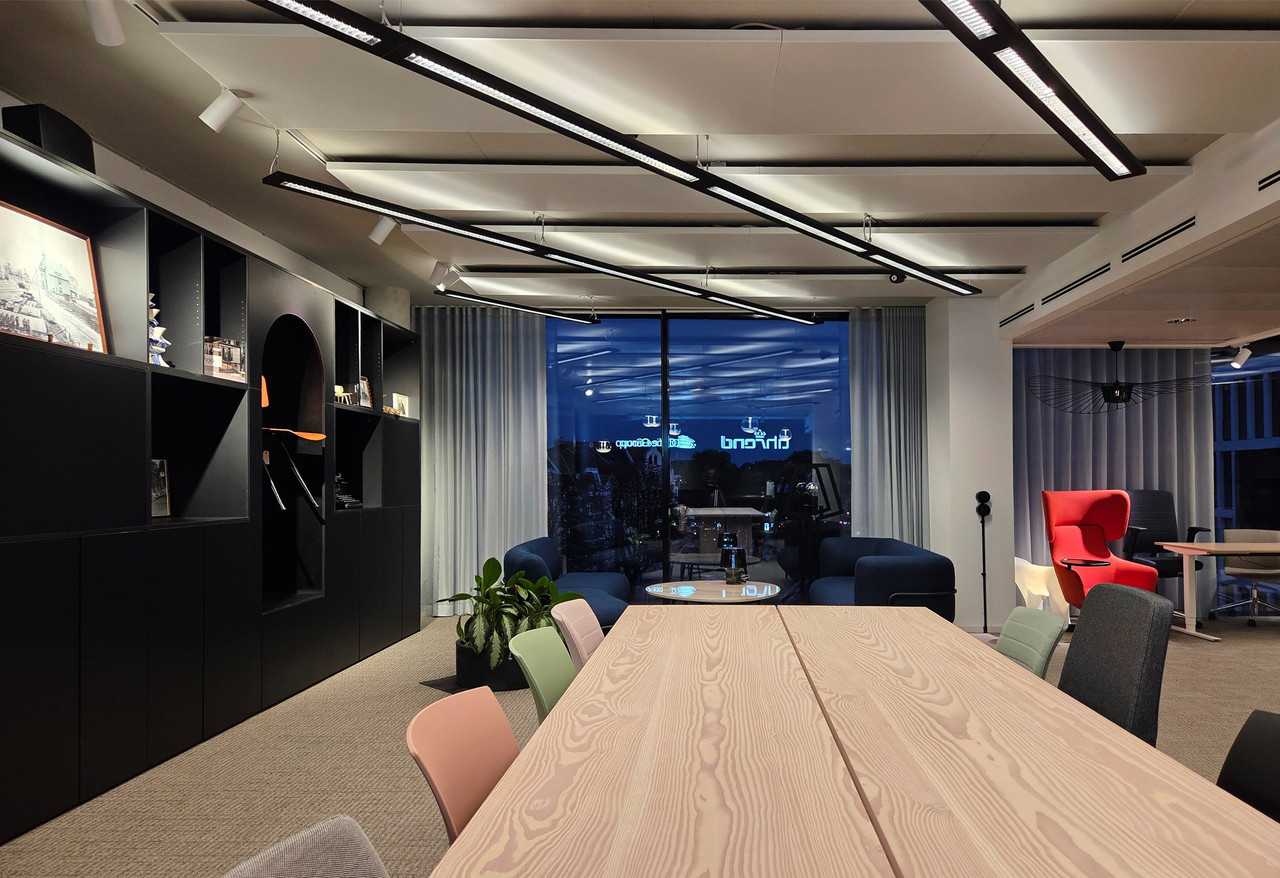
In this context, The Loop is almost as interesting as Full Node.
But for the opposite reason.
The project was not approached with the logic: more technology, more variability, more functions.
Instead, the existing lighting was transformed into a higher-quality system.
Existing luminaires were upgraded to flicker-free LED technology with 3000 Kelvin and CRI 95.
This is an important insight for anyone considering Tunable White: good lighting design does not begin with the largest possible number of options. It begins by asking what the room actually needs.
- Does the room regularly switch between different uses?
- Are there different times of day with clearly changing requirements?
- Should deliberate scenes be created for work, exchange or events?
- Is there a clear control strategy rather than technology for its own sake?
- Can the architecture support different lighting moods?
- Will users actually understand and use the controls?
- Is the overall light quality high, not only the adjustable colour temperature?
- Could better dimming, glare control or light distribution actually matter more?
- Are there good reasons not to use a high-quality static solution?
- Treating Tunable White as a sales feature: technology alone does not create a better room.
- Confusing colour temperature with light quality: glare, distribution, colour rendering and light direction remain just as important.
- Defining too many states without a clear logic: complex controls can overwhelm users rather than help them.
- Thinking of dynamic light only as an effect: if changing colour temperatures add no functional or spatial value, they can quickly feel arbitrary.
- Trying to solve every room with the same technology: not every area needs the same level of control.
- Underestimating static lighting: particularly where uses are clear, an excellent fixed solution can be the more precise answer.
Tunable White describes a lighting system in which the colour temperature can be adjusted within a defined range. This allows the light to appear warmer or cooler and to respond to different uses or times of day.
Tunable White is particularly useful in spaces with changing uses, long operating hours or scene-based requirements. Examples include multifunctional work environments, meeting areas, learning spaces and hospitality settings.
No. Tunable White can form part of a Human Centric Lighting strategy, but it is not automatically HCL. Human Centric Lighting also considers factors such as light quantity, timing, duration and the light that actually reaches the eye.
No. In many projects, a high-quality static lighting solution is the better choice. The decisive question is whether dynamic colour temperature creates a genuine spatial or functional benefit.
Common ranges may extend from around 2700 to 6500 Kelvin or from 3000 to 6000 Kelvin. The useful range depends strongly on the project, use and desired lighting character.
Factors such as glare control, colour rendering, light distribution, vertical illumination and intuitive controls can be at least as important. Tunable White should never be considered in isolation.
needs more
possibilities.
Some just need
the right ones.
Good lighting design does not begin with a feature.
It begins with questions.
What happens in this room? How does its use change? How does the architecture respond? And which type of light genuinely supports it?
Studio De Schutter therefore develops lighting concepts from space, use and light quality — not from technology alone.
Sometimes that means Tunable White. Sometimes it deliberately means a high-quality static solution.
Contact Us:
