

Lighting scenography moves beyond illumination. It treats light as a spatial medium that shapes perception over time. Rather than making everything visible, it defines what is revealed, when it is revealed, and how a space is emotionally experienced. At Studio De Schutter, lighting scenography is never decorative. It is intentional, precise, and deeply connected to architecture. Light becomes part of the spatial narrative, guiding movement, attention, and atmosphere without ever needing explanation.
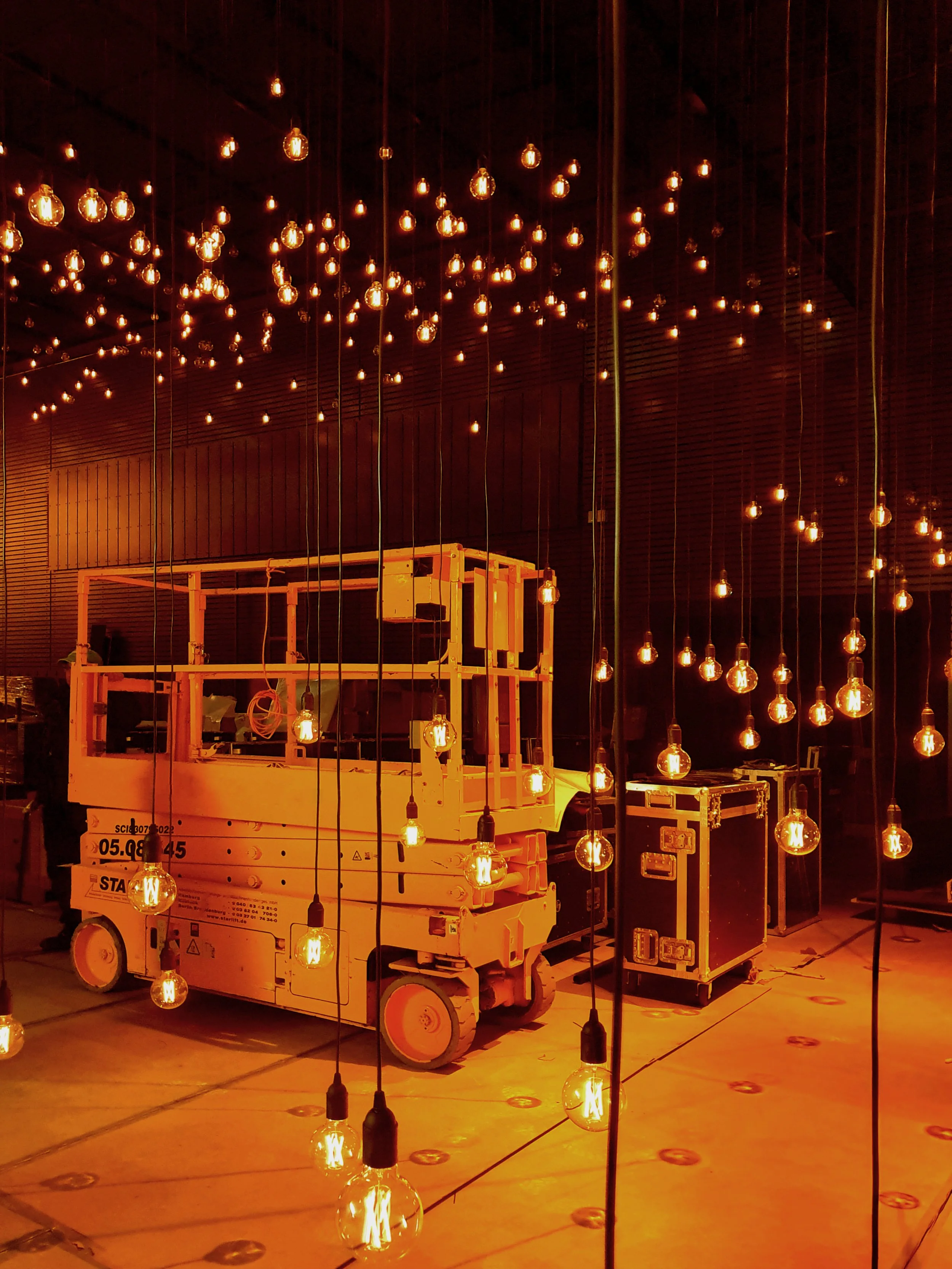
Chapter 1: Light as Spatial Narrative
Scenographic lighting is about storytelling. Spaces are not read in a single moment but unfold step by step as people move through them. Light sets the pace of this experience.
Instead of uniform brightness, we work with sequences and contrasts:
Moments of arrival followed by calm transitions
Accents that draw focus without demanding attention
Gradients that guide movement intuitively
Light establishes hierarchy. It tells you where to look, where to pause, and where to move next. Shadows are not treated as absence, but as active elements that create depth and tension.
Key principles of spatial narrative in lighting:
Not everything needs to be visible at once
Emphasis comes from contrast, not intensity
Vertical surfaces define space more strongly than floors
Rhythm is created through repetition and variation
When lighting is scenographic, architecture gains clarity. Spaces feel composed rather than lit.
“Scenographic lighting tells a story over time.It reveals space step by step, using contrast, rhythm, and restraint to guide perception.Light does not aim to show everything at once – it creates hierarchy, depth, and meaning.”
Chapter 2: Emotion, Atmosphere, and Time
Lighting scenography always works on an emotional level. Before people understand a space intellectually, they feel it. Light plays a decisive role in shaping this first and lasting impression.
Atmosphere is created through:
Carefully controlled brightness levels
Directional light that reveals texture and materiality
Subtle shifts in color temperature
Balance between intimacy and openness
At the same time, scenographic lighting must respond to time. Daylight changes. Uses evolve. Moods shift from day to evening.
This requires lighting concepts that allow:
Flexible scene settings
Smooth transitions between daylight and artificial light
Adaptation to different uses without visual disruption
Long-term resilience without redesign
Scenography is not static. It is a living system that adjusts quietly, maintaining atmosphere while allowing spaces to change.
“Light shapes emotion before it explains space. Through atmosphere, timing, and subtle change, lighting scenography responds to how people feel, move, and use a space over time. It is never static – it adapts quietly, maintaining identity while allowing transformation.”
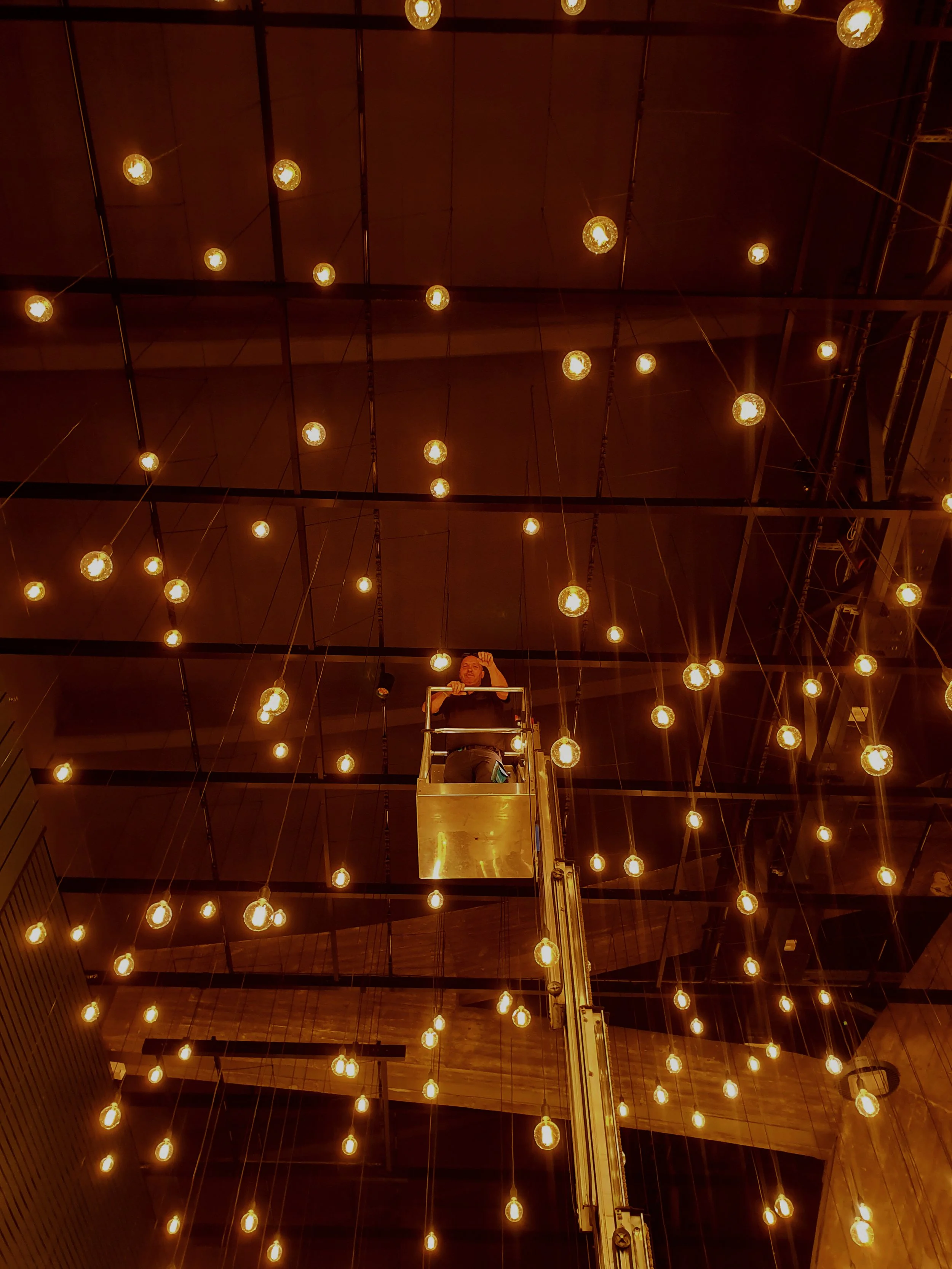
Light as Experience
Lighting scenography is about perception, rhythm, and memory. When light is carefully composed, it disappears as an object and becomes part of the experience itself. You don’t notice the lighting – you feel the space.
The strongest scenographic concepts are often the most restrained. They do not compete with architecture or dominate a room. They support it, clarify it, and allow it to unfold naturally over time. Light becomes guidance instead of instruction, atmosphere instead of decoration.
At Studio De Schutter, this is where our work begins. If you are working on a project where light should do more than meet technical requirements, if it needs to create identity, support experience, and remain adaptable over time – lighting scenography can become a powerful design tool.

We work closely with clients, planners, and designers to translate spatial ideas into lighting concepts that feel intuitive, precise, and lasting. Because when light is designed with intention, it gives spaces meaning long before words are needed.
Contact Us:
