
Lighting Concept Berlin from Private Living Spaces to Modern Work Environments
A space can function without thoughtful lighting.
But it won’t resonate.
This is exactly where the often underestimated difference lies. While materials, layouts, and furniture are usually defined early on, lighting is often considered last. As an addition. As a technical necessity. Not as a design tool.
Yet light determines how we perceive architecture.
How tall a space feels. How calm it appears. How clearly its structure can be read.
A professional lighting concept starts precisely here. Not as a decorative layer, but as an integral part of the design process. It connects daylight and artificial light, responds to different uses, creates orientation, and shapes environments that evolve throughout the day.
Or put differently:
Light is not something you add.
It is what makes spaces truly perceptible.
Three projects. Three scales. One approach.
Eisenbahnstraße in Berlin – Living Between Flexibility and Spatial Quality
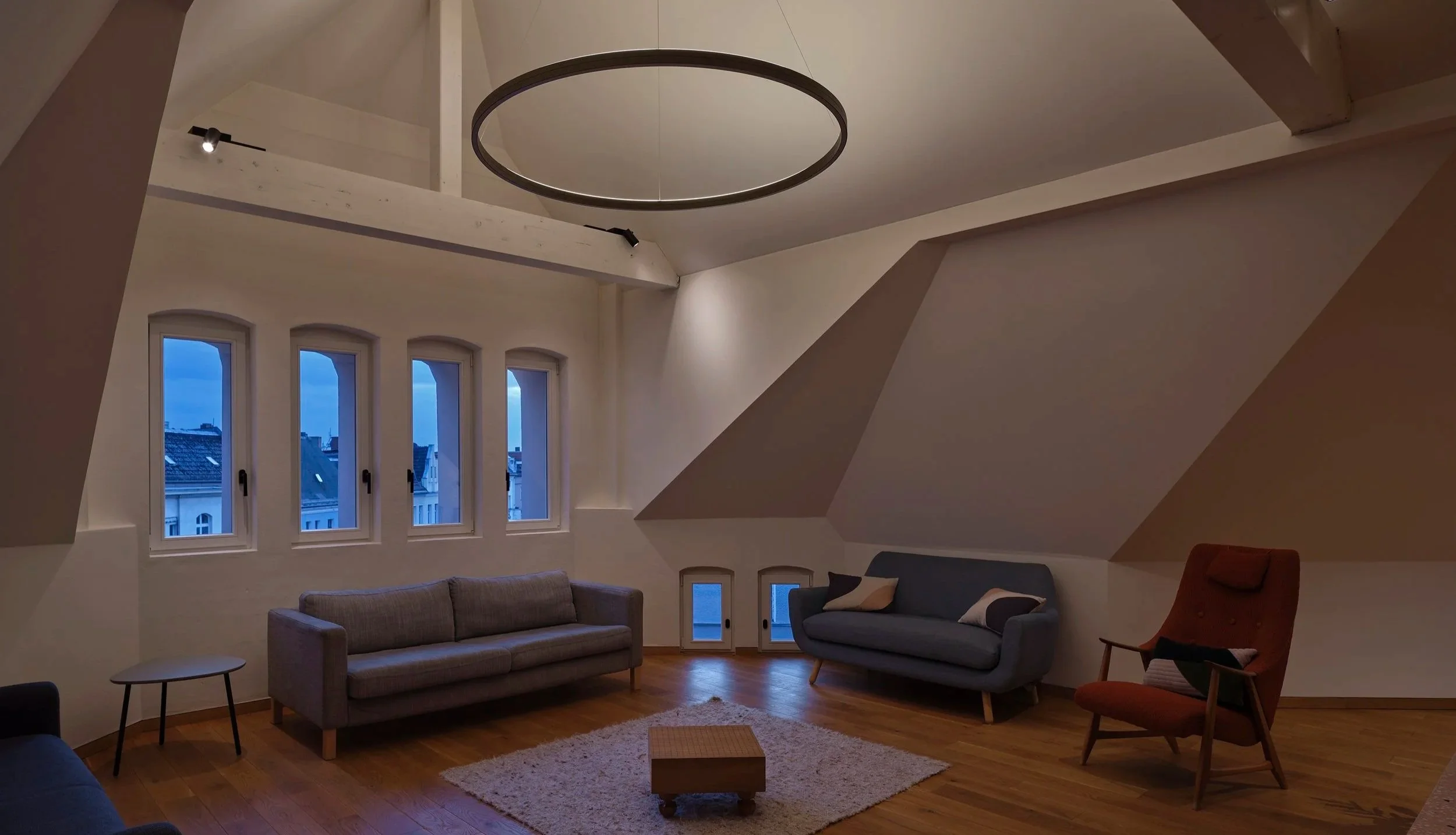
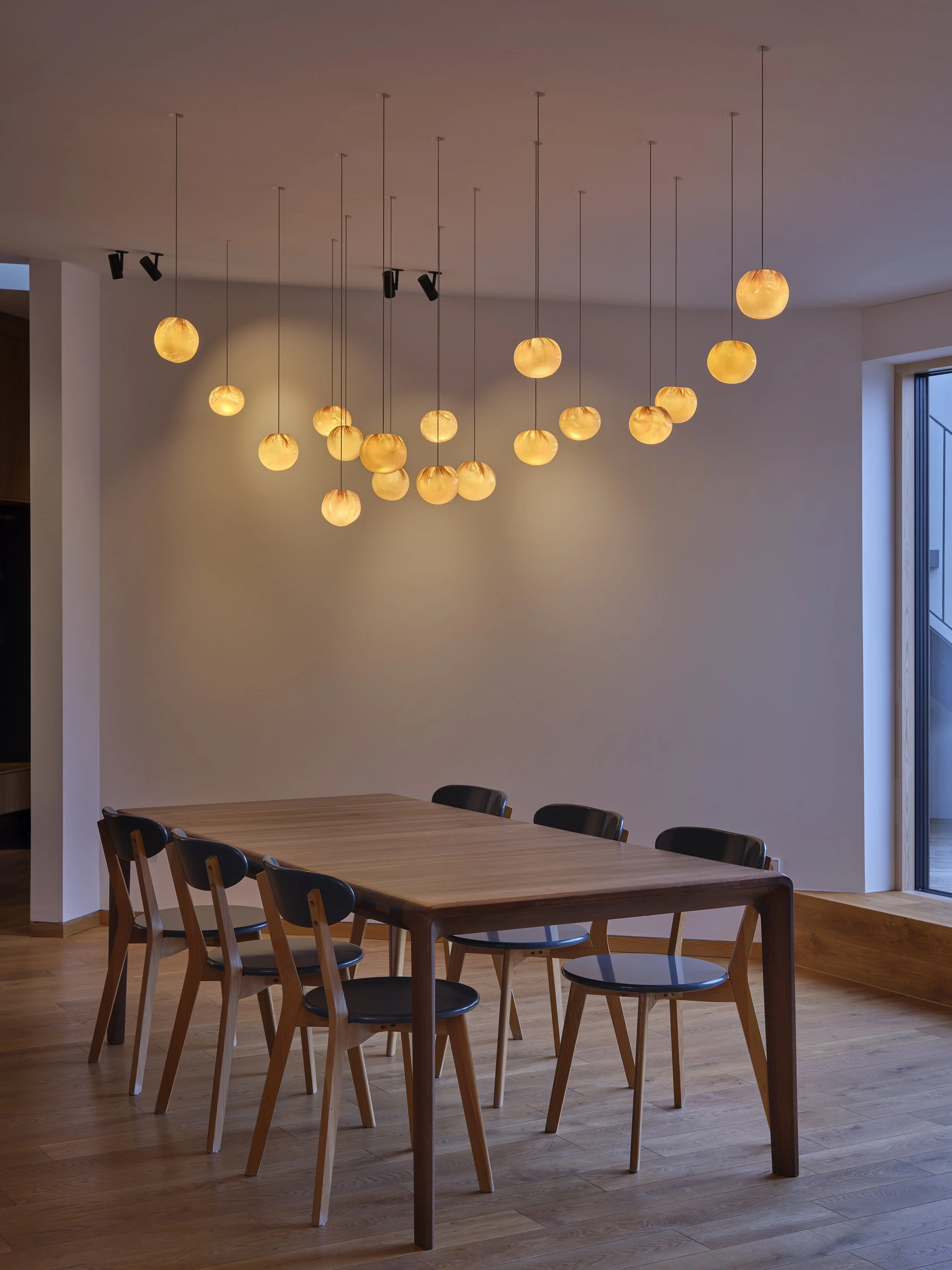
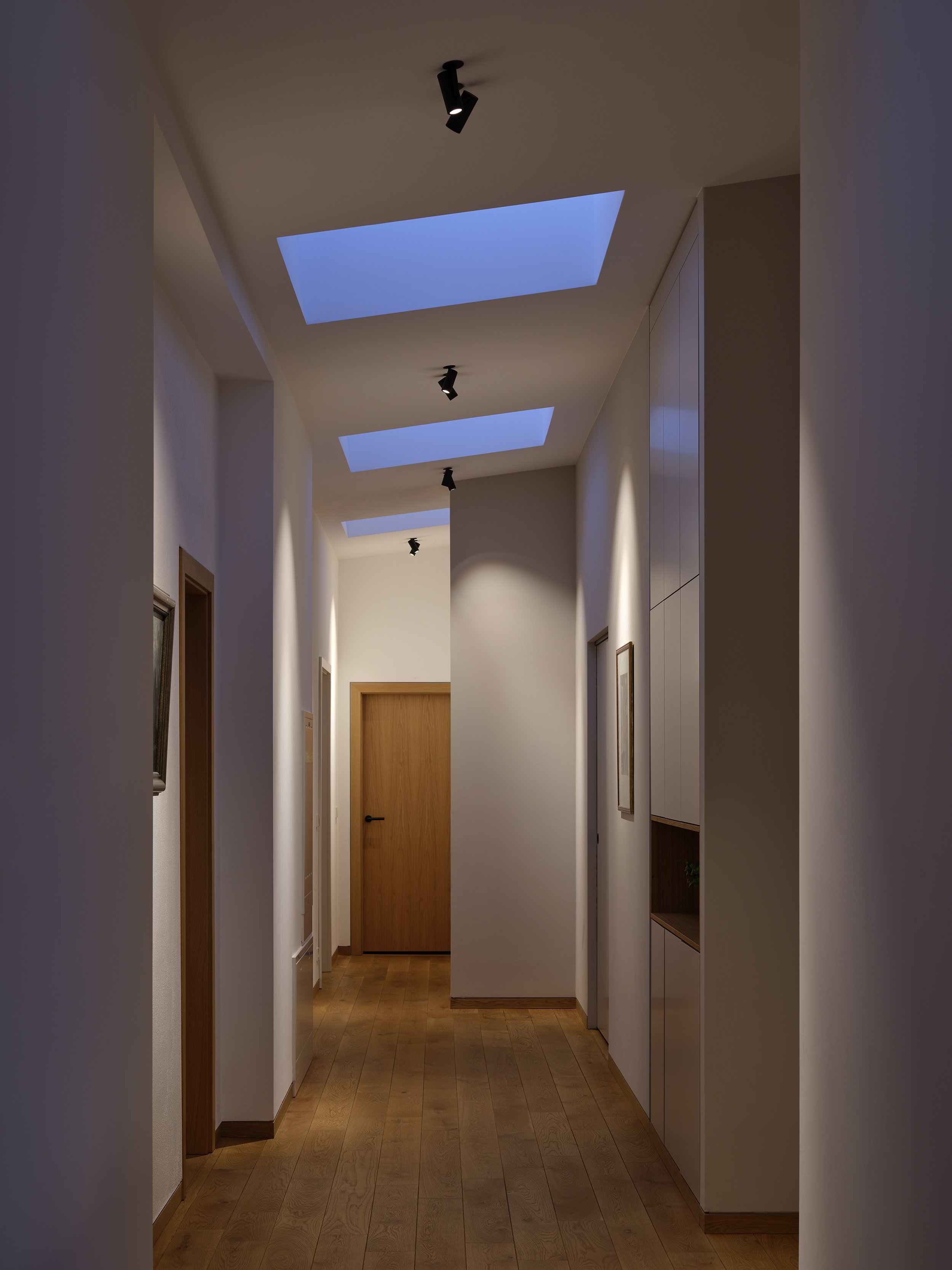
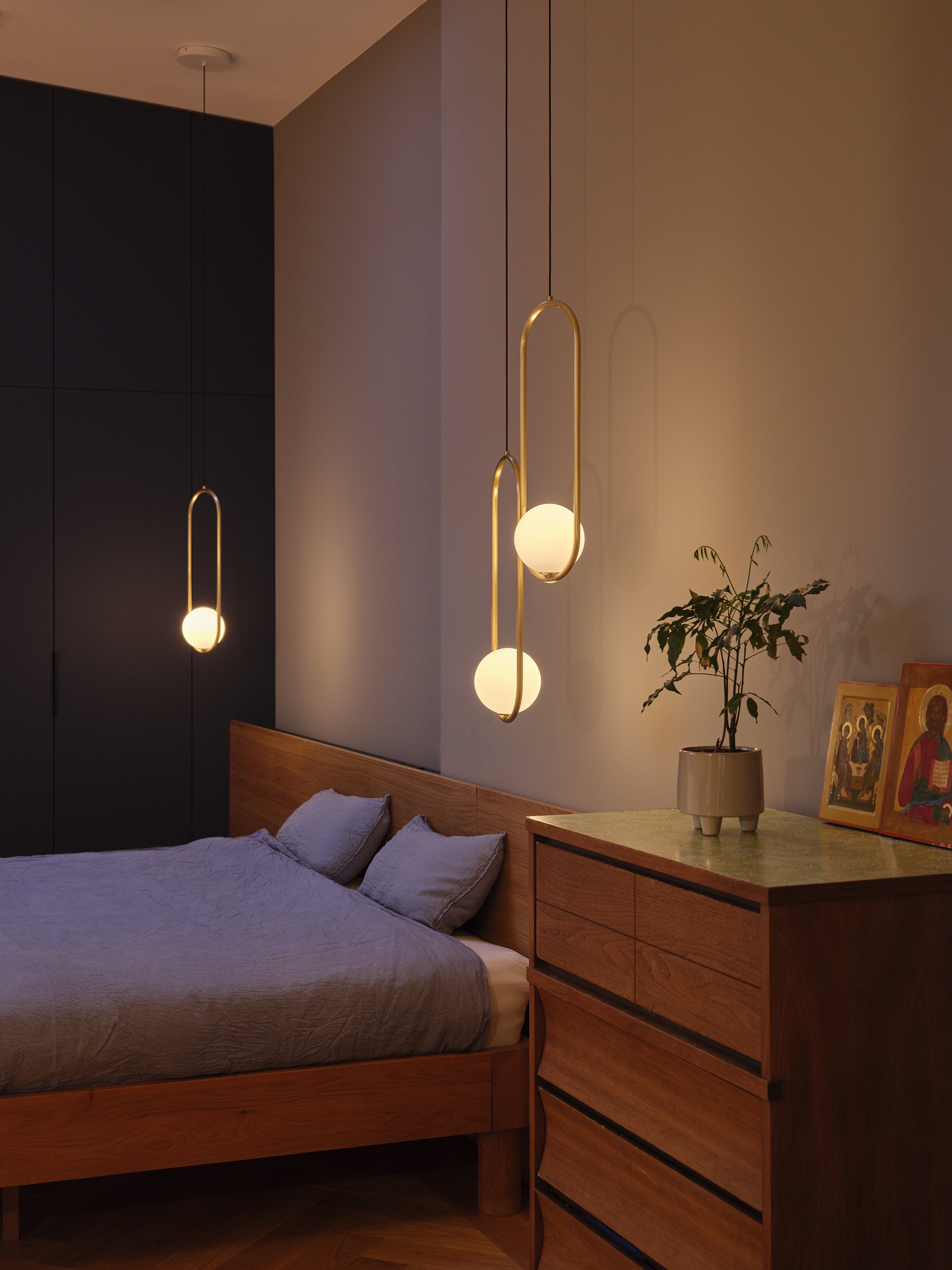
In private living spaces, it becomes especially clear how strongly light influences our daily lives. In this penthouse in Berlin, the goal was not simply to illuminate a space, but to support different situations throughout the day — from a quiet evening to larger gatherings around the dining table.
The lighting concept is based on the interplay of multiple layers, each intentionally designed to be controlled independently. Indirect lighting creates spatial depth and highlights the architecture, while targeted spotlights set accents and support specific functions. This system is complemented by decorative luminaires that not only provide light, but also act as defining design elements.
A key feature is the arrangement of mouth blown glass globes above the dining table. Each luminaire is unique, interwoven with fine copper structures that produce a warm, almost vibrant glow. The varying pendant heights allow the table to be extended flexibly without compromising the quality of light.
What defines this project:
– multiple layers of light that can be individually controlled
– a combination of functional and decorative lighting
– flexible use of space through adaptable lighting scenarios
– deliberate integration of light into the architectural structure
The result is not a static space, but a home that evolves.
With the moment. With the people. With the way it is used.
The Loop – Work Environments as a Dynamic System
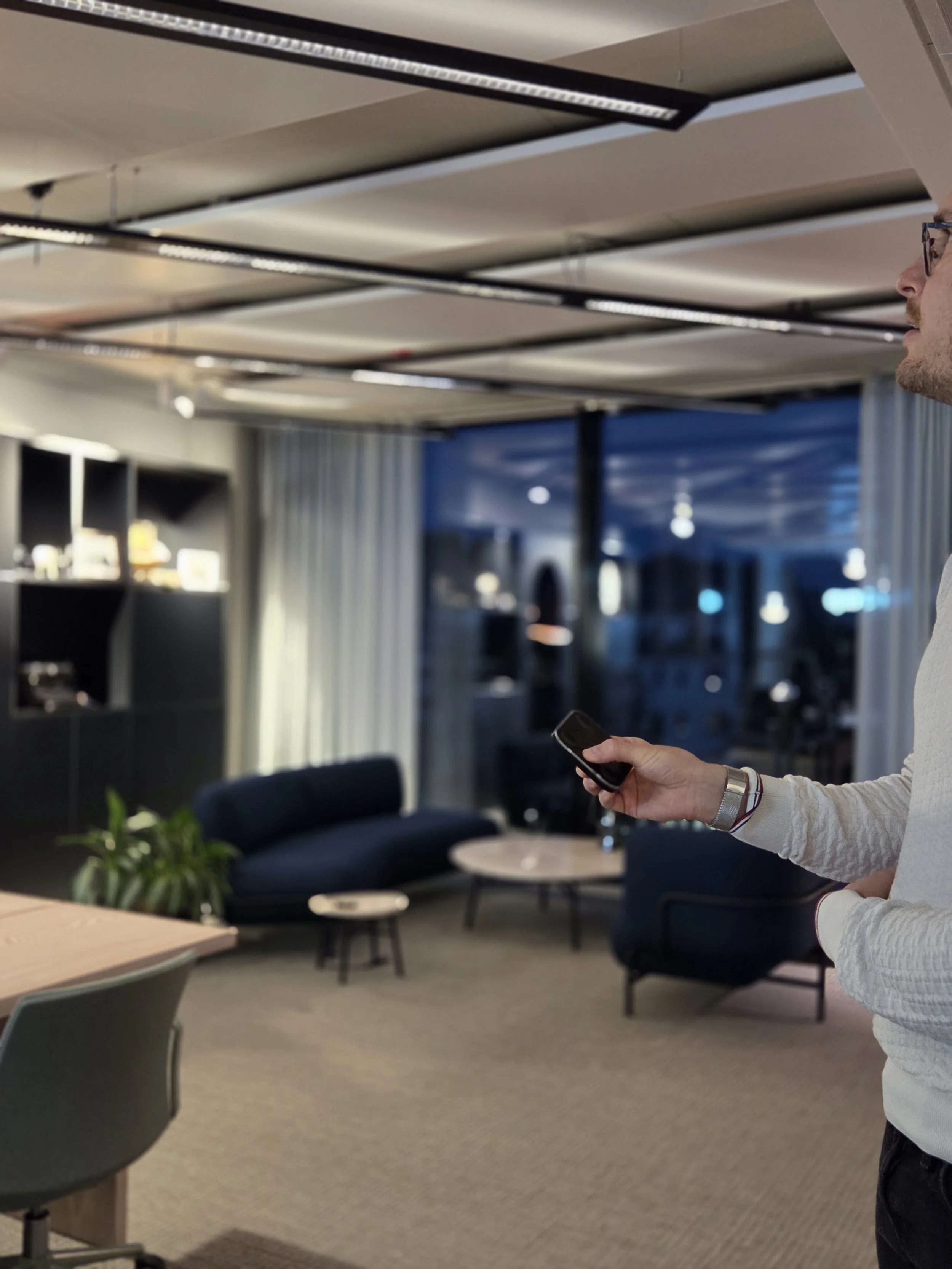
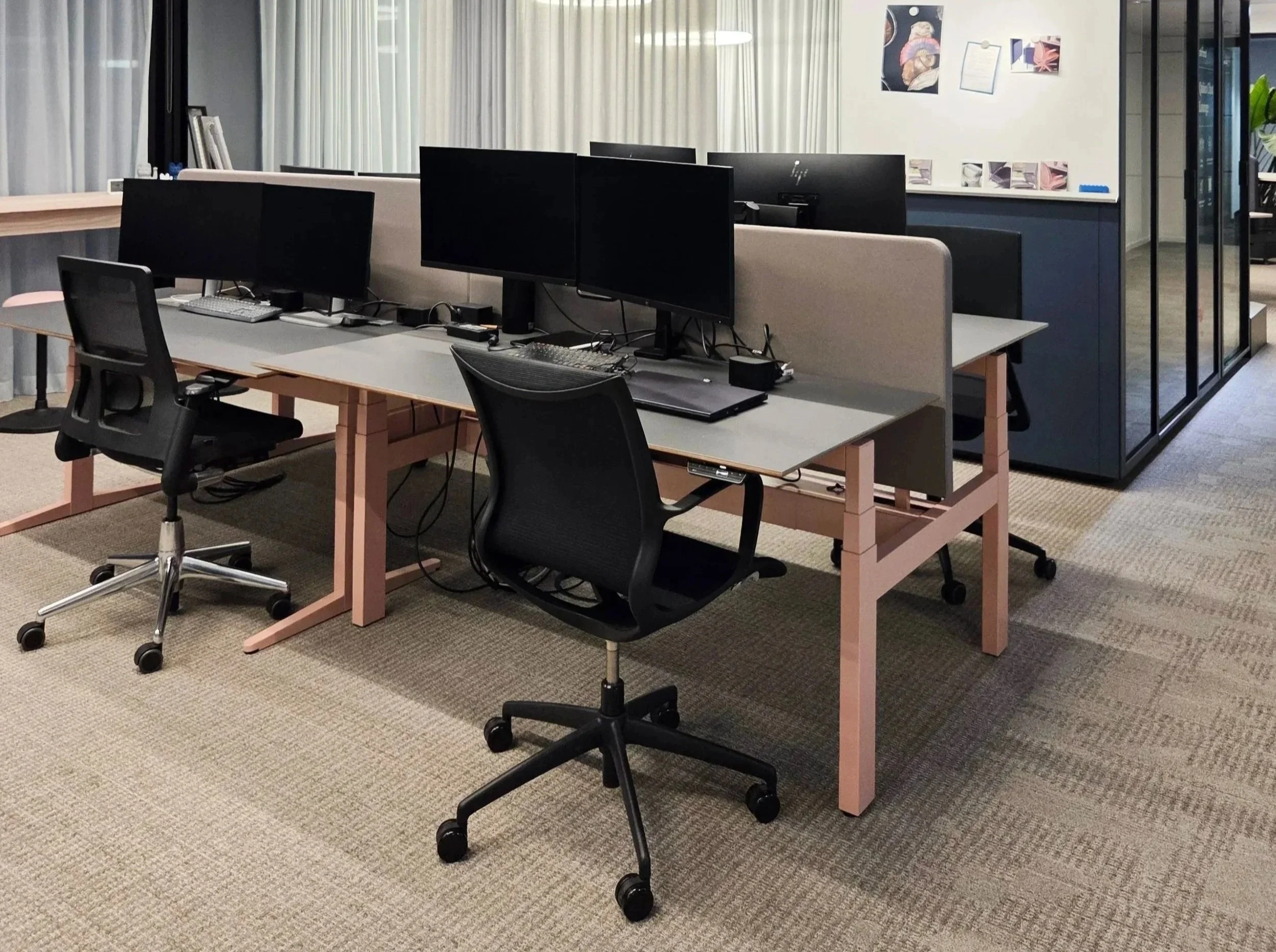
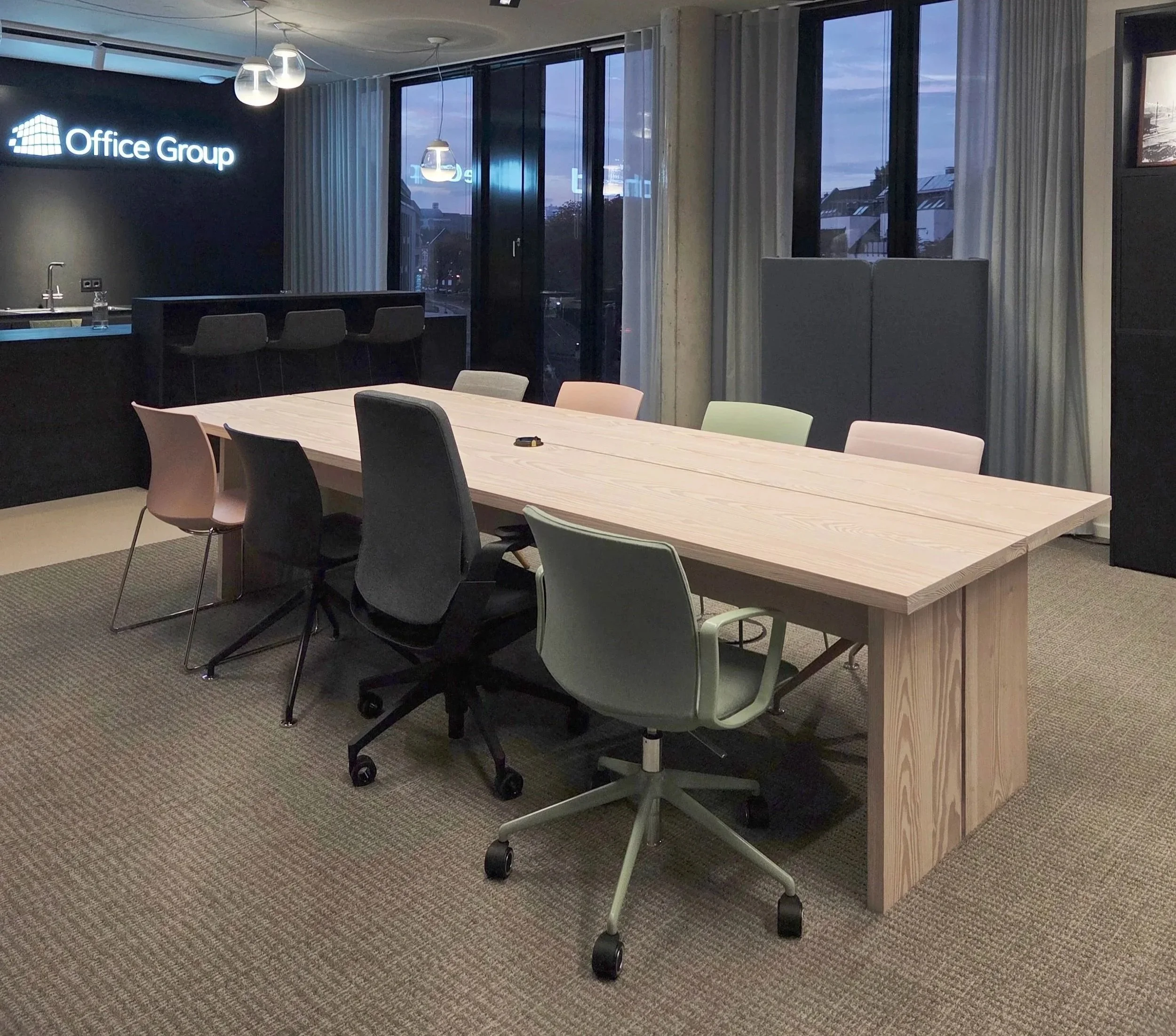
Modern work environments place new demands on lighting. Focus, communication, and retreat often happen within the same space — and a lighting concept needs to respond to exactly that.
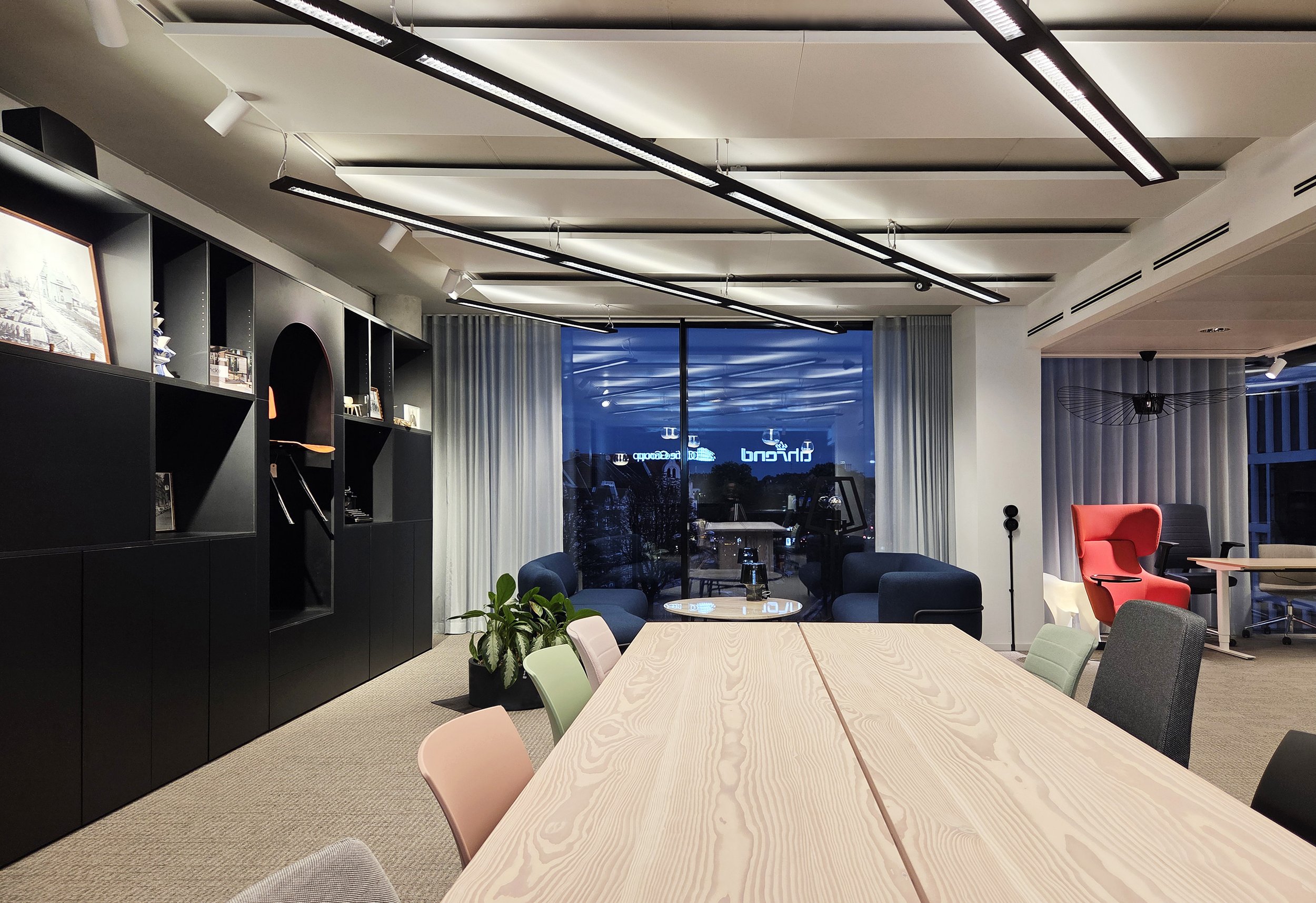
In the project The Loop, light was not conceived as a static solution, but as a dynamic system that clearly defines different zones while remaining flexible in use. Linear lighting structures guide movement through the space, create orientation, and give the architecture a clear visual order.
At the same time, the lighting adapts to different uses. Work areas receive uniform, glare free illumination, while meeting zones or informal areas are intentionally designed with softer, more relaxed lighting qualities. This differentiation is not random, but carefully planned and controllable.
A key aspect is adaptability. Light changes throughout the day, responds to different scenarios, and supports various ways of working. The result is not a rigid lighting setup, but an infrastructure that evolves יחד with the needs of the space.
Core principles:
– clear lines of light for spatial orientation
– zoned lighting for different uses
– glare free task lighting combined with softer areas
– flexible scenarios for changing requirements
Light becomes the invisible moderator of the space.
It structures without dominating.
And creates an environment where working feels intuitive.
Coreum Hotel – Lighting as a Sustainable System
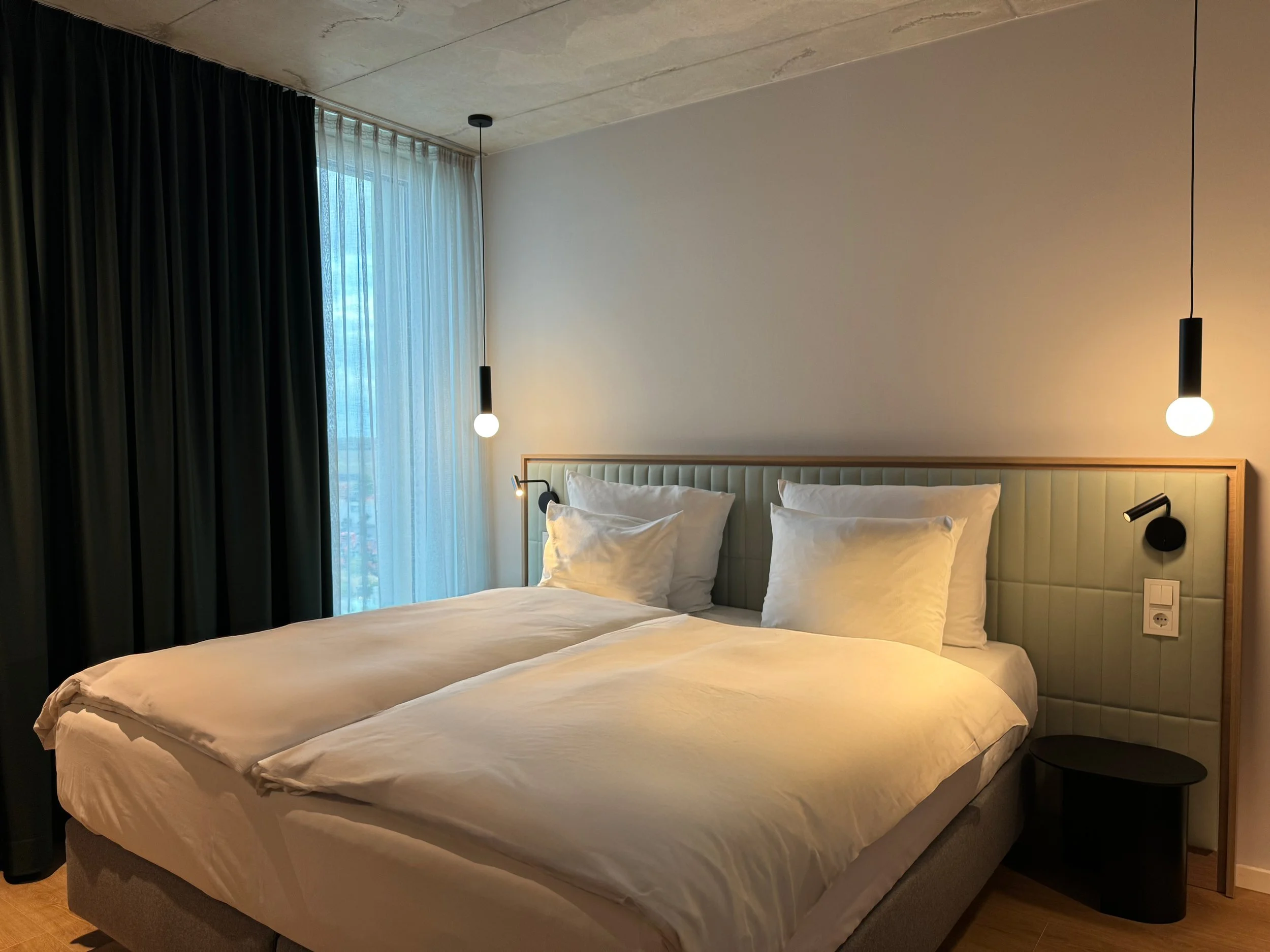
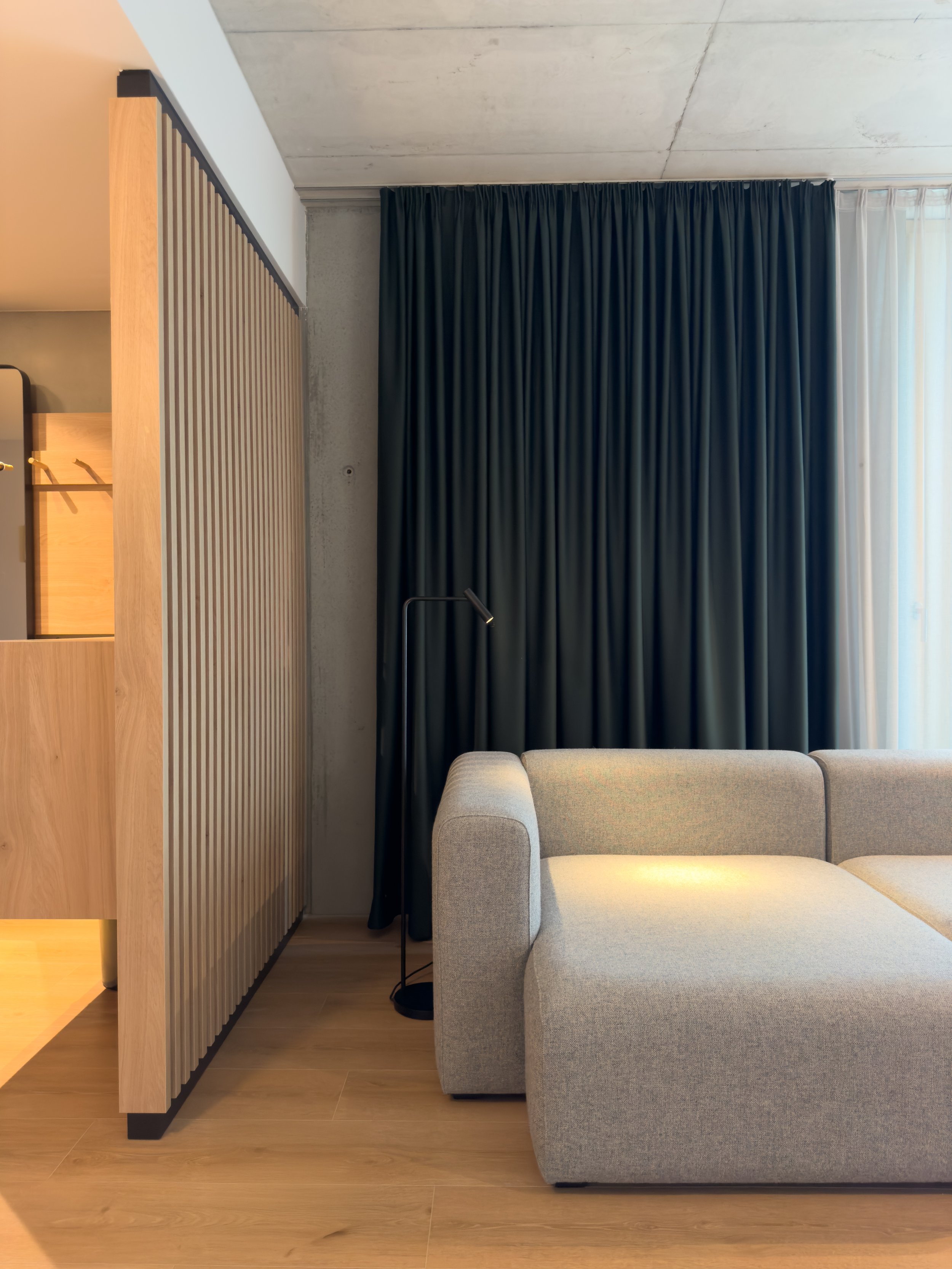
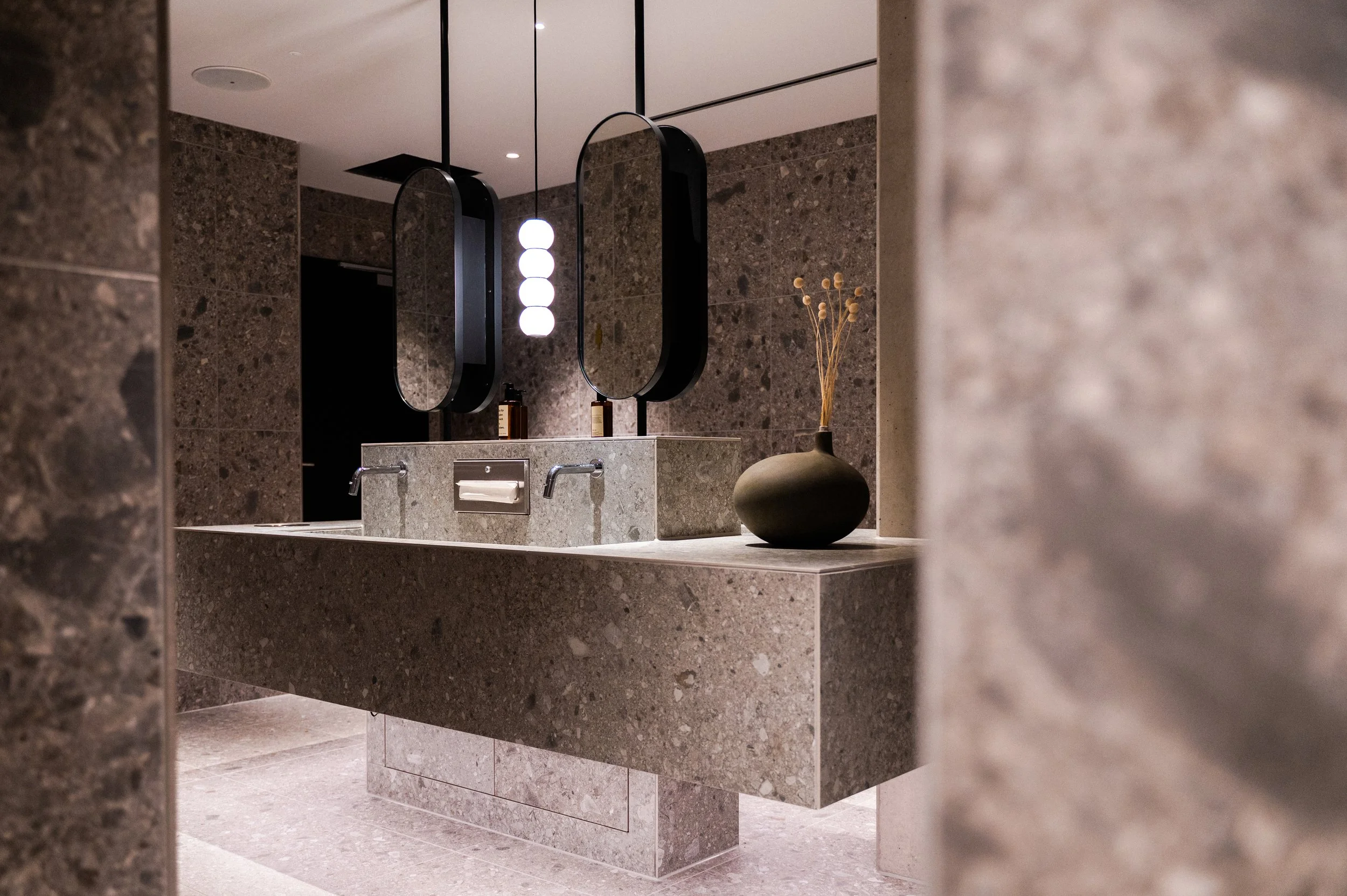
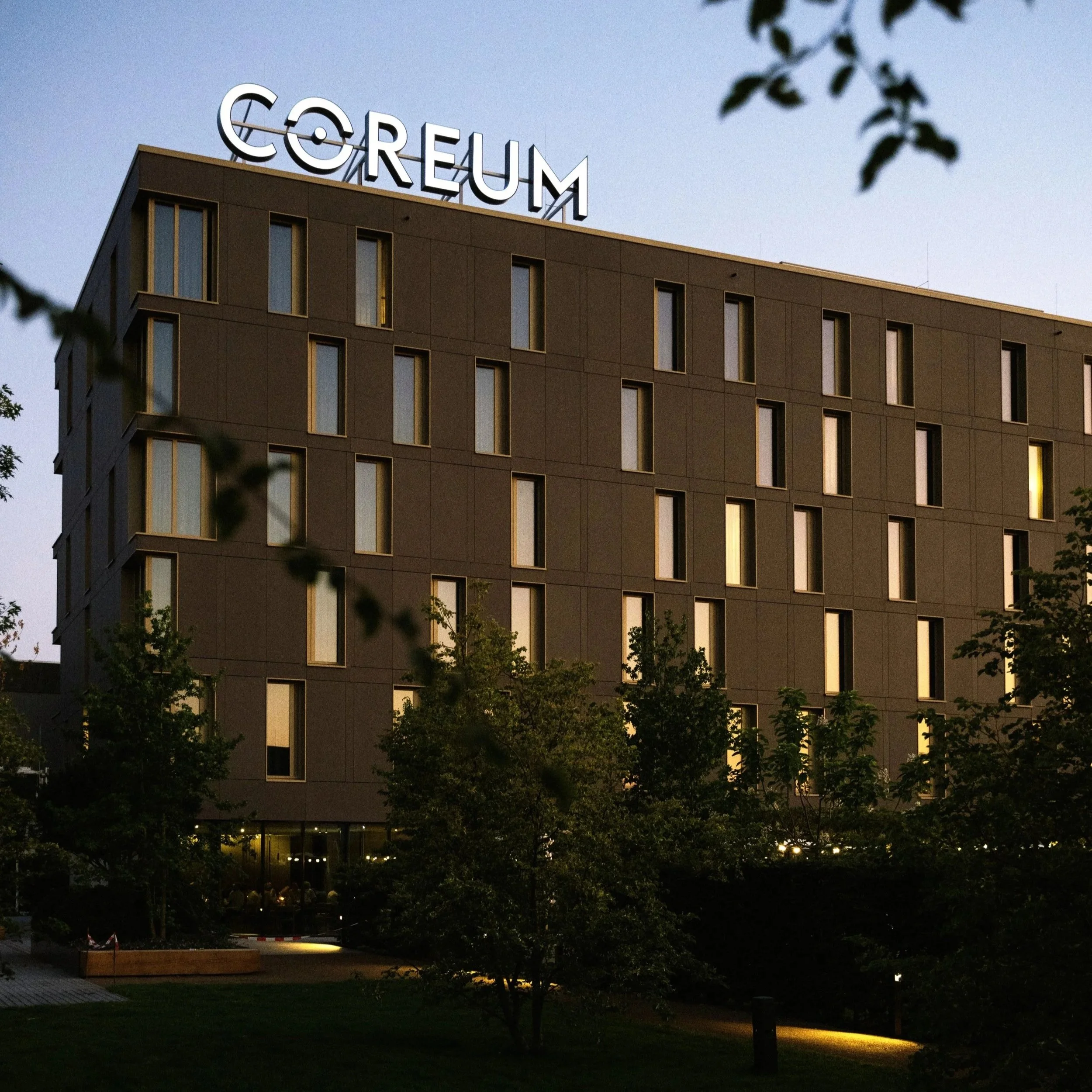
In the hospitality sector, lighting is not only about visual quality, but also about longevity and operation. It needs to do more than look good — it has to perform reliably over time, remain efficient, easy to maintain, and adaptable.
At the Coreum Hotel, this requirement became the starting point of the entire lighting concept. Instead of static solutions, a modular system was developed that can respond to different uses while being designed with sustainability in mind.
The selected luminaires were chosen deliberately to be easy to replace, reposition, or upgrade. This not only reduces resource consumption over time, but also allows the hotel to react flexibly to change without having to rethink the entire system.
The resulting lighting creates a calm and refined spatial quality that supports the architecture without dominating it. Public areas, guest rooms, and transition zones are carefully coordinated to form a coherent overall experience.
The approach behind the project:
– modular lighting systems for long term flexibility
– durable and maintenance friendly components
– sustainability across the entire life cycle
– consistent lighting quality throughout all areas
Light provides orientation, clarity, and quality.
And always remains part of a larger whole.
Why Studio De Schutter
A good lighting concept is not defined by how noticeable it is.
But by how natural it feels.
Studio De Schutter follows exactly this approach. Light is never treated in isolation, but always developed in relation to architecture, use, and spatial quality. This means that technical precision and design quality go hand in hand — from the first idea through to the final implementation.
The projects demonstrate that there is never a single standardized solution, but always a precise response to the specific space. Depending on the context, different aspects take priority — sometimes flexibility, sometimes sustainability, sometimes the effect created through the interaction of use and architecture.
What truly matters is that lighting is considered from the very beginning, not introduced only after all other decisions have already been made. It is in this early stage that light unfolds its full potential and becomes an integral part of the overall concept, rather than a later addition.
Contact Us:
