

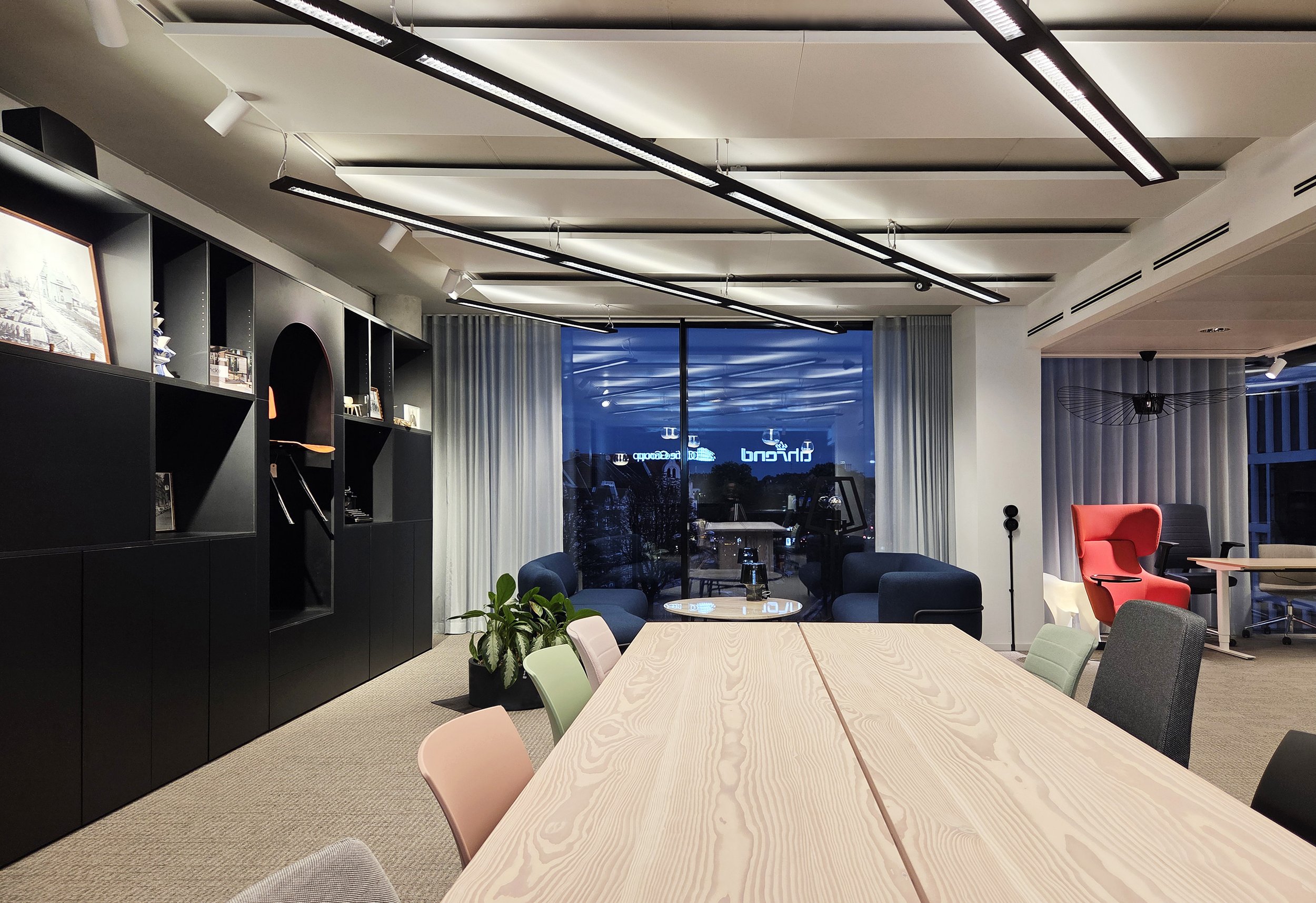
Pictures: The Loop Office designed by Studio de Schutter
Conference rooms are places of discussion, concentration, and decision-making.
This is where strategies emerge. Where ideas are negotiated. Where different perspectives meet and develop into shared solutions.
Light influences far more than one might initially think.
It determines whether people remain alert. Whether faces are clearly visible. Whether presentations are easy to read.
It can support conversations, guide attention, and noticeably shape the atmosphere of a room.
Many conference rooms are technically equipped, but not truly designed.
Light Creates Focus
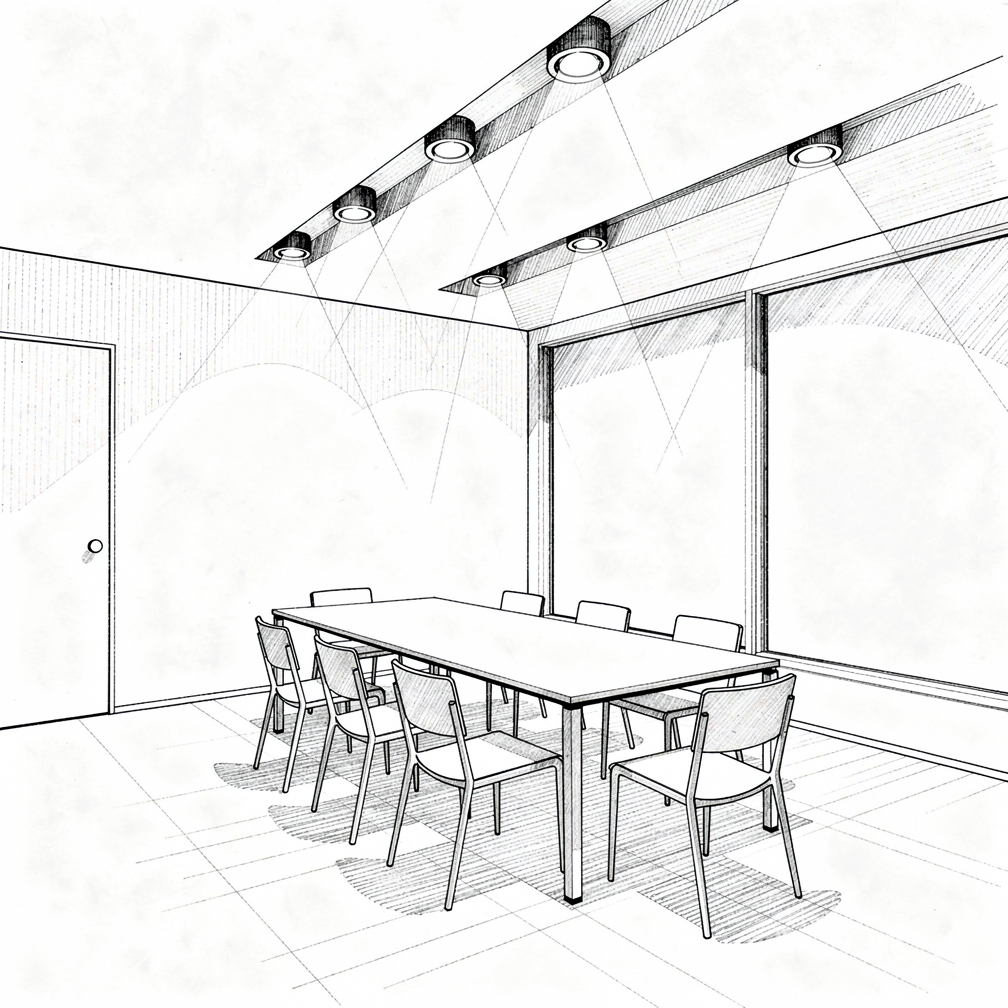
Good lighting helps organize thoughts and guide conversations clearly.
A room with poor lighting quickly feels tiring and uncomfortable.
Glare or harsh contrasts become distracting. Too little light reduces attention.
A well-designed conference room works differently.
It feels calm.
Clear.
Focused.
Light creates a visual structure that supports communication.
Considering Different Meeting Situations
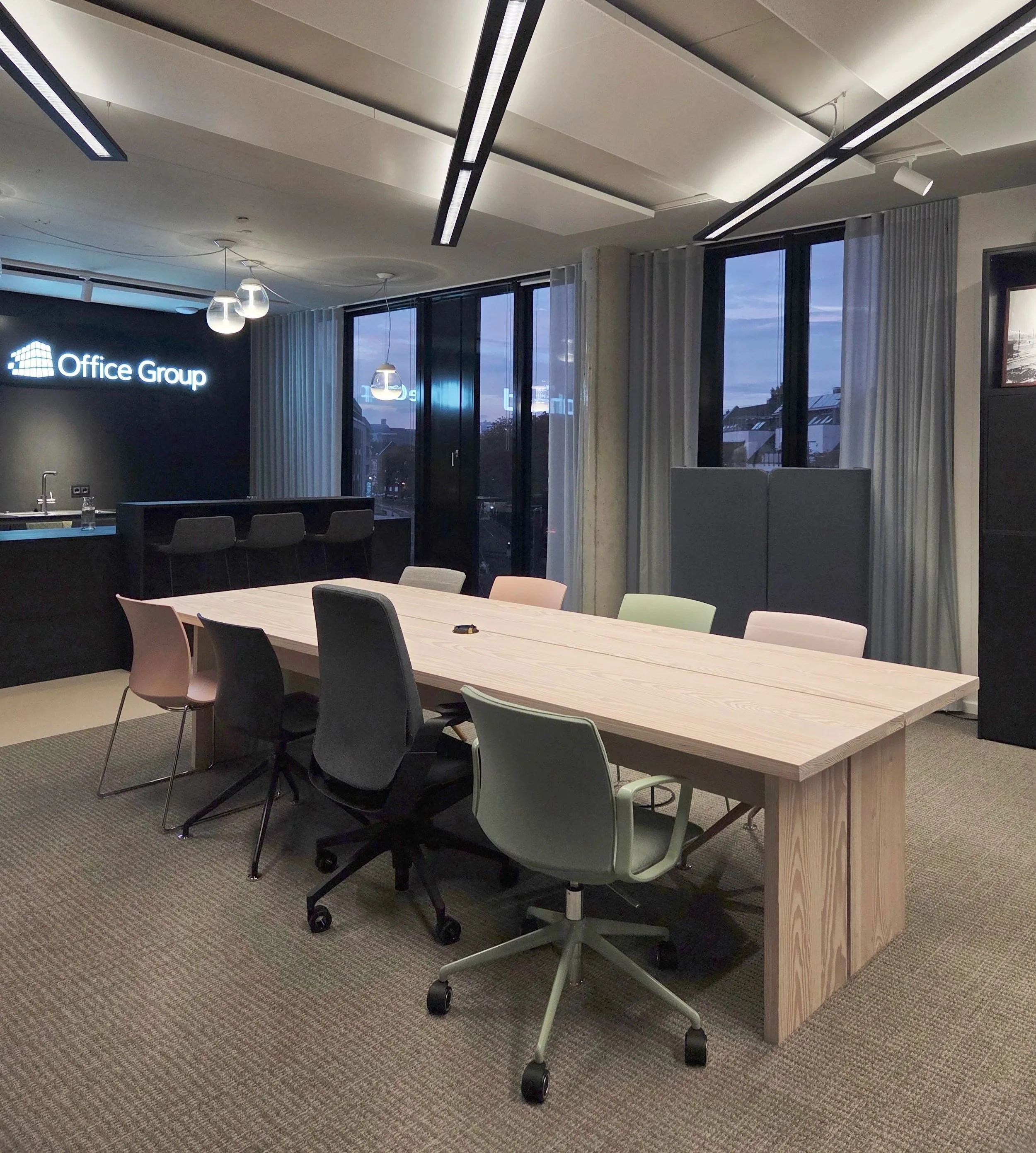
A conference room is rarely used for just one activity. In practice, different situations alternate, each with its own lighting requirements.
A classic team meeting usually benefits from clear, activating lighting that supports concentration and keeps conversations lively. Presentations, on the other hand, often work better with reduced brightness in the room so that content on screens or projection surfaces remains clearly visible and attention is directed toward the speaker. Videoconferences require evenly lit faces so that participants appear natural on camera and facial expressions and reactions remain easy to recognize.
Workshops or creative working phases also place their own demands on lighting. In these situations, bright, neutral light helps create energy and supports an open atmosphere for discussion.
Flexibility therefore plays a central role.
Modern conference rooms often use controllable lighting systems that allow different lighting scenes and can quickly adapt to changing requirements:
• discussion or workshop
• presentation or lecture
• videoconference
• informal conversations or short meetings
With only a few adjustments, the room can adapt to different needs.
This not only improves visual conditions but also supports the dynamic of each conversation setting.
Making Faces Visible
Communication depends on eye contact. In conference rooms, it is therefore essential that faces can be perceived clearly and naturally. Strong shadows or highly focused lighting can distort facial expressions and unconsciously make conversations more difficult.
Balanced lighting ensures that people around the table are evenly illuminated. This preserves nonverbal communication and allows participants to appear open, present, and attentive.
Even small differences in lighting can have a significant effect here. When faces are well lit, the atmosphere of the conversation immediately becomes more pleasant. People feel more acknowledged, and discussions tend to flow more naturally. At the same time, good lighting reduces misunderstandings because reactions, gaze direction, and gestures remain clearly visible.
Important aspects include:
• even illumination along the conference table
• indirect lighting components for softer shadows
• balanced brightness between table and surrounding space
• good color rendering for natural skin tones
This aspect becomes even more important during video conferences. Cameras react sensitively to uneven lighting or strong contrasts. Calm, uniform illumination ensures that people appear clear and professional on screen.
In modern working environments, where hybrid meetings are becoming increasingly common, good facial lighting is therefore not only a matter of aesthetics but an essential part of effective communication.
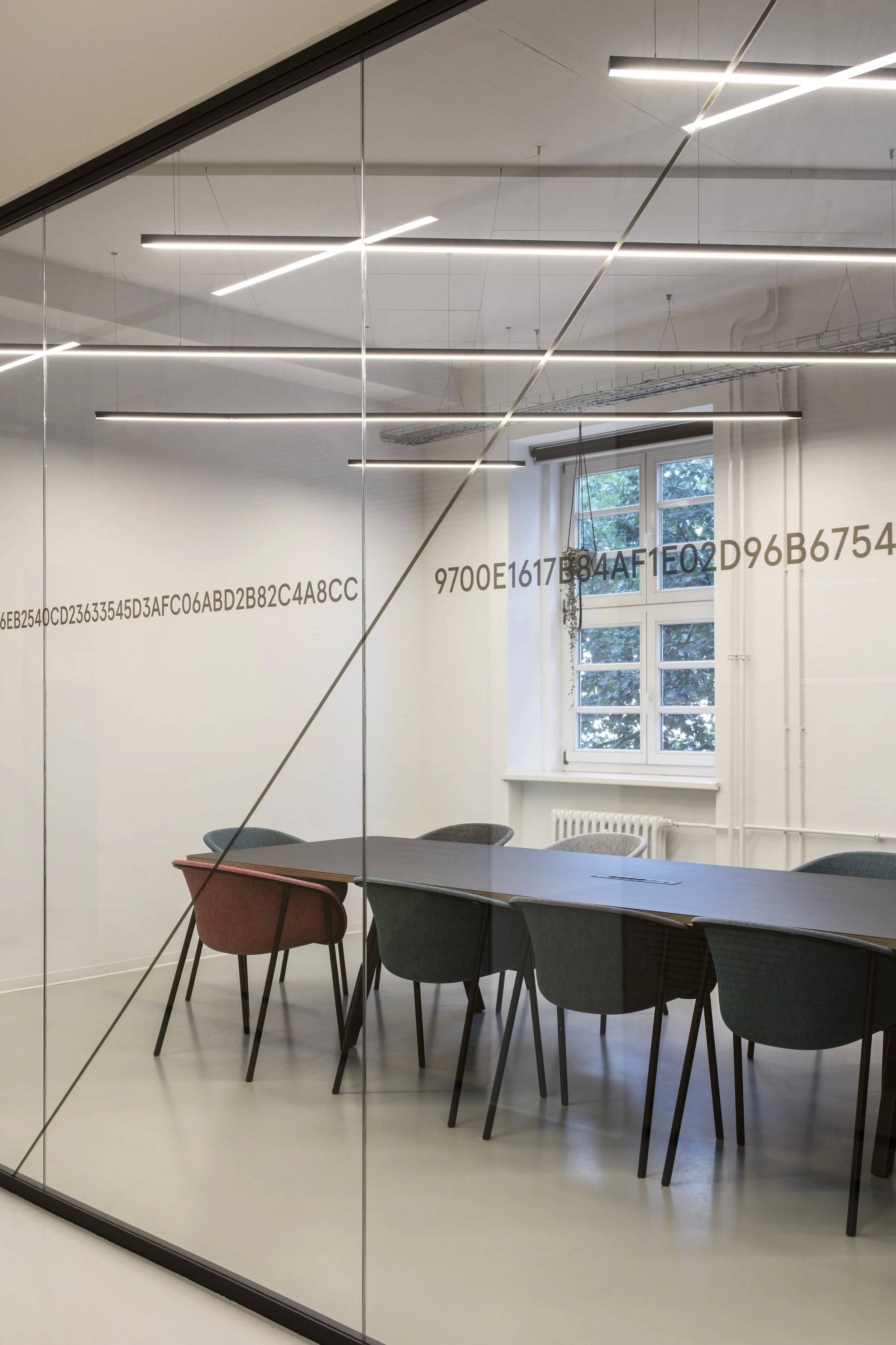
Emphasizing Architecture and Spatial Structure
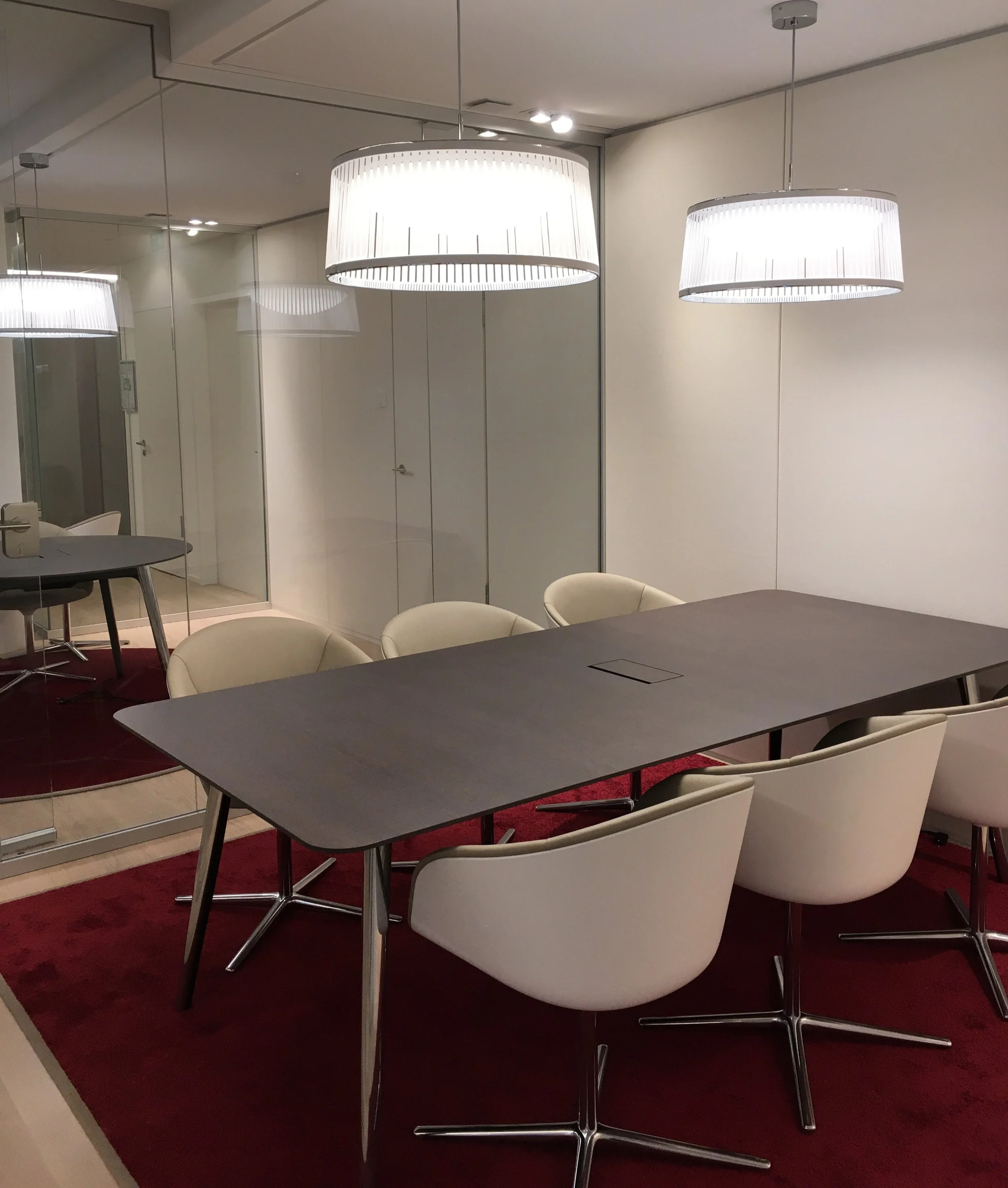
Conference rooms are often part of representative office spaces. They are used not only for internal meetings but also for conversations with partners, clients, or guests. Lighting can play a decisive role in making the architecture visible and giving the room a clear identity.
In modern offices especially, the impression of a space is important. A well-designed conference room conveys professionalism, structure, and attention to detail. Light supports this effect by highlighting materials, lines, and proportions and by giving the room a clear visual order.
Instead of illuminating only the table, it is worth including walls and ceilings in the lighting concept as well. This makes the space feel more open, deeper, and noticeably more refined. At the same time, a spatial balance emerges in which not only the center of the room but the entire architecture becomes visible.
Materials such as wood, concrete, glass, or textile wall surfaces can also stand out more strongly through targeted lighting accents. The room is therefore not only lit functionally but deliberately staged. Architectural lines can be traced with light, ceiling heights can be emphasized, and certain areas of the space can be given a clear hierarchy.
Typical design elements include:
• indirect lighting for wall surfaces
• light lines along architectural axes
• accent lighting for materials or artwork
• structuring pendant lights above the table
The result is a space that is not only functional but also atmospheric. Light becomes a design element that connects architecture, spatial structure, and use while emphasizing the character of the room.
“Good light does not only show a space. It explains it.”
Light as Part of the Room’s Identity
A conference room truly works well when lighting is not understood merely as a technical necessity, but as an integral part of the spatial design. Light structures the room, supports communication, and creates an atmosphere in which people can concentrate on their work while also enjoying coming together.

At Studio De Schutter, we therefore always understand lighting design as a connection between architecture, function, and perception. Especially in conference rooms, the goal is to create an environment that fulfills technical requirements while also developing a clear spatial identity.
Contact Us:
