

Lighting design for restaurants
A restaurant is judged long before the first plate arrives.
People notice the temperature of a room before they notice the menu. They feel whether a table is intimate or exposed. They see whether food looks alive, whether faces look calm, whether the bar has tension, whether the room gives them a reason to stay.
That is where lighting design for restaurants begins. Not with decorative fixtures. Not with brightness. Not with a catalogue of luminaires. But with the question: what should this place do to people?
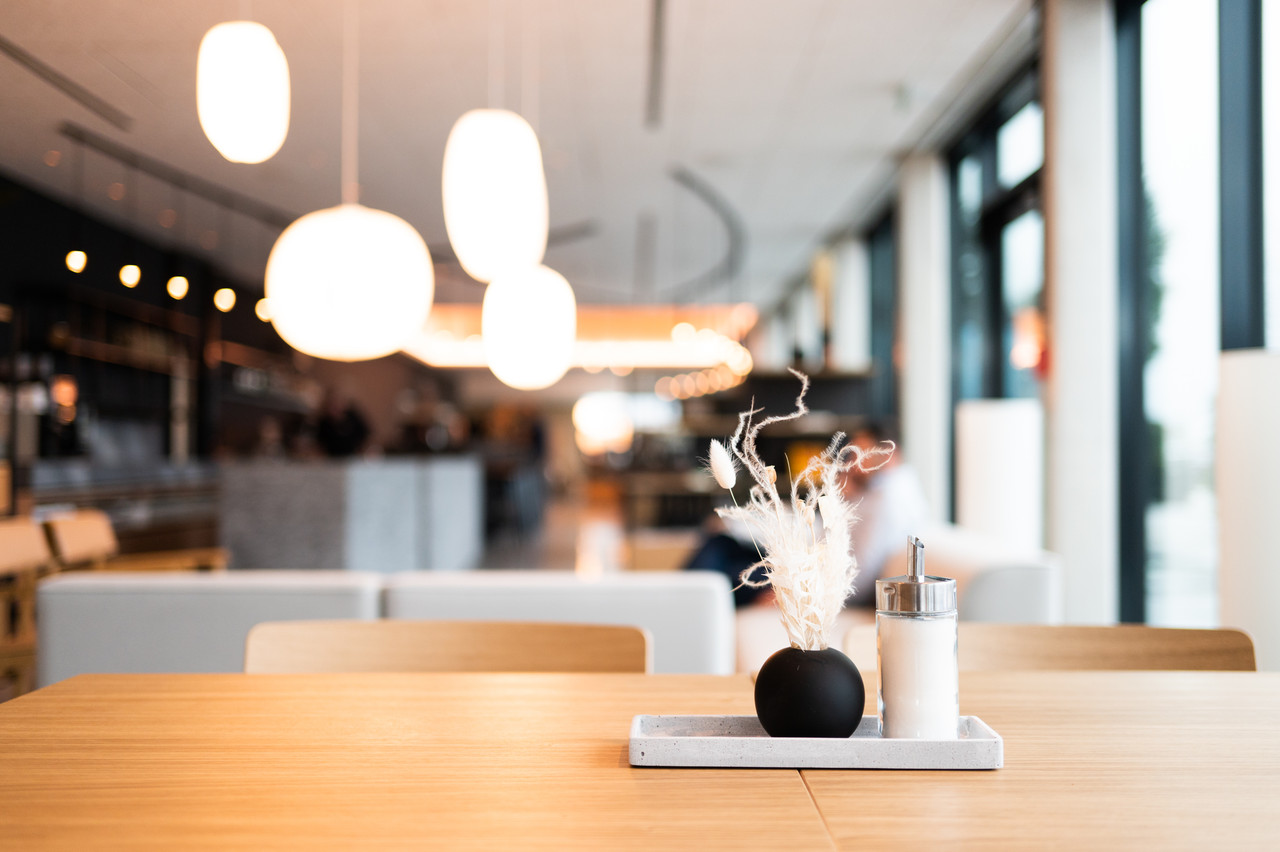
Too bright, and the evening loses intimacy. Too dark, and the food loses precision. Too decorative, and the concept becomes a stage set.
A guest does not separate lighting from hospitality. For them, the room either feels right or it does not.
The table must flatter the food. The circulation must feel intuitive. The bar may need more contrast. The breakfast area may need freshness in the morning and softness in the evening.
A restaurant often works across many states: breakfast, lunch, dinner, private events, cleaning, photography, seasonal changes. Good lighting design gives each of these moments its own setting.
Not as a gimmick.
As a quiet operational tool.
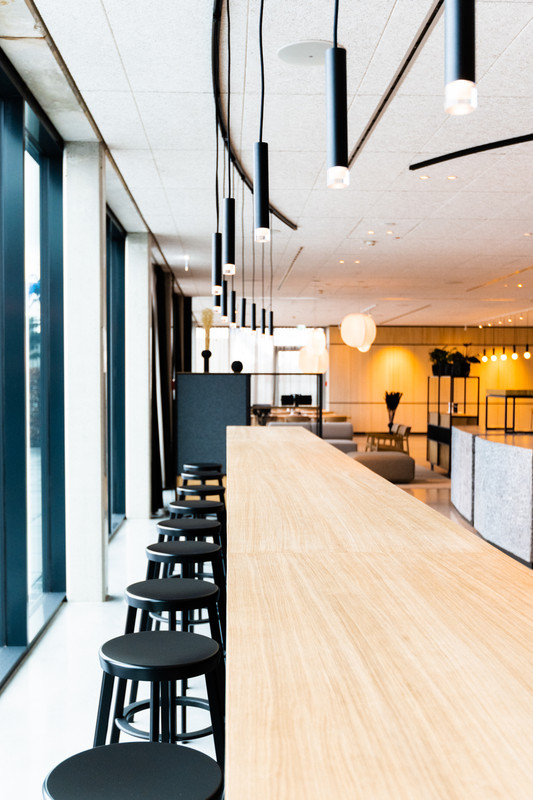
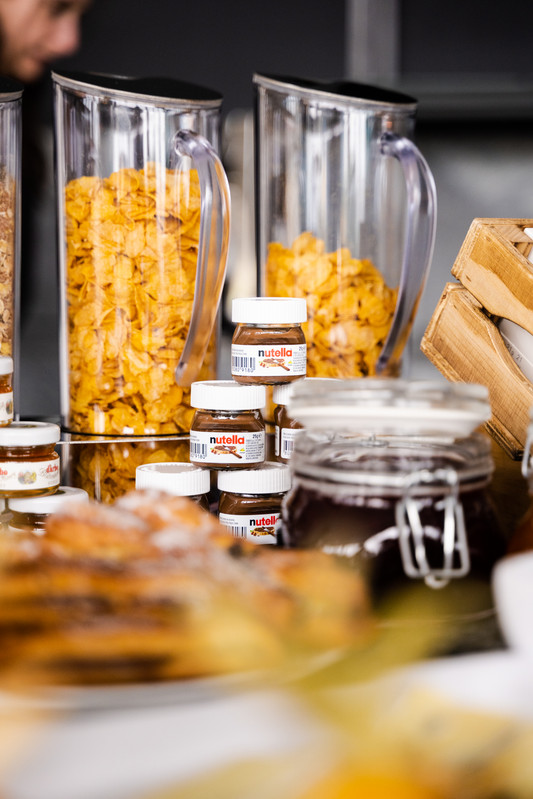
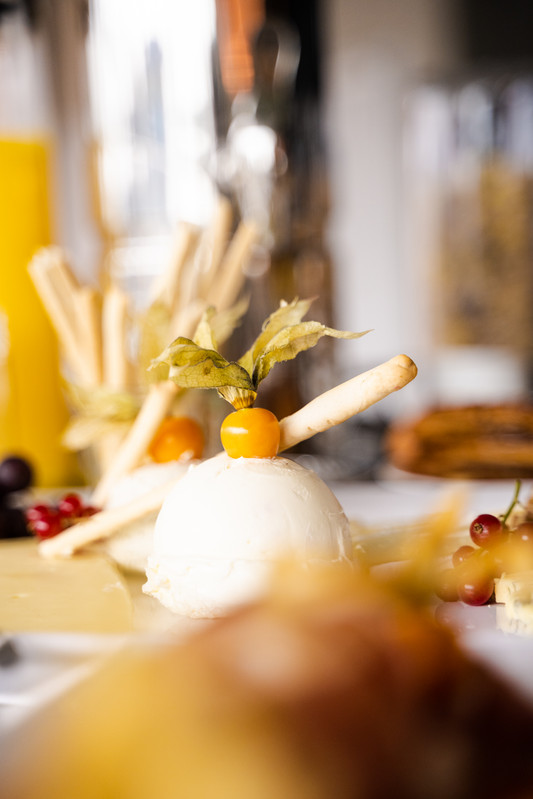
At COREUM Hotel, the lighting does not try to dominate the architecture. It structures it.
The breakfast area needs a different kind of intelligence than a fine dining room. It has to feel open, fresh and legible in the morning. But it should still avoid the flat, exposed feeling that many hotel restaurants suffer from.
The challenge is balance. Enough light for orientation. Enough contrast for depth. Enough warmth for hospitality. Enough restraint to let materials, food and guests remain in the foreground.
This is especially important for hotels, cafés, bars and hybrid hospitality spaces. The room has to work commercially. It has to photograph well. It has to feel good in real life. And it has to remain flexible without becoming anonymous.
Light decides whether a room feels generous, intimate, sharp, soft, open or protected.
The wrong spectrum can make dishes look tired. The right light gives colour, texture and freshness.
Scenes, zones and controls help the team shift between breakfast, service, events and closing.
They usually do not want a theoretical article. They want to know whether a lighting designer can make their restaurant feel better, work better and look more valuable.
They may be planning a new restaurant. Reworking an existing space. Opening a hotel dining area. Building a bar. Preparing a flagship hospitality concept.
And often, they already sense the problem:
- the room feels too flat
- the tables are not intimate enough
- the bar lacks visual pull
- the food does not look as good as it should
- the atmosphere changes badly throughout the day
- the technical lighting and decorative lighting do not speak the same language
Professional restaurant lighting design solves these problems before they become expensive corrections on site.
A collaboration with Studio De Schutter makes sense when light is not treated as a final layer, but as part of the spatial concept.
Early in the planning process. Before ceilings are closed. Before decorative fixtures are ordered. Before the electrical plan becomes fixed.
Because the best restaurant lighting is not added later.
It is built into the logic of the room.
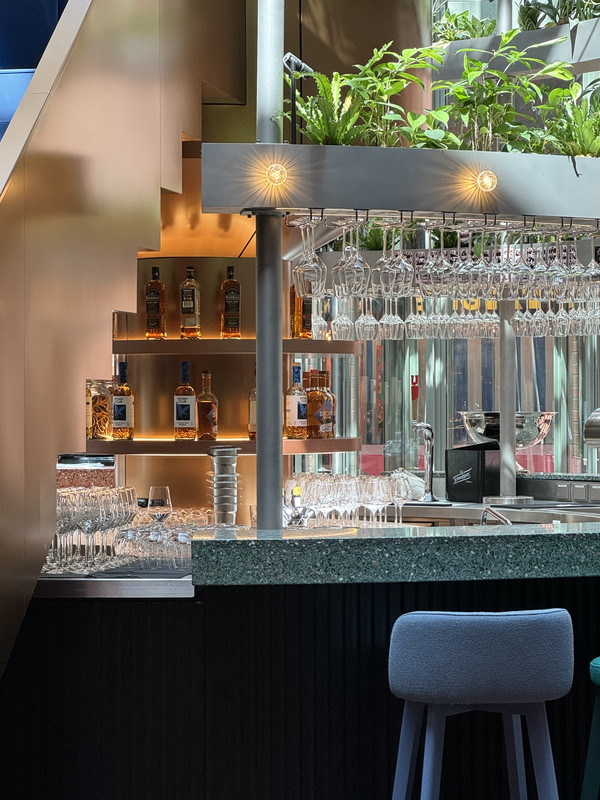
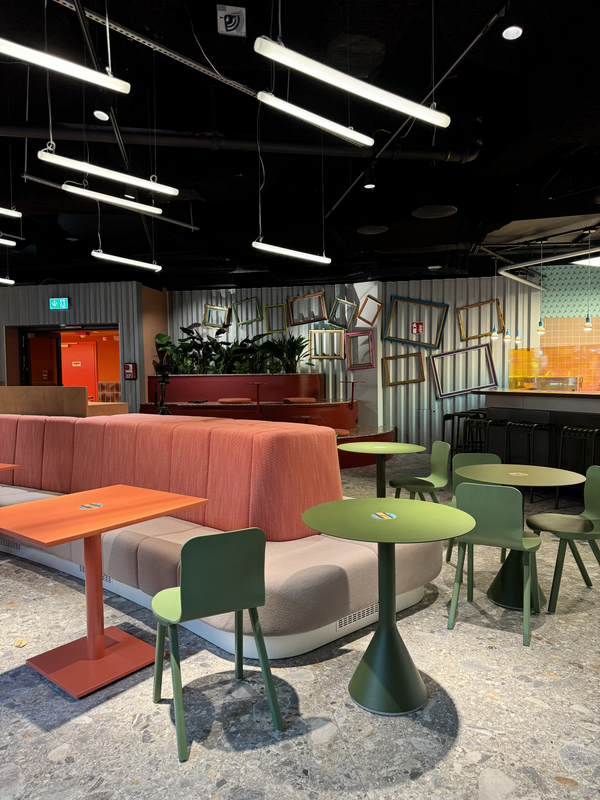
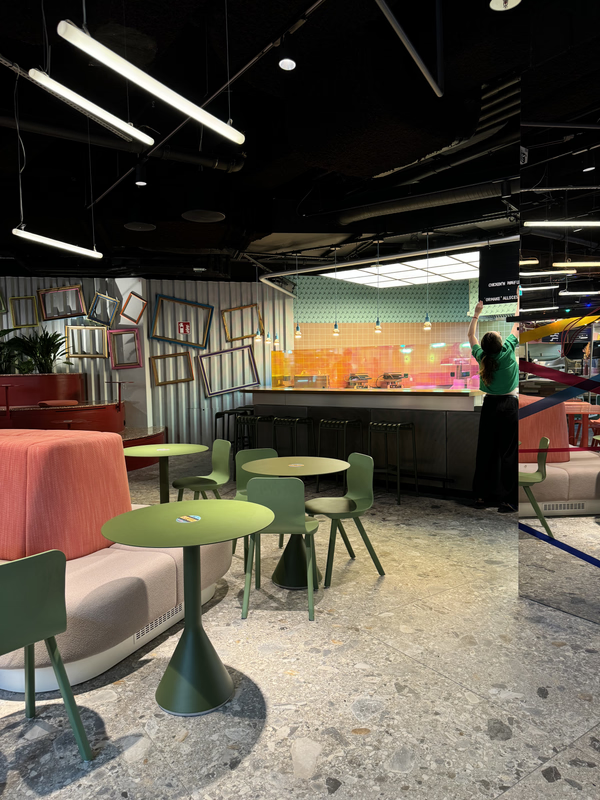
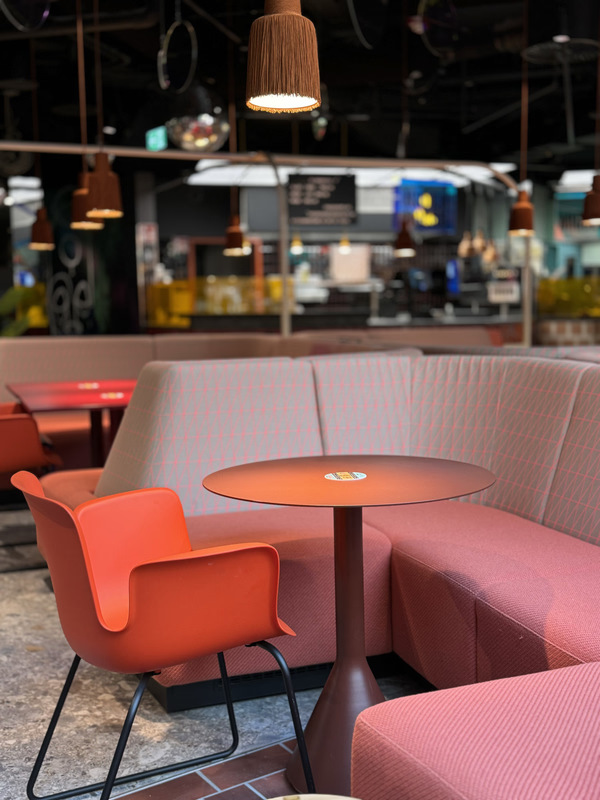
Some restaurant spaces need elegance. Others need friction. Others need a certain theatrical confidence.
Le Big Tam Tam shows how restaurant lighting can support a strong spatial attitude without becoming loud. The light does not flatten the room. It creates pockets, edges, moments and visual tension.
Award-winning hospitality projects are rarely defined by one spectacular gesture. They are defined by consistency. By the relationship between table, wall, object, guest and movement. By how a room behaves from the first impression to the last drink.
This is where Studio De Schutter’s work becomes precise: architectural enough to support the space, emotional enough to shape the experience, technical enough to function every day.
Good restaurant lighting does not only make a place beautiful. It makes decisions easier.
Where do guests look first? Which tables feel most desirable? Does the entrance pull people in? Does the bar become a destination? Do materials still have depth after sunset? Can the team adapt the mood without improvising?
Light influences dwell time, perceived value and the way people remember a place. For restaurants, cafés, bars and hotels, that is not decoration. It is part of the business model.
- lighting scenes for different moments of the day
- table lighting that supports food, faces and intimacy
- bar lighting with depth, contrast and visual attraction
- accent lighting for art, objects, materials and architectural details
- technical lighting that does not destroy the interior concept
- control logic that the team can actually use
- coordination with architecture, interior design and electrical planning
The result should feel effortless. But the process behind it is exact.
Many restaurant projects start with beautiful decorative fixtures and solve the actual lighting later.
That is risky.
Decorative luminaires can give a room character. But they rarely solve table quality, glare, zoning, service light, scene control or long-term flexibility on their own.
A good concept connects decorative and architectural light into one system.
Studio De Schutter works best with projects where lighting is allowed to become part of the concept from the beginning. Not as an afterthought. Not as a technical correction. But as a design discipline.
This can be a restaurant, hotel restaurant, café, bar, members’ club, retail-hospitality hybrid or a flagship space with strong public presence.
The important factor is ambition. The project should care about architecture, guest experience, operational quality and a lasting visual language.
The right lighting concept can sharpen the room before the first guest enters. It can make the interior feel more valuable, the food more vivid and the evening more memorable.
A collaboration makes sense when the project needs more than standard brightness. When the lighting should support architecture, service, emotion and commercial performance at the same time.
Studio De Schutter develops lighting concepts for restaurants and hospitality spaces that are precise, atmospheric and built for real use.
Not louder.
Better controlled.
More intentional.
Contact Us:
