

Cozy Lighting: How Light Instantly Makes Rooms Feel More Inviting
A room can be beautifully furnished and still feel uncomfortable in the evening.
The sofa works. The materials work. The colours work.
And then the lights come on.
Suddenly, everything is equally bright. The ceiling dominates. Corners disappear. The room loses depth.
This is where the real secret of cozy lighting lies: It is not simply warm light that makes a room feel inviting. It is how the light is distributed throughout the space.
A bright room can feel extremely inviting.
A dark room, on the other hand, can feel completely uncomfortable.
Many rooms are illuminated as if every surface had the same importance.
A central ceiling light or a regular grid of downlights distributes light relatively evenly. That is functional. But uniformity is rarely what makes a living space interesting.
In a cozy room, there are instead brighter and darker areas. An illuminated wall. A brighter table. A small lamp beside the sofa. A quieter background.
The eye immediately recognises an order.
Where should I sit? Where does activity take place? What belongs in the foreground? What can recede?
It is precisely this graduation that makes a room feel visually calmer.
Making a room feel more inviting does not necessarily mean redesigning the entire electrical plan. Often, a few decisions can make a surprisingly large difference.
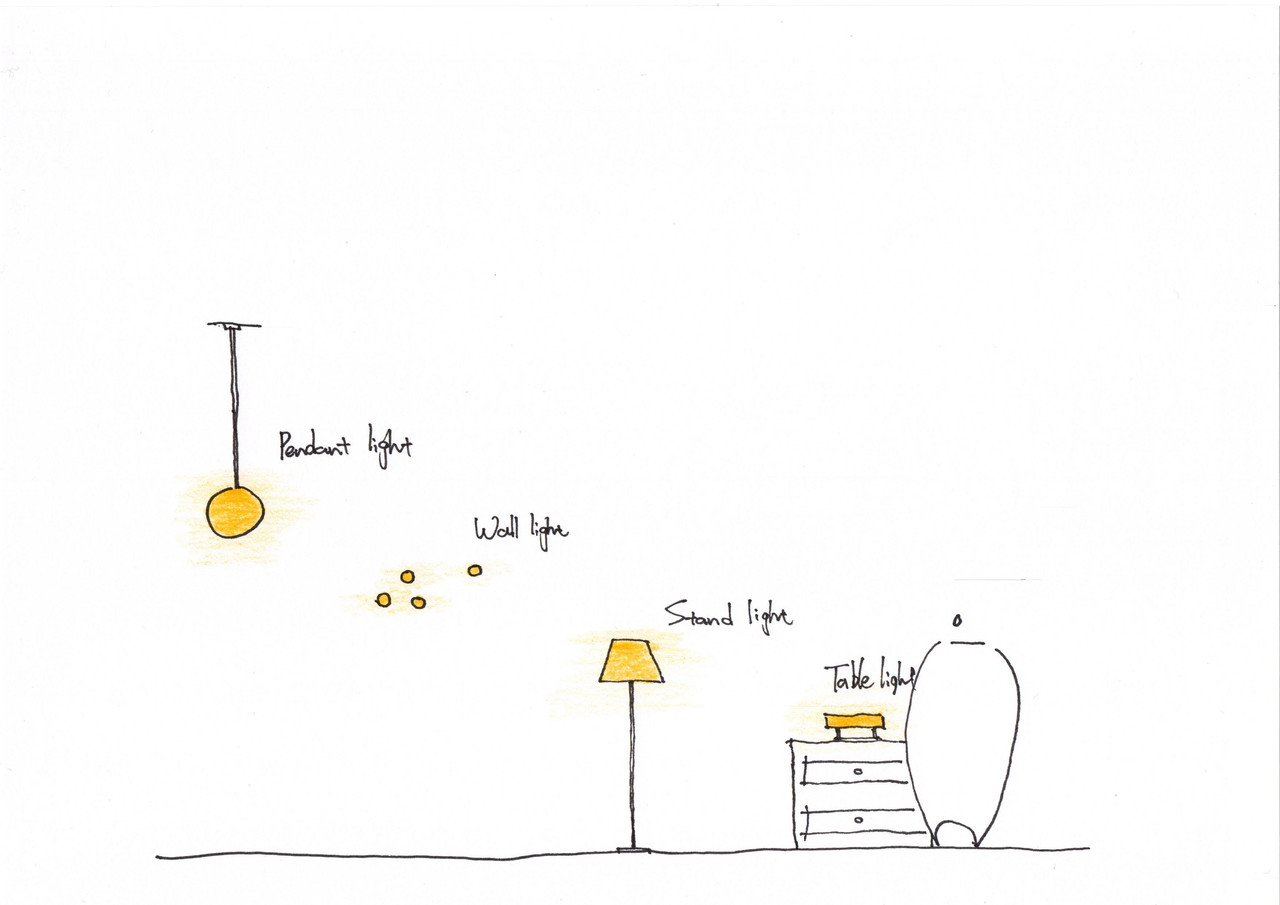
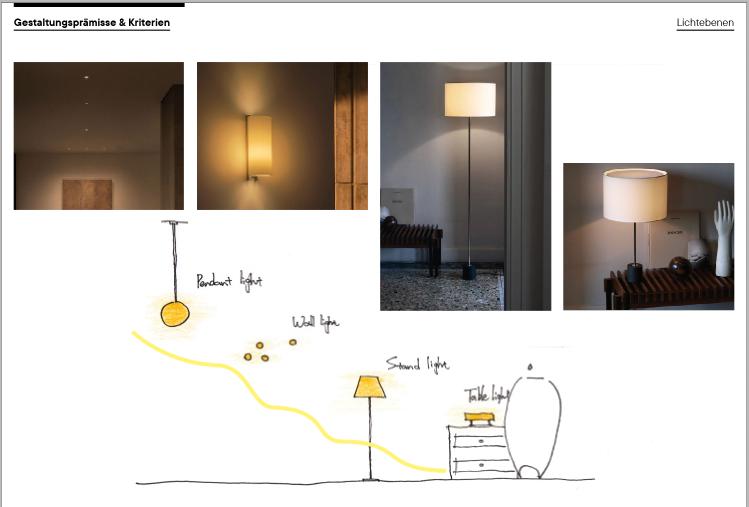
Pendant lights, wall lights, floor lamps and table lamps create several points of light throughout the room. This layering prevents the space from feeling flat.
A softly illuminated wall can have more influence on the spatial impression than a large amount of light on the floor. Vertical surfaces define the visible boundaries of the room.
Cozy lighting depends on hierarchy. A table can be brighter than its surroundings. Artwork can stand out. A corner can deliberately remain calmer.
2700 K is a good starting point. Lower colour temperatures can become interesting later in the evening. What matters is always the relationship between materials and light intensity.
A warm LED can still be uncomfortable if it shines directly into the eye. Shielding, shades and good positioning are at least as important as the Kelvin value.
A lighting situation that works during the day can feel too present late at night. Dimming allows the hierarchy within the room to change over time.
In many homes, almost all lighting is located in the ceiling.
Exactly where it is furthest away from the people using the space.
A table lamp on a sideboard, a floor lamp beside the sofa or a lower-hanging pendant brings light down to the level at which we actually live.
This changes the scale of the room.
Instead of perceiving the whole ceiling as one large light source, smaller spatial areas begin to emerge: a chair, a table, a picture, a sideboard.
The room does not necessarily become darker. It becomes more differentiated.
Colour temperature matters. But six equally bright downlights at 2700 K are still six equally bright downlights.
Warm white light is not a substitute for lighting design.
If contrast, position, shielding and luminaire height are wrong, even very warm light can feel technical and restless.
Our eyes constantly fall on vertical surfaces within a room. Walls. Shelves. Curtains. Art. Plants.
Yet lighting still tends to focus surprisingly heavily on horizontal surfaces.
A little light on a wall can make the entire room feel larger and calmer.
A wall light can become part of the composition itself. Indirect light can softly brighten a surface. A spotlight can deliberately emphasise art or material.
The goal is not to make every wall bright. It is to choose one or two surfaces that give the room visual depth.
Then turn it off and switch on a floor lamp, a table lamp and a light on the wall instead.
Same room.
Completely different spatial effect.
For residential interiors, warm white light is usually the right starting point. In many cases, that means around 2700 Kelvin.
But this is only where the planning begins.
Our relationship with light changes throughout the evening. While cooking or reading, a clearer and slightly stronger light can be useful. Later, the same light source may need to feel considerably calmer.
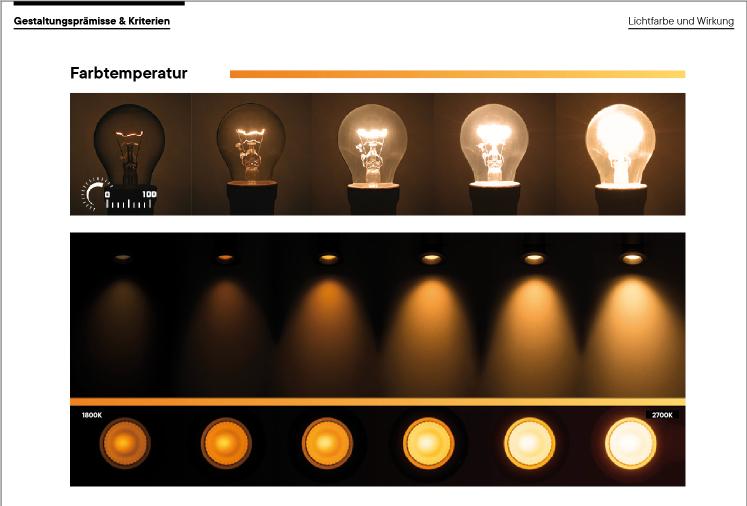
The lower the colour temperature, the more the impression shifts towards candlelight and the character of traditional incandescent lamps.
Even so, “the warmer, the better” is not a useful rule.
Very warm light can quickly appear orange at high intensity. Conversely, 2700 K at a low intensity can already feel extremely pleasant.
Colour temperature and brightness therefore need to be considered together.
Colour rendering matters too. Especially in residential spaces with timber, textiles, skin tones, art and warm surfaces, a high-quality light source with good colour rendering is worthwhile. A Kelvin value alone tells you very little about how beautiful materials will actually look.
A good starting point for many residential areas, particularly when reading, dining or working also takes place there.
Interesting for later evening hours, decorative lighting and relaxed lighting scenes.
Very warm and expressive. Particularly effective at low light levels and with deliberately positioned light sources.
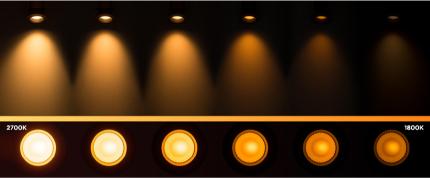
This is exactly where Warm Dim differs from conventional dimming. With a standard LED, the colour temperature often remains largely unchanged when the light is dimmed. The luminaire simply becomes darker.
Warm-Dim light sources, by contrast, change their light colour at the same time. As intensity decreases, the light becomes warmer — similar to the behaviour of traditional incandescent lamps.
People usually do not dim the lights in the evening because a certain lux level is technically too high.
They dim the lights because the way they use the room has changed.
Dinner is finished. The laptop is closed. Everyone moves to the sofa.
The light should not simply become weaker now. It should feel different.
This is why Warm Dim can be particularly effective in residential interiors. It changes the character of the lighting without requiring a second luminaire or an additional scene.
It is particularly interesting for:
- Pendant lights above dining tables
- Decorative downlights
- Living rooms with several evening uses
- Bedrooms
- Hotel rooms and private retreat spaces
A floor lamp beside the sofa, light on a wall and a smaller table lamp create depth. Ceiling lighting can complement them — but it does not have to play the leading role.
A pendant light defines the table as a spatial island. The important point: people around the table should receive light without being dazzled by the source.
Light beside the bed, on the wall or at low furniture height supports the evening character of the room better than dominant ceiling lighting.
Light on walls, art or furniture can define the route. Particularly at night, less light — positioned more precisely — is often more comfortable than a completely bright corridor.
- Using only downlights: Almost all the light remains in the ceiling, creating very little residential layering.
- Setting every luminaire to the same brightness: This removes visual hierarchy.
- Focusing only on Kelvin: Warm white light alone does not create a good room.
- Leaving light sources directly visible: Glare can destroy visual comfort very quickly.
- Leaving walls completely unlit: The room can feel smaller and flatter as a result.
- Using only indirect lighting: Even a softly illuminated room needs accents and clearly defined points of light.
- Not including dimming: Residential rooms are used differently over the course of the day.
- Considering colour temperature in isolation: Intensity, surfaces and materials significantly change the final impression.
If a room currently feels uncomfortable, you do not necessarily need to replace everything.
Start with three questions:
- Is there any light below ceiling level? If not: add a floor lamp or table lamp.
- Is at least one vertical surface illuminated? If not: highlight a wall, artwork or shelving.
- Can the brightness be reduced significantly in the evening? If not: introduce dimming or a separate evening lighting layer.
Then comes the fine-tuning.
Which light source causes glare? Which one is too dominant? Which area remains too dark? Which materials look flat?
Good lighting design is not created by using as many luminaires as possible. It is created by establishing the right relationship between them.
Around 2700 K is a good starting point for many residential spaces. Lower colour temperatures can be interesting for relaxed evening settings. However, colour temperature should always be considered together with light intensity, materials and colour rendering.
There is no fixed number. What matters is covering different tasks and different heights. A combination of ceiling or pendant lighting, wall lighting, floor lamps and table lamps is often more effective than one very bright light source.
No. Indirect light can be very comfortable, but on its own it can quickly feel flat. It becomes much more convincing when combined with focused accents, vertical light and lower-level light sources.
Warm Dim describes light sources where dimming reduces not only the amount of light but also shifts the colour temperature towards a warmer tone. A typical range might move from around 2700 K towards 1800 K.
Not necessarily. Ceiling lighting can be both functional and architecturally useful. It simply should not automatically be the only or strongest source of light. A room usually feels more inviting when several light sources are combined across different levels.
Better relationships
between light
sources.
Cozy lighting is not created by choosing one beautiful luminaire.
It is created through the interaction of architecture, furniture, materials, light colour, sightlines and use.
Studio De Schutter therefore does not plan luminaires in isolation, but complete lighting compositions.
Where does the room need brightness? Which wall should become visible? Which luminaire takes over in the evening? Where does Warm Dim make sense? And which light source may not be needed at all?
These decisions turn lighting into a natural part of the architecture.
Contact Us:
