

Bathroom Lighting Design: From Functional Space to Personal Retreat
The bathroom is the space where intimacy is created.
Intimacy with one’s own body, with routines, with moments of calm. And yet, light here is often considered purely technical. A ceiling light. Perhaps some mirror lighting.
Done.
Professional bathroom lighting design starts exactly here and shifts the perspective. It understands light not as equipment, not as technology, but as part of perception.
A bathroom does not function through brightness.
It functions through atmosphere.
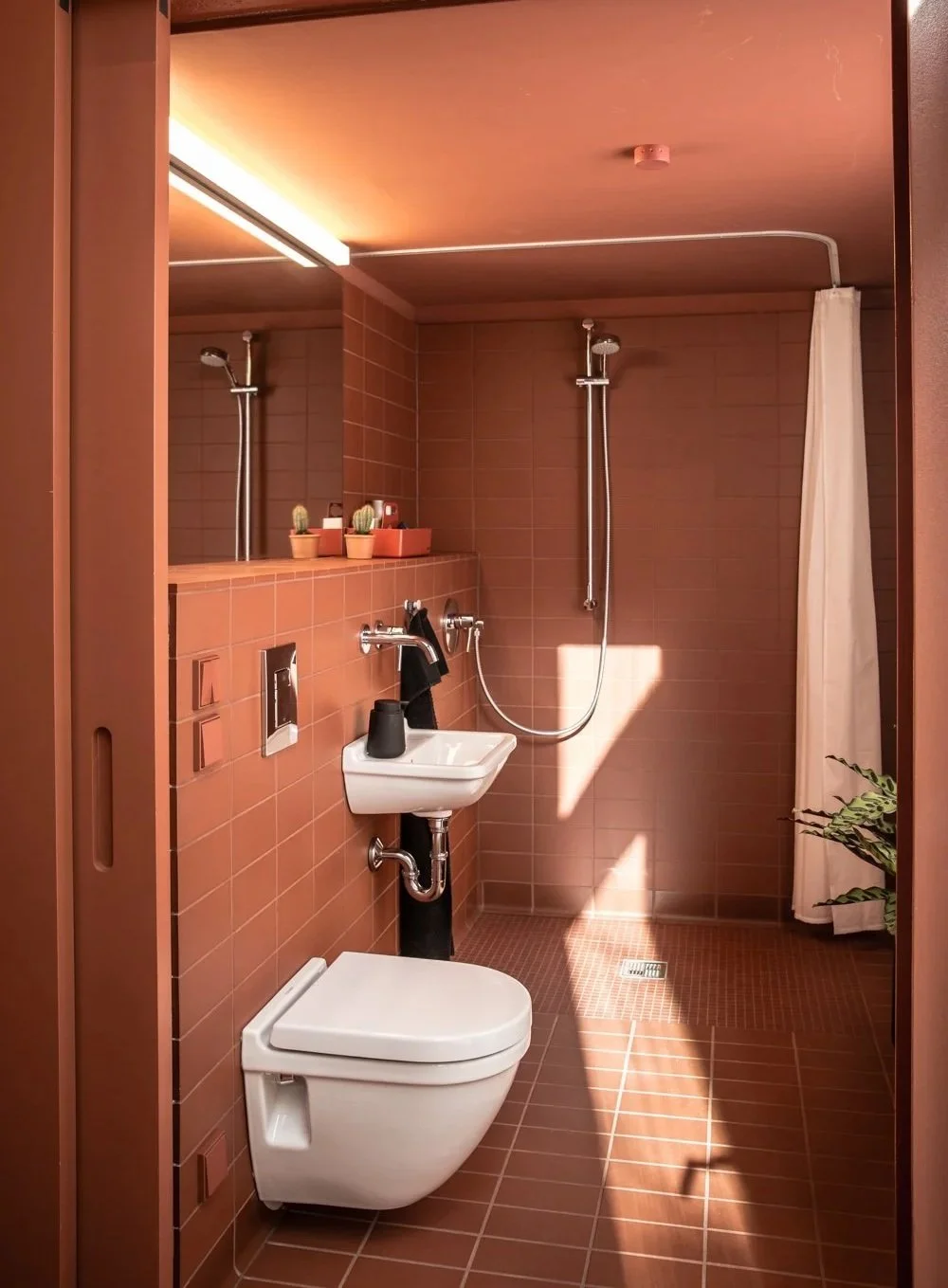
Workspace - Am Lokdepot: Designed by Studio De Schutter
What people are really looking for when they google bathroom lighting design
Hardly anyone is searching for technical data or standard values. Behind the search for bathroom lighting design lies the expectation of a space that is used every day — and is meant to do far more than simply function.
What people are looking for:
A bathroom that energizes in the morning without overwhelming — and maybe doesn’t reveal every wrinkle ;)
Light that wakes you up without being harsh. Clarity that supports the start of the day.
A space that calms in the evening without feeling dark — even when you get up at night ;)
Soft lighting moods that let the day fade out and create a sense of ease.
A feeling of quality, calm, and control — just enough light for shaving when you want it ;)
Light that feels intentional rather than accidental. A coherent overall composition with intuitive control.
A space with personal character — where else?
Moving away from the anonymous functional room toward a place that allows retreat and expresses identity.
Professional bathroom lighting design connects use, architecture, and technology into a calm, precisely tuned overall concept — transforming a functional space into an atmospheric retreat.
Bathroom Lighting Design Begins with Listening
Before luminaires are discussed, it’s about questions. About routines. About habits. About architecture. Every bathroom is different because every daily routine is different. Lighting design therefore does not start with products, but with understanding.
Strategic Lighting Consulting as the Foundation
Already in the early project phases, the space is analyzed holistically — not reduced to individual functions or luminaires. The goal of this phase is to create clarity: about use, atmosphere, and architectural relationships. This is deliberately not about quick answers or ready-made solutions, but about developing a deep understanding of the space and its requirements.
At the center of the analysis are, among others, the following questions:
Usage scenarios:
How is the bathroom used in everyday life? As a private retreat for one person, a shared space for two, or a functional family bathroom with differing needs?Temporal use:
Which times of day are relevant? Morning routines, evening relaxation, or nighttime use each place different demands on light intensity, color temperature, and control.Materiality and surfaces:
Which materials define the space? How do tiles, natural stone, wood, glass, or metal react to light? What reflections, contrasts, or depth are created as a result?Spatial relationships:
Where do sightlines run? Where do reflections occur, transitions between zones emerge, or visual connections form within the space?
From this structured analysis, clear goals, design potentials, and also planning constraints are derived.
In this way, a robust foundation is created for all further decisions in planning and implementation.
Because those who plan light too late, plan past the space.
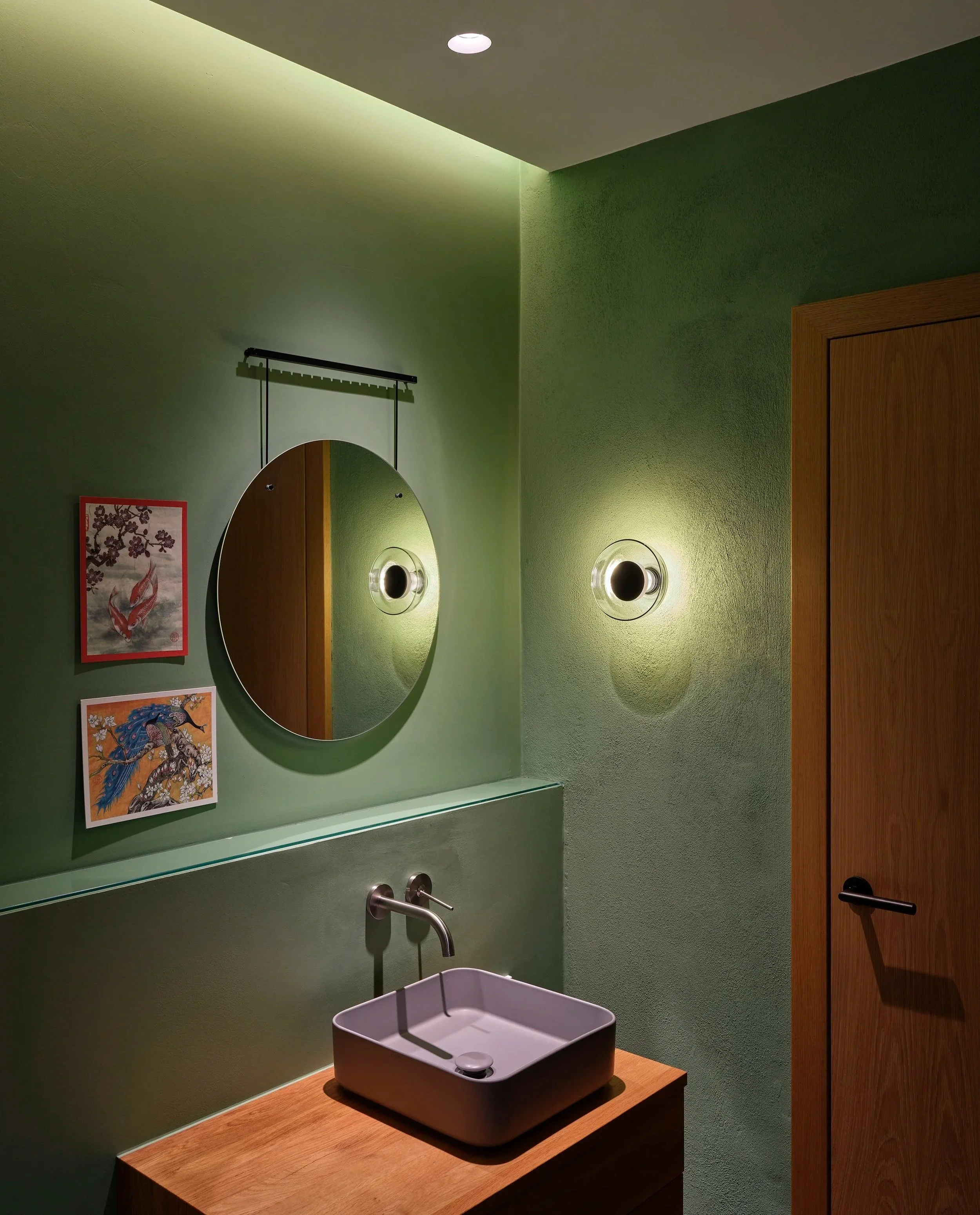
Privatprojekt - Eisenbahnstrasse: Designed by Studio De Schutter
Lighting Moods Instead of On–Off
A bathroom changes throughout the day. Light must respond to these shifts. Instead of a single, uniform lighting solution, differentiated lighting scenes emerge — aligned with use and moment.
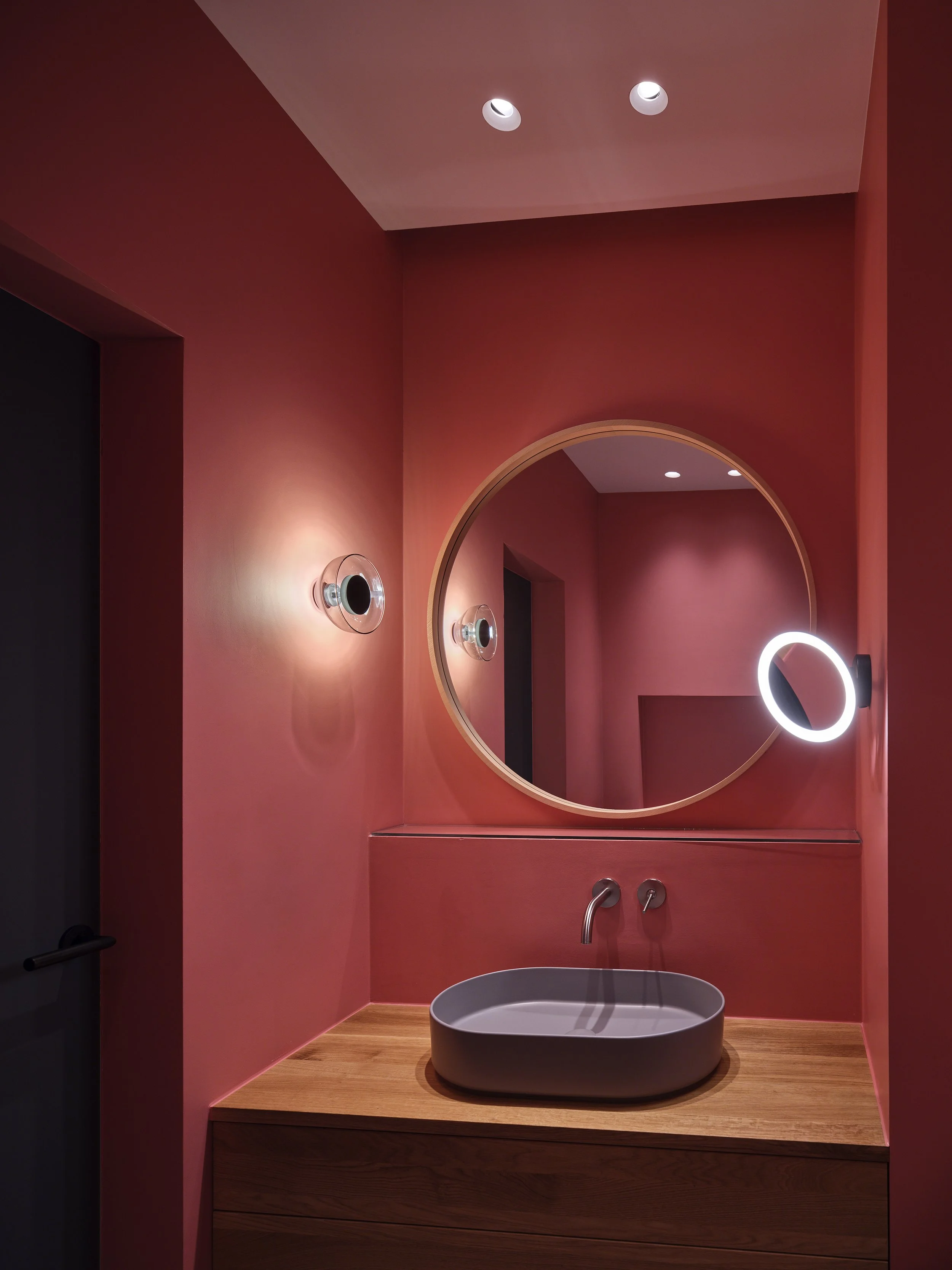
Privatprojekt - Eisenbahnstrasse: Designed by Studio De Schutter
Planning, Integration, and Implementation
A lighting concept only unfolds its full impact when it is executed with precision. This is where technical lighting design begins. It translates design intent into robust, functional solutions and ensures that atmosphere is not only conceived, but truly experienced.
In this phase, light becomes part of the architectural system as a whole. It is integrated, coordinated, and developed down to the last detail.
Within technical lighting design:
Luminaires are precisely positioned and coordinated
Distances, heights, and viewing angles are defined so that light can unfold its effect without glare or disturbance.Light distributions are calculated and fine-tuned
Brightness levels are differentiated, transitions softened, and contrasts deliberately set to combine orientation with calm.Interfaces with architecture and building technology are coordinated
Light is aligned with materials, built-in elements, sanitary fixtures, and control systems. This creates clear solutions without visual breaks.Solutions are carried through to execution readiness
From detailed planning and coordination to implementation, the lighting idea remains consistent and legible.
Planning does not end on paper. It extends into realization and final on-site adjustment. Only during focusing does it become clear whether light truly works. This is where nuances are refined, atmospheres sharpened, and the concept brought to life.
Light is therefore not only planned, but deliberately realized —
precise, restrained, and enduring in its effect.
When Bathroom Lighting Design Becomes Technically Precise
A strong concept only unfolds its impact in execution. This is where ideas become reality. Technical lighting design ensures that atmosphere is reproducible — independent of time of day or use.
Scenographic Concepts and Intuitive Control
Through clearly defined usage scenarios, different lighting moods emerge:
Activating light for the morning
Neutral, shadow-free light at the mirror
Dimmed, warm atmospheres for the evening
Subtle orientation lighting at night
Control is deliberately kept simple.
Light responds to use — not the other way around.
Comfort emerges when light responds intuitively.
Tailored Solutions for Special Spaces
Not every bathroom can be addressed with standard products or off-the-shelf lighting solutions. Architecture, materiality, and spatial conditions often impose specific requirements that call for individual concepts. Especially in bathrooms with complex layouts, distinctive materials, or high design ambitions, standard solutions quickly reach their limits.

Lighting design at Studio De Schutter does not begin with products. Each space is understood as its own context, not as a scheme to be reproduced. Especially in the bathroom — a place of intimacy and daily rituals — light requires particular sensitivity.
Contact Us:
