
Award Winning Lighting Design: What Truly Defines Outstanding Lighting Design
Awards in lighting design rarely emerge where things are simply illuminated spectacularly.
They emerge where light solves a task more precisely than expected.
More quietly.
More intelligently.
More consistently.
Award Winning Lighting Design does not mean: maximum effect. It means that a project endures beyond the moment. That light is not understood as decoration, but as part of the architecture, the use, the materiality — and sometimes the attitude — of a place.
A good lighting concept can be visible.
But it can also almost disappear.
What matters is not the volume.
What matters is the precision.
.jpg)
.jpg)
Project: MELO · Light art for historical facade
Beauty is part of it.
But it is not enough.
A project is not recognised because it photographs well. It is recognised when design, technology, context and consistency come together. When an idea is not merely claimed, but functions in the details.
With MELO, the task was not to make a building brighter. The task was far more precise: a school needed to become visible within the urban space, without overwriting the historical facade.
A listed building.
An old facade niche.
A lettering.
And a great many constraints.
That is precisely where good lighting design starts to become interesting. Not in open space, but in resistance. Where fire protection, heritage preservation, neighbourhood considerations, vandalism protection, light pollution and design clarity all have to be addressed simultaneously.
The solution: folded, backlit aluminium letters that shift as you pass by. Depending on the viewing angle, the name unfolds. The facade remains legible. The light does not impose. It complements.
During the day, the material works.
At night, the glow works.
Not loud.
But very precise.
Awards are not purely a matter of style. Good juries can tell whether a project has only a strong surface, or whether the idea runs deeper.
They recognise:
- whether the light was developed from the place itself
- whether technical requirements are resolved elegantly
- whether energy, maintenance and control were considered
- whether the light suits the use
- whether a project is culturally or spatially relevant
- whether the solution holds up beyond the first impression
Award Winning Lighting Design is therefore never just a result. It is a process. Research, tests, mock-ups, coordination, material decisions — and sometimes doubt.
And it is precisely this work that you can see in a strong lighting project.
Not always immediately.
But you sense that nothing is accidental.
Project: Your Point of View · Light art installation
Some lighting projects do not solve a classic problem.
They open one.
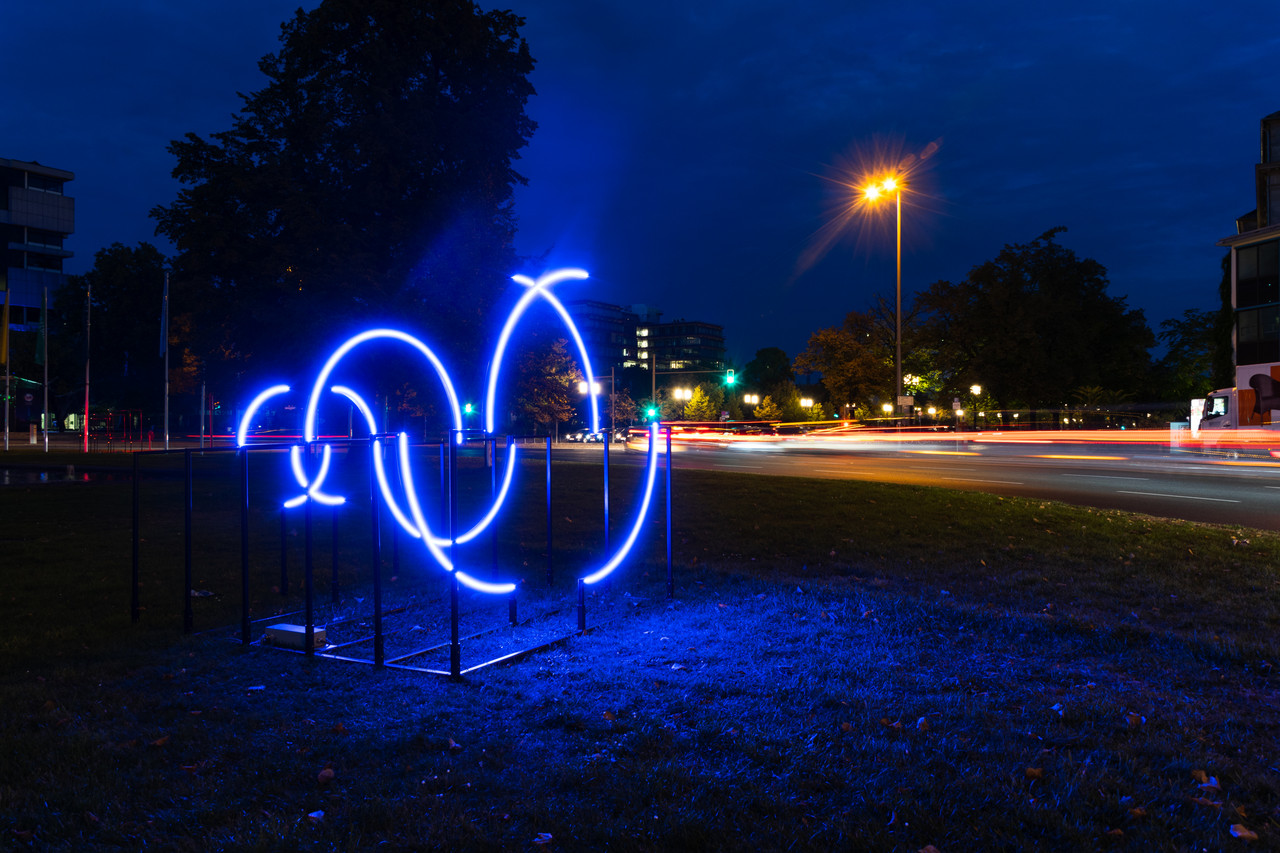
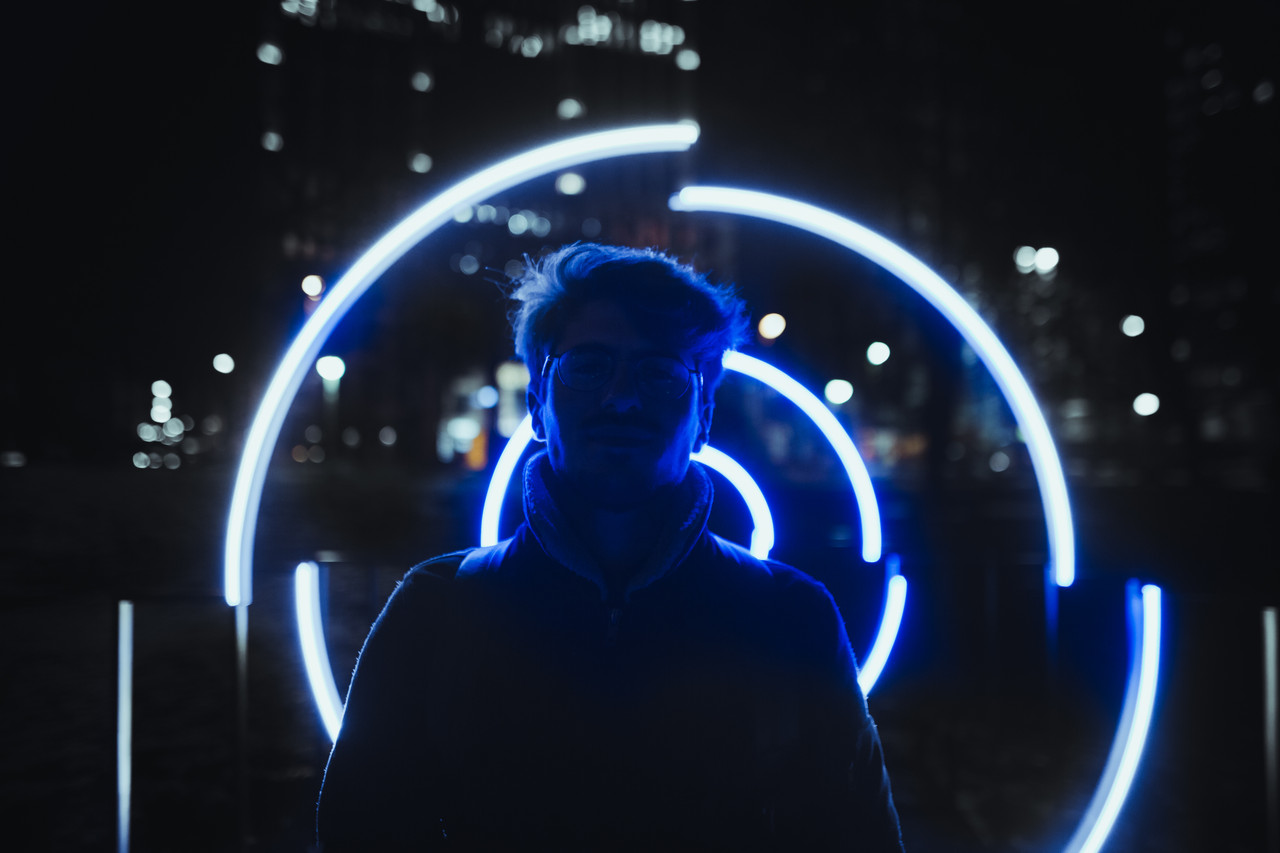
Your Point of View is a series of light sculptures that work with standpoint, form and interpretation. Monochrome LED lines appear different depending on position. Linear structures become a circle, a rectangle or a triangle. Then again they dissolve into a complex web of light.
The viewer must move.
Otherwise the work remains incomplete.
That is the decisive point: the installation is not merely an object. It is an experience in space. It shows that meaning is not stable — it depends on one's own standpoint.
For lighting design, this is an important thought. Because even in architectural projects, quality often arises not through a single perfect view. It arises through movement.
On arrival.
While passing through.
While working.
In a brief glance back.
Award-winning light takes these moments into account.
Many projects make a strong impression at first glance.
Strong contrasts.
Dramatic shadows.
Gleaming surfaces.
But effect is not automatically quality. Effect can age quickly. Attitude lasts longer.
Award-winning lighting design does not ask: How do we attract attention?
It asks:
- What role does light play in this space?
- Which boundaries must not be crossed?
- How much light is enough?
- What needs to be visible?
- What may remain in the background?
- How does the place change over the course of the day?
The best lighting concepts are often not the ones that show everything. But the ones that make choices.
They give rhythm.
They set priorities.
They avoid over-staging.
And they take seriously the person moving through the space.
.jpg)
.jpg)
Project: Impact Hub Berlin · Circular lighting consultancy
At the Impact Hub Berlin in the CRCLR House, the question of award-winning light shifts once more.
Here it is not just about form.
Not just about comfort.
Not just about energy.
But about a lighting concept that is connected to the idea of a circular building.
Around 70 percent of the materials used come from recycled, upcycled or sustainable sources. For the lighting design, this means: the classic route of catalogue, selection and order is not sufficient.
Instead, it requires research.
Surplus stock.
Reuse.
Replanning.
Mock-ups.
And the willingness to develop new quality from existing things.
That is precisely where the real innovation lies. Sustainable lighting design is not only about reduced consumption. It is a different way of thinking about resources, life cycles and design.
At the Impact Hub, former recessed luminaires become surface-mounted ones. Reclaimed timber boards become part of linear pendant lights. Standard components are combined into bespoke project-specific solutions.
Studio De Schutter calls such solutions Light Hacks.
A fine term.
Because it shows that intelligence in the detail is often more valuable than an expensive product.
When you look at MELO, Your Point of View and Impact Hub Berlin side by side, a clear picture emerges.
Award-winning lighting design does not always look the same.
It can be graphic.
Sculptural.
Circular.
Restrained.
Experimental.
But it shares common qualities:
- Context: The light emerges from the place, not from a style.
- Precision: Every decision serves a purpose.
- Reduction: Not everything is lit — only what is right.
- Technical clarity: Control, glare, energy and maintenance are all considered.
- Originality: The project develops an idea that goes beyond standard solutions.
- Relevance: Light becomes part of a larger architectural or social question.
Studio De Schutter works at the intersection of architecture, light art, technology and human experience.
Not as an afterthought of illumination.
But as an integral part of the design.
The award-winning projects reveal different facets of the studio: the sensitive intervention on a historical facade, the experimental power of a light installation, and the forward-looking planning of a circular workplace project.
It is precisely this breadth that makes good lighting design relevant.
It can make a building more legible.
It can make an attitude visible.
It can conserve resources.
It can shape spaces without dominating them.
And sometimes a single lighting idea is enough to give a project an entirely new dimension.
2023 · POLIS Awards · Category "Ecological Reality" · Impact Hub Berlin · 3rd Place
2020 · German Lighting Design Awards · Best Emerging Practice
2020 · German Lighting Design Awards · Best Light Art Installation · Your Point of View
2017 · LIT Awards · Winner Heritage Lighting · MELO
2017 · Darc Awards · Best Exterior Scheme — Low Budget · MELO · 3rd Place
2016 · Lighting Design Awards · 40 under 40 · Emerging Lighting Design Talent
Contact Us:
