

How lighting makes art visible – without overpowering it
Art lighting is not decoration. It is translation. Light determines whether a work appears flat or gains depth, whether materiality becomes legible or disappears, and whether an exhibition feels calm or visually exhausting.
Good art lighting stays in the background while remaining precise. It creates orientation within the space, protects sensitive materials, and supports curatorial dramaturgy. Above all, it respects the artwork: light must never be louder than the art.
A deliberate guidance of perception, without making the technology visible. Materiality, depth, and fine surfaces remain readable. Glare is avoided so the gaze can rest. Flexibility for changing hangings and formats. Protection of sensitive works without losing impact. A coherent, quiet lighting composition within the space.
Technically, this means controlled light distributions, high-quality color rendering, and consciously placed contrasts. Artistically, it means a lighting dramaturgy that creates atmosphere without seeking effects.
“The best art lighting disappears – and still changes everything.”
– Studio De Schutter

Light integration in art: “You live by the sword, you die by the sword”
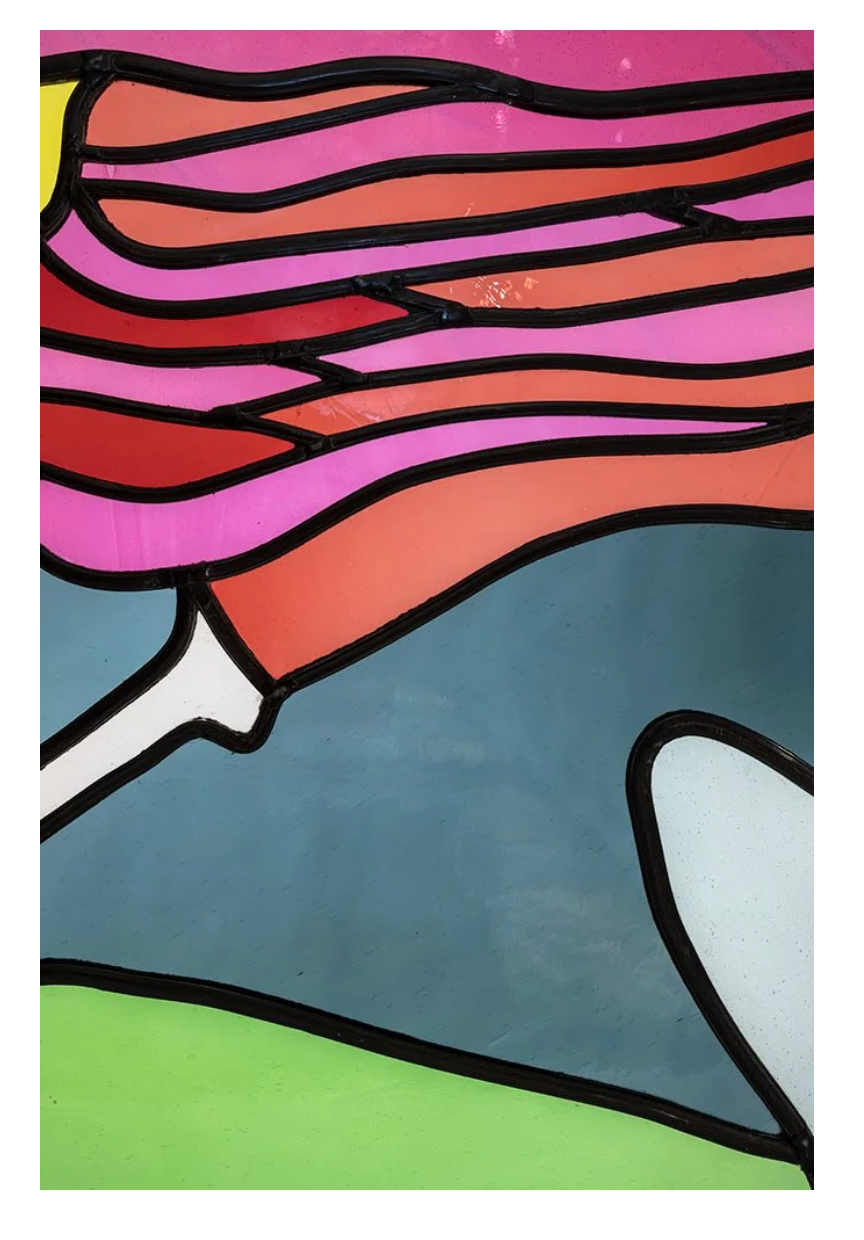
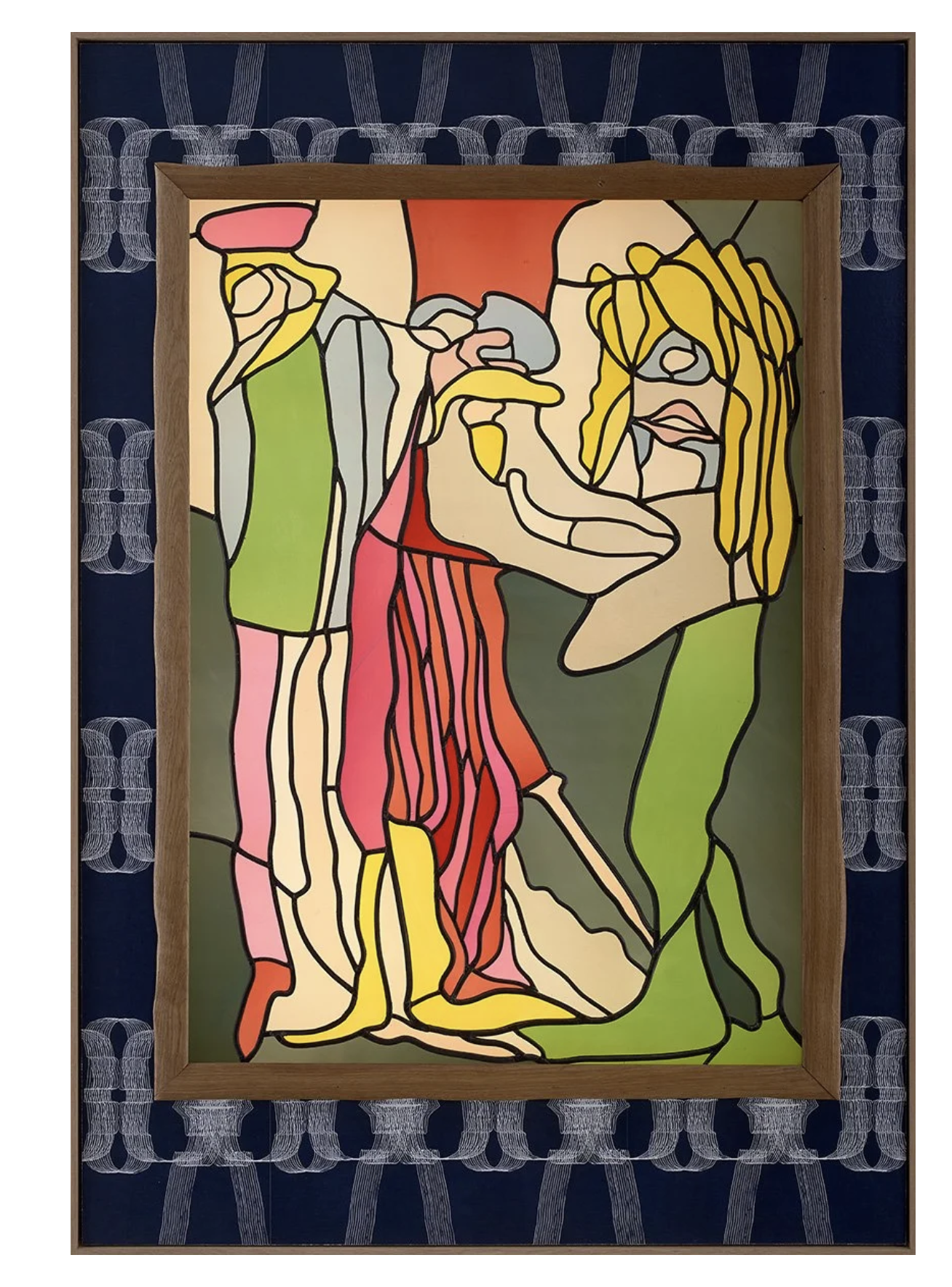
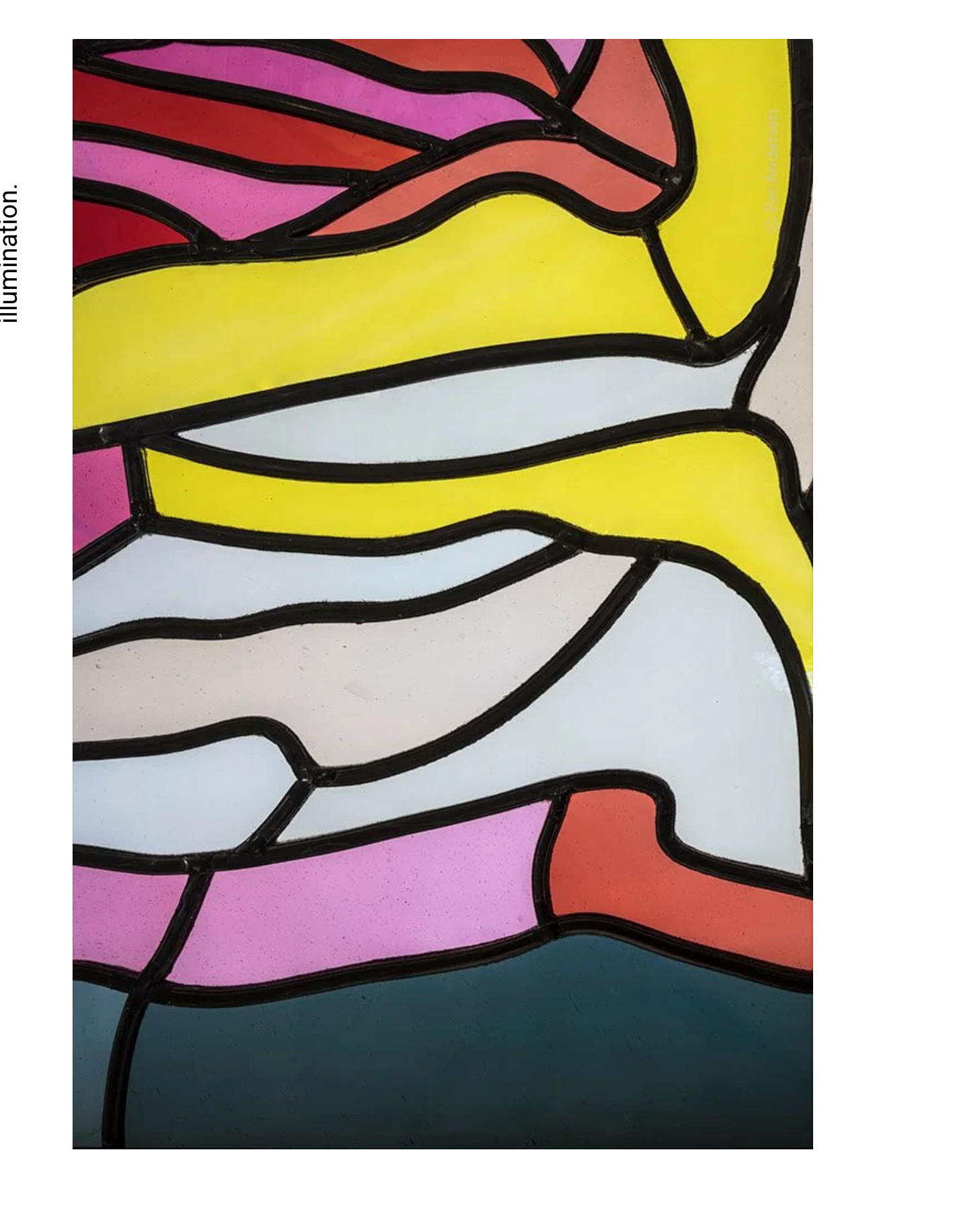
The artwork “You live by the sword, you die by the sword” by Danish artist Peter Linde Busk consists of antique, colored glass pieces with lead. In an exhibition in Copenhagen, the work was hung in front of a window, creating a distinctive luminous effect that made the glass appear to glow from within.
When the work was acquired by a private collector, an unusually precise task emerged: the lighting impression was to be reconstructed exactly as the collector had experienced it in the gallery. Art lighting became a technique of memory—not just any beautiful light, but the exact reconstruction of a perception.
To achieve this, Studio De Schutter analyzed the original spatial situation and the conditions of daylight. Relevant factors included not only the window surface, but also reflective facades in the surroundings and the exterior light atmosphere on that specific day. With glass works, perception changes dramatically depending on time, weather, and season.
The final lighting solution is based on a multi-layered, modular setup with warm white light and Bluetooth control. Multi-layered here means that the light is not simply bright or dark, but composed in layers, allowing transparency, depth, and material texture to become distinctly visible.
Together with Peter Linde Busk, the lighting team tested various approaches to consciously highlight the subtle imperfections of the antique glass. Small air bubbles, inclusions, and edges are part of the material’s poetry. Light must not smooth out these details, but make them legible without becoming too harsh.
At the same time, uniform illumination was essential so that the work would remain effective even from a distance. With a size of over one meter, this is demanding—especially when the solution must remain extremely flat and disappear within a load-bearing frame. This is precisely where it becomes clear why art lighting is almost always a custom solution: standard products are rarely precise enough.
Bluetooth control allows the work to be recalibrated within the context of a collection or exhibition. This makes it possible to adapt the lighting mood to room brightness, surroundings, and curatorial intention without changing the setup. Flexibility is achieved not through many effects, but through controlled adjustability.
In addition, the exhibition lighting within the collection made use of existing spotlights and relied on calm, even wall illumination. The surrounding environment also determines whether a work appears luminous or visually fades away. Art lighting is always about space and artwork together.
Planning art lighting: what really matters in practice
Art spaces react sensitively to light. Even small changes in brightness, angle, or reflection can determine whether a work feels present or loses its impact. Good art lighting therefore always begins with an analysis of materiality, surface, visual guidance, and daylight.
In galleries and museums, the protection of artworks is an additional factor. Light must not cause damage and must simultaneously allow curatorial flexibility. A strong lighting concept is therefore not only aesthetic, but also durable—capable of working across changing hangings, formats, and uses.
What matters in practice:
Testing reflections in the space at an early stage
Setting light angles consciously and transparently
Layered lighting instead of technical overload
Calm wall zones with clearly defined accents
Precise control for fine adjustments
Considering custom solutions from the very beginning
Especially with glass, reflections, metal, or mixed media, it becomes clear that standard solutions are often insufficient. This is where lighting design becomes a translation between art, space, and technology. The goal is always balance: the artwork resonates, the technology steps back.
In private collections, additional questions arise: how to integrate art into living spaces, how to remain flexible when interiors change, and how to create control systems that feel intuitive in everyday use. Here too, the principle applies: calm, precise, and designed for the long term.
Contact us. Whether you are planning an exhibition, curating a collection, or need a custom solution, Studio De Schutter supports projects from analysis and mock-ups through to implementation—developing lighting concepts that respect art and shape spaces.
