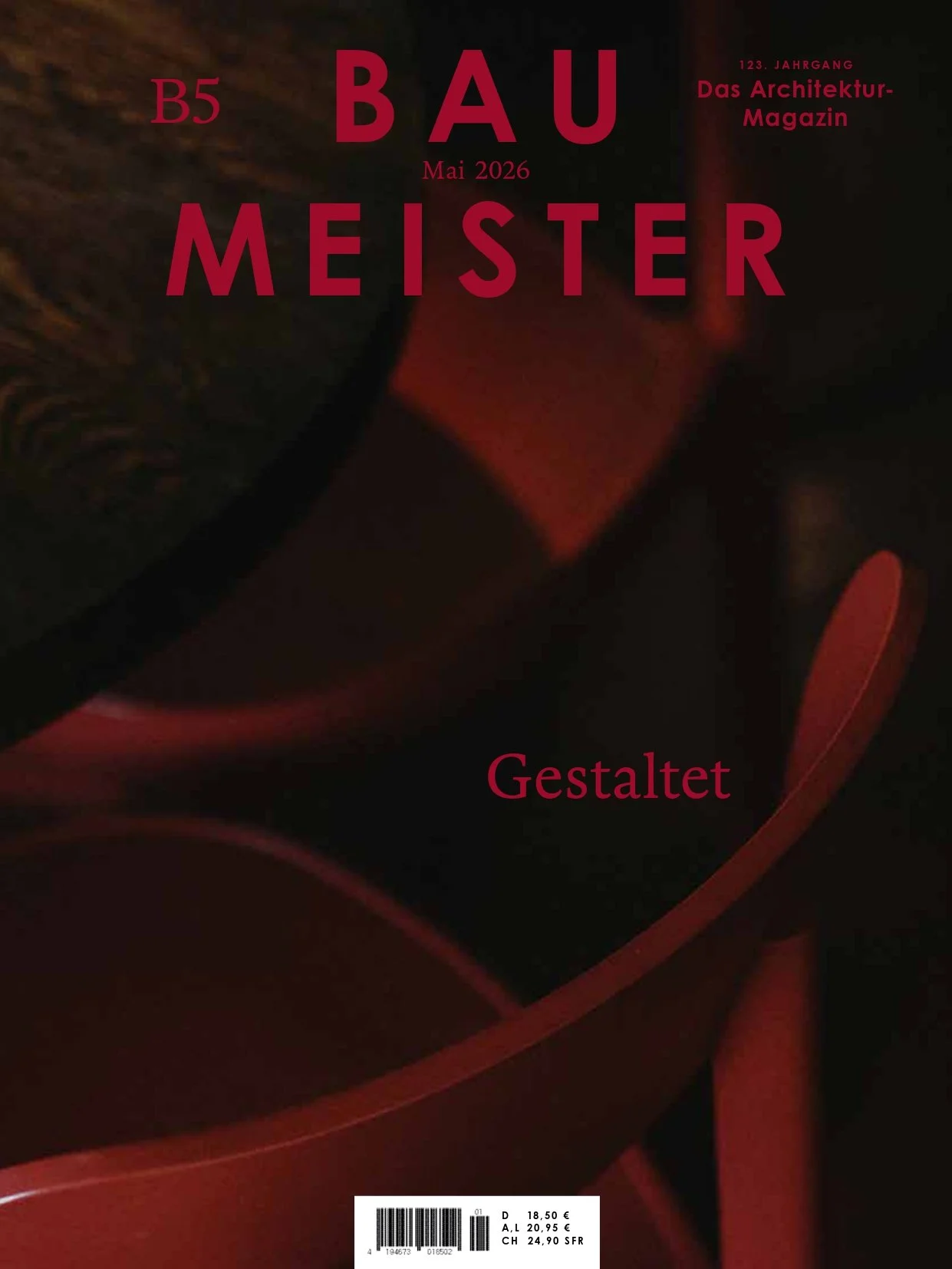
Color Blocking and Spatial Identity featured by BAUMEISTER
In BAUMEISTER B5/2026, Studio De Schutter is featured as part of the interior concept for “Flip N Fry” in Berlin, developed together with Bruzkus Greenberg. The article explores how strong spatial identity can emerge through the interaction of color, materiality, and lighting design — transforming a compact fast casual restaurant into a highly recognizable architectural experience.
Located near Winterfeldtplatz in Berlin Schöneberg, the project rethinks the visual language of a classic burger restaurant through bold primary colors, reflective surfaces, and a deliberately graphic lighting concept. Within only 120 square meters, the space unfolds as a sequence of carefully zoned atmospheres defined by yellow, terracotta red, and ultramarine blue.
Studio De Schutter developed the lighting concept to support both orientation and spatial rhythm within the long, narrow floor plan. Since the historic Berlin building receives daylight only from the street facing side, one of the project’s key challenges was creating a balanced sense of brightness deep into the interior. The result is an evenly illuminated environment that feels open, energetic, and visually structured throughout the entire space.
A defining element of the concept is the diagonal arrangement of suspended linear luminaires. Their graphic pattern introduces a second visual layer beneath the exposed ceiling infrastructure while simultaneously softening the strict geometry of the room. Reflections on glossy epoxy flooring and stainless steel surfaces further amplify the dynamic relationship between light, color, and material.
Rather than creating a traditional hospitality atmosphere, the lighting intentionally reinforces the project’s industrial and direct character. The homogeneous illumination extends from the dining area into the kitchen, emphasizing transparency, functionality, and the fast paced identity of the concept. At the same time, the modular spatial strategy allows the design language to be transferred easily into future locations.
The article highlights how lighting, interior architecture, and branding can merge into one coherent spatial identity — bold, playful, and unmistakably urban.
👉 Featured in BAUMEISTER B5/2026 “Gestaltet”