

How to Plan Apartment Lighting Properly: Common Mistakes and Better Solutions
Almost every home has one: that single fixture in the middle of the ceiling that's supposed to handle "everything." Breakfast. Reading. Guests. TV. Winding down in the evening.
That's exactly where the most common planning mistake begins.
Good residential lighting doesn't start with a beautiful fixture, but with a simple question: how much light is needed, for what, in which spot, and at what time of day?
Ignore that, and you get brightness.
But no lighting concept.
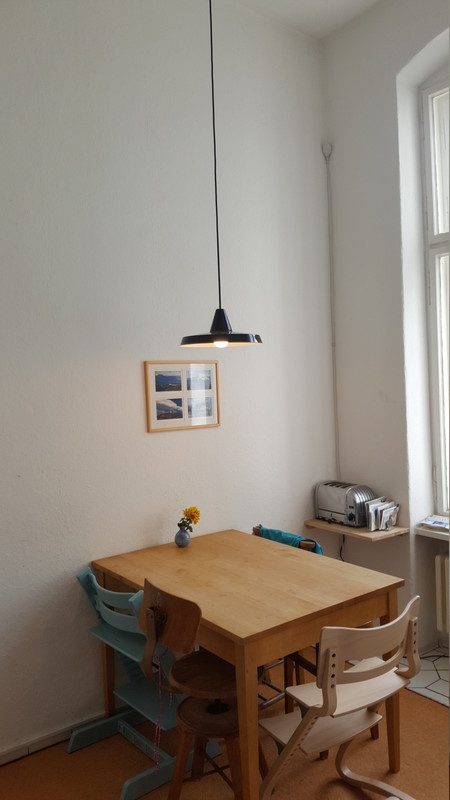
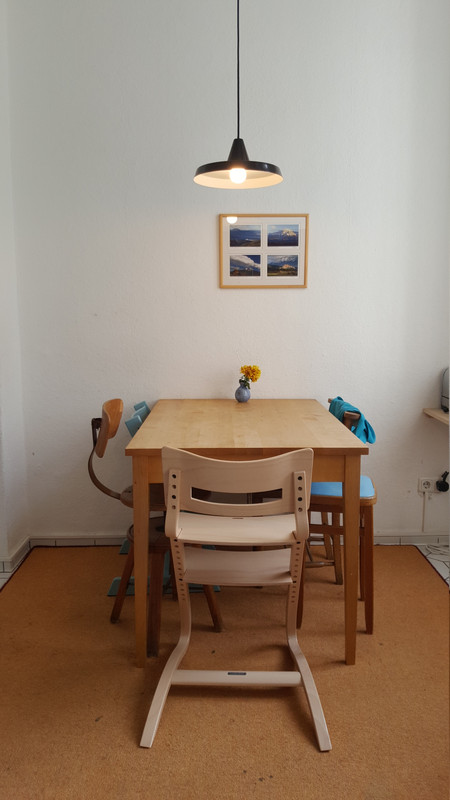
A robust lighting concept fulfills several tasks at once. It should provide orientation, support activities, make materials and colors legible, avoid glare, and structure the space. What matters here isn't just the design of a fixture, but its placement, the amount of light, the distribution of light, and the quality of light in the room.
Good residential lighting thinks in functions:
- ambient light for overview
- task light for specific visual activities
- mood light for accents
- freedom from glare for comfort
- controllability for different times of day
The most important shift in perspective: The room doesn't get "a fixture." Every activity gets the light it actually needs.
That's exactly why homes with expensive fixtures often still look flat, restless, or unpleasant: the dramaturgy is missing. Light is present, but it doesn't organize the space.
The first classic mistake is the idea that a room mainly needs one main fixture. In the living room, that's almost always too little. In the kitchen, a single ceiling light often casts shadows on the work surface. And even the dining table quickly looks sterile under plain ambient light alone, while its own pendant or task lighting elevates it both functionally and spatially.
Too centralized.
Too flat.
Too little guidance.
The second mistake is light that's too harsh, too directional, or poorly placed. A room can be bright and still feel exhausting if reflections, hard shadows, or glare occur. This becomes especially relevant in the bathroom and on stairs: mirror lighting needs to illuminate faces evenly, and stair lighting needs to make steps clearly and safely visible.
.jpg)
The best counter-argument to typical poor planning is this: not one fixture per room, but several light layers per activity. Ambient light creates orientation, task light brings brightness exactly where it's needed, and accent light adds depth, mood, and direction.
This changes everyday life above all else:
- The dining table gains significance.
- The kitchen gains precision.
- The living room gains depth.
- The hallway gains orientation.
- The bedroom gains calm.
Good residential lighting works almost always more with surfaces than with cones of light. Light directed onto ceilings and walls can make small or windowless areas feel larger and friendlier, while focused accents give the room structure.
Dimmable light, separate circuits, and easily reachable switches often change daily life more than the shape of the fixture itself. A home doesn't need a single lighting mood, but several states: morning, daytime, evening, working, eating, reading, and coming home.
In the bedroom, warm-white, dimmable light sources work well, along with switches reachable from the bed and softly shielded reading light. The home office, on the other hand, has different requirements: more brightness, better freedom from glare, and a combination of direct and indirect light.
Especially important: When a bedroom and a workspace share the same room, lighting shouldn't be solved with a single fixture. Calm and concentration need separate scenes.
.jpg)
.jpg)
In the living and dining area, the most worthwhile step is moving away from a single switch for everything. Many situations overlap here: conversation, eating, reading, watching TV, retreating, hosting guests. Offering only one lighting mood forces a single function onto the room.
In the kitchen and bathroom, precision matters more than romance. Kitchen worktops need good, low-shadow light; in the bathroom, the mirror lighting determines whether faces look natural or are distorted by harsh shadows. Hallways and stairs, in turn, need safe orientation, pleasant vertical brightness, and good visibility.
Living room: depth.
Kitchen: precision.
Bathroom: evenness.
Hallway: orientation.
Bedroom: calm.
A home gets better when every area has its own lighting logic. Not as a complicated system, but as a spatial order that remains instantly understandable in everyday life.
Circadian lighting is not an empty buzzword, but it's also not a miracle machine. Light influences wellbeing, daily structure, and the sleep-wake cycle; even so, good light at home isn't created simply by buying tunable white or making every fixture smart.
For homes, the more sensible priority is much simpler: use as much daylight as possible, light work and functional areas brightly and clearly during the day, reduce brightness in the evening, and think of cozy zones as warmer, calmer, and more dimmed.
Good residential lighting doesn't need a tech showcase:
- more daylight in everyday life
- clear light zones instead of uniform brightness
- warmer light in the evening
- dimmable scenes instead of rigid switch logic
- less glaring light in the bedroom
The exact dosage in residential settings always remains an open question. Age, daylight exposure, chronotype, material colors, room depth, and individual visual tasks significantly change light requirements. That's why there's no perfect Kelvin number and no single lux value that automatically makes a home right.
What can still be said very clearly: good residential lighting is layered, low-glare, controllable, and tailored to the space. It replaces the single central fixture with an interplay of ambient light, task light, and accents.
It gives the kitchen real work light.
The bathroom reliable mirror lighting.
The hallway vertical brightness.
The stairs safety.
The bedroom calm.
And it takes daylight seriously, rather than treating it as just a bonus.
Studio De Schutter develops lighting concepts for homes, apartments, and architecturally ambitious interior projects, where light is never treated as an afterthought of decoration, but as part of the spatial design itself.
Good light doesn't just make a home brighter.
It makes it more precise, calmer, and more livable.
Contact Us:
