

You won’t remember the lux value of a hotel.
You remember how it made you feel.
Hotel lighting is not background. It is atmosphere, attitude, identity. It decides whether a place feels calm or hectic, generous or distant, intimate or anonymous. And it does so quietly. Almost invisibly.
That is exactly its power.

Light is the First Brand Touchpoint
Before check in.
Before the room.
Before the service.
Light is the first thing guests experience.
A hotel brand that understands lighting does not decorate spaces. It stages emotions. The entrance is not brighter because it needs to be bright. It is brighter because it signals arrival. Safety. Orientation. Welcome.
Light answers the unspoken question:
“Am I in the right place?”
The Lobby: Confidence, Not Spectacle
Many hotels try to impress through scale. Height. Objects. Oversized chandeliers that demand attention the moment you step inside. The result is often visual noise rather than clarity.
True confidence behaves differently.
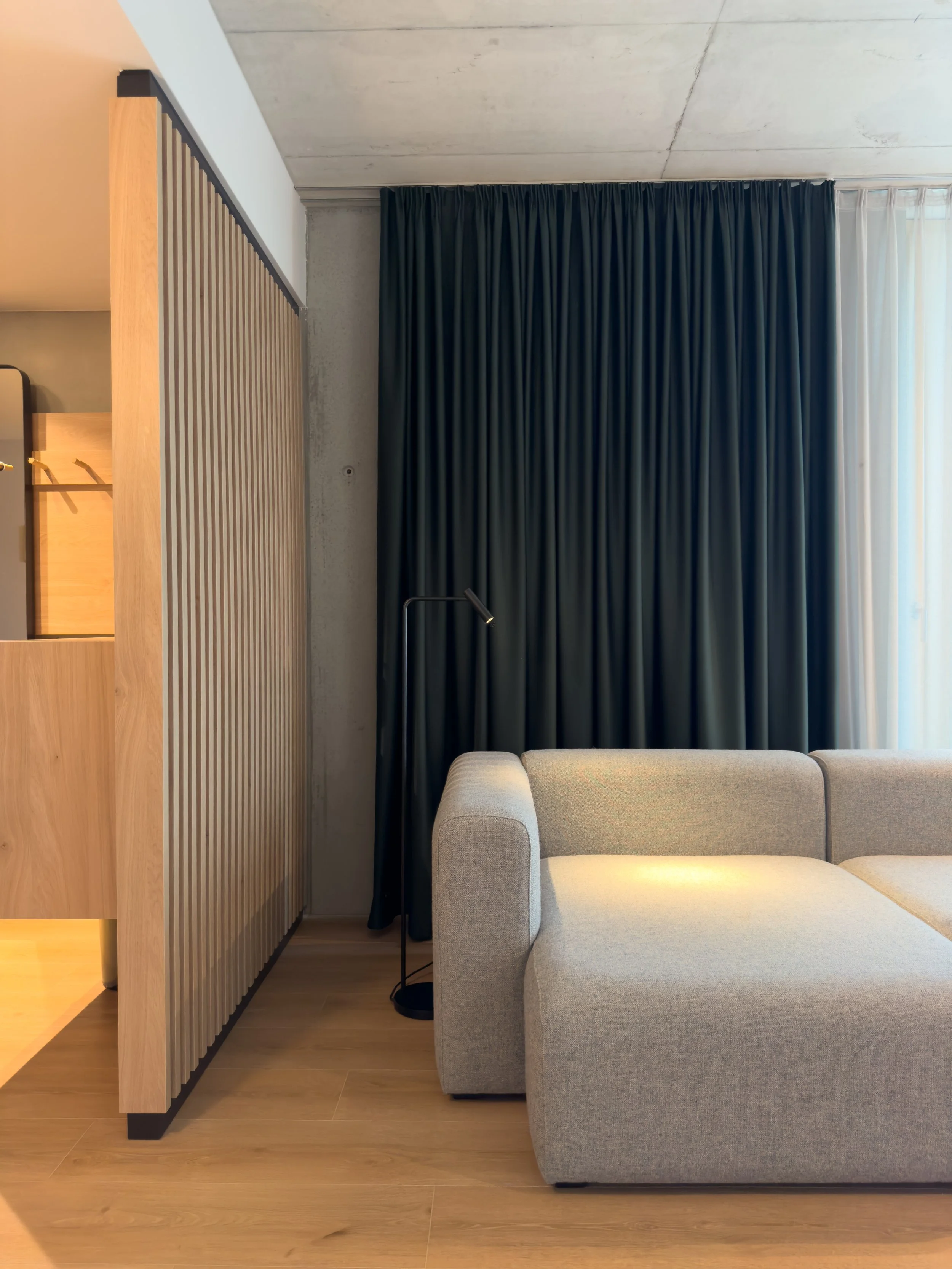
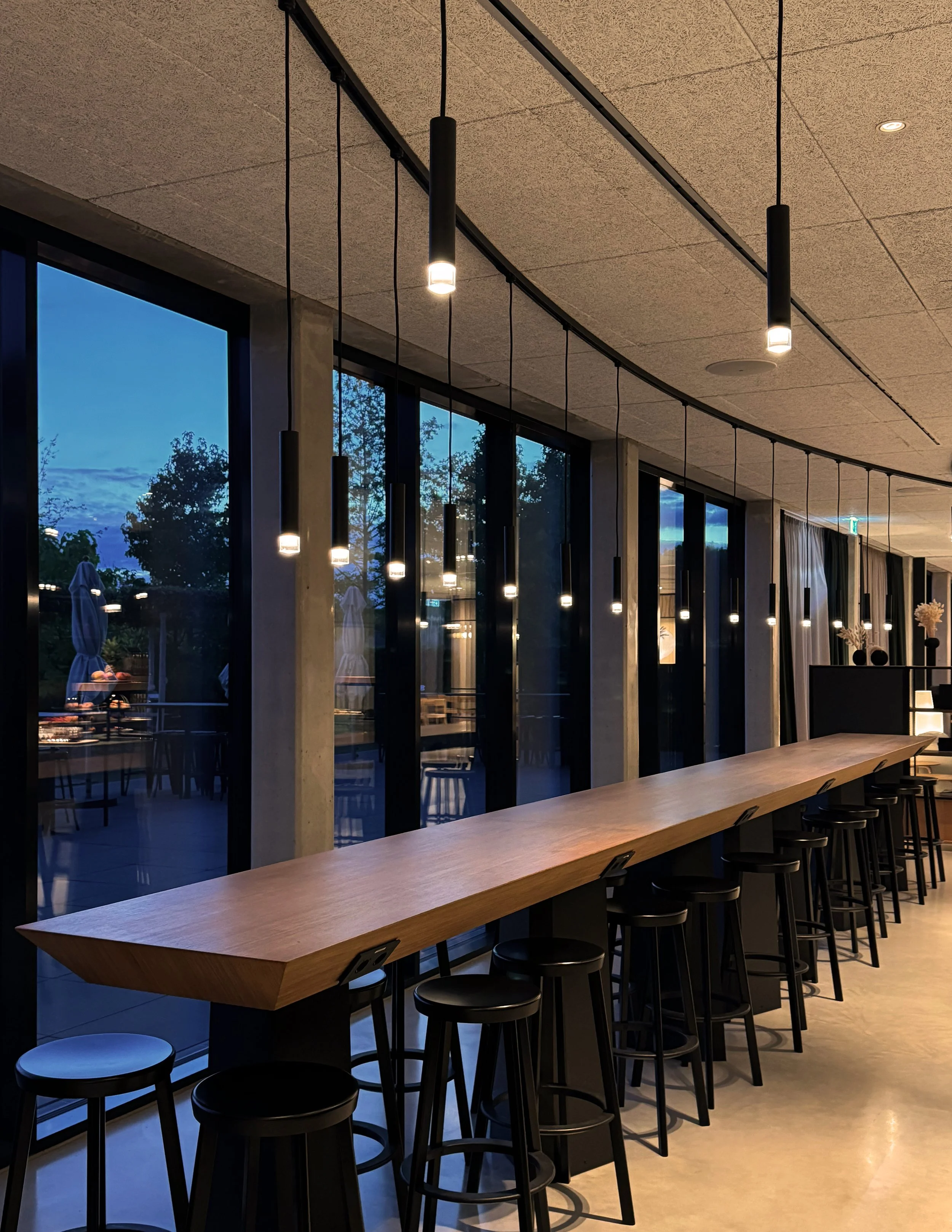
Confident hotel lighting does not rely on spectacle. It works with the architecture, not against it. Vertical surfaces become light carriers. Walls are gently washed to reveal proportions and materials. The ceiling steps back. The space begins to breathe.
• Vertical light creates dignity and spatial calm
• Reduced glare builds trust and comfort
• Darkness is used intentionally to frame what matters
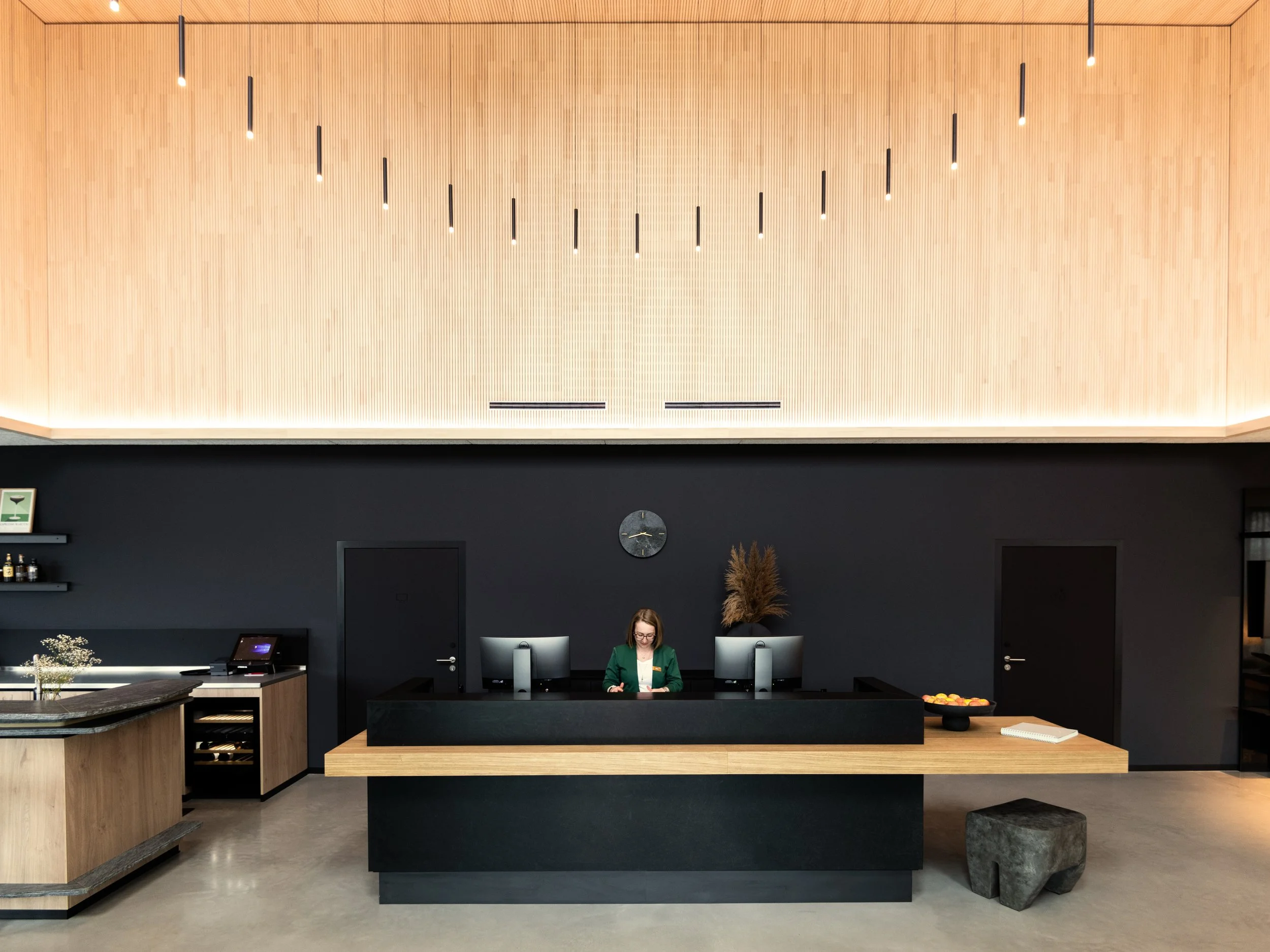
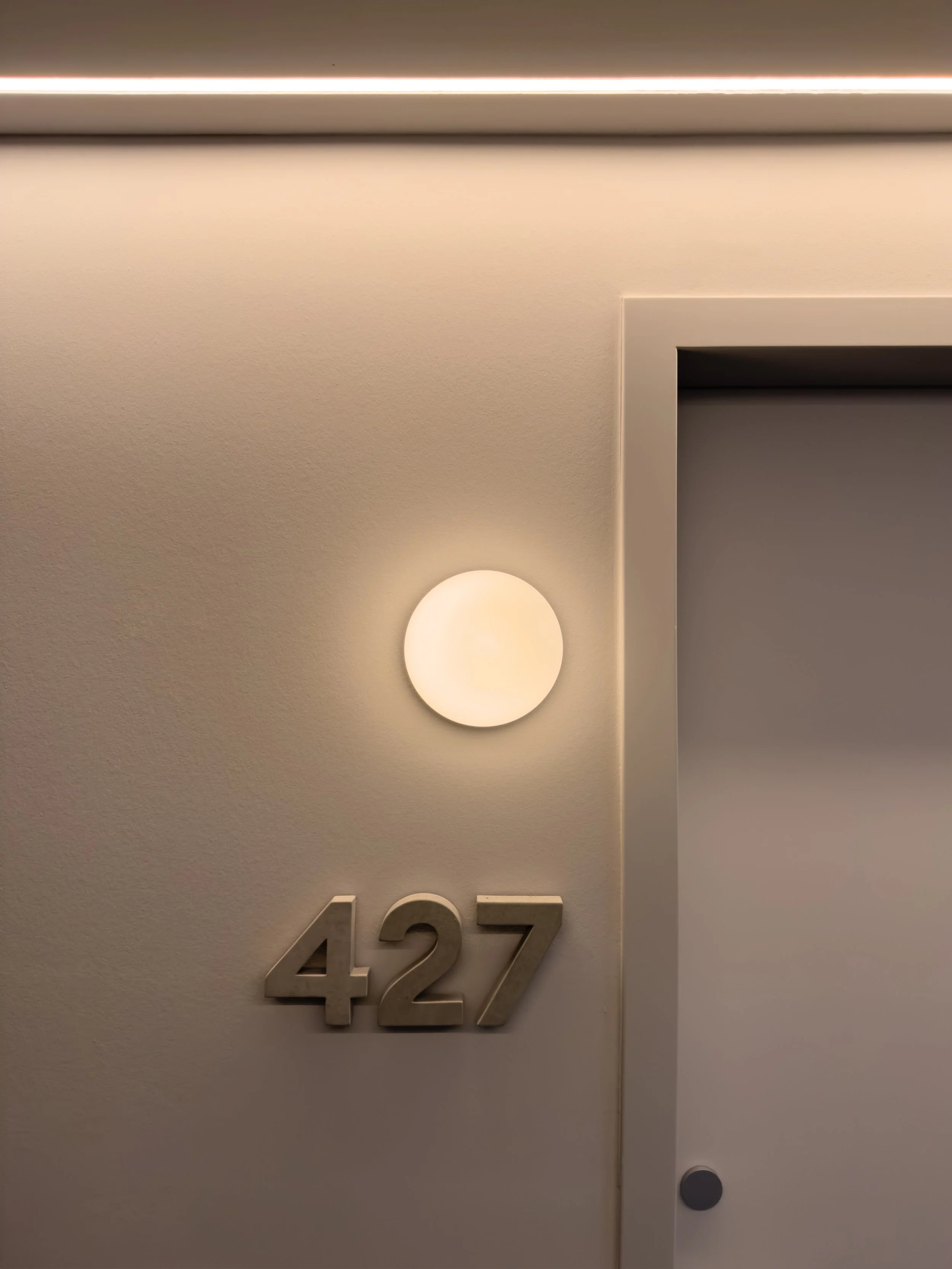
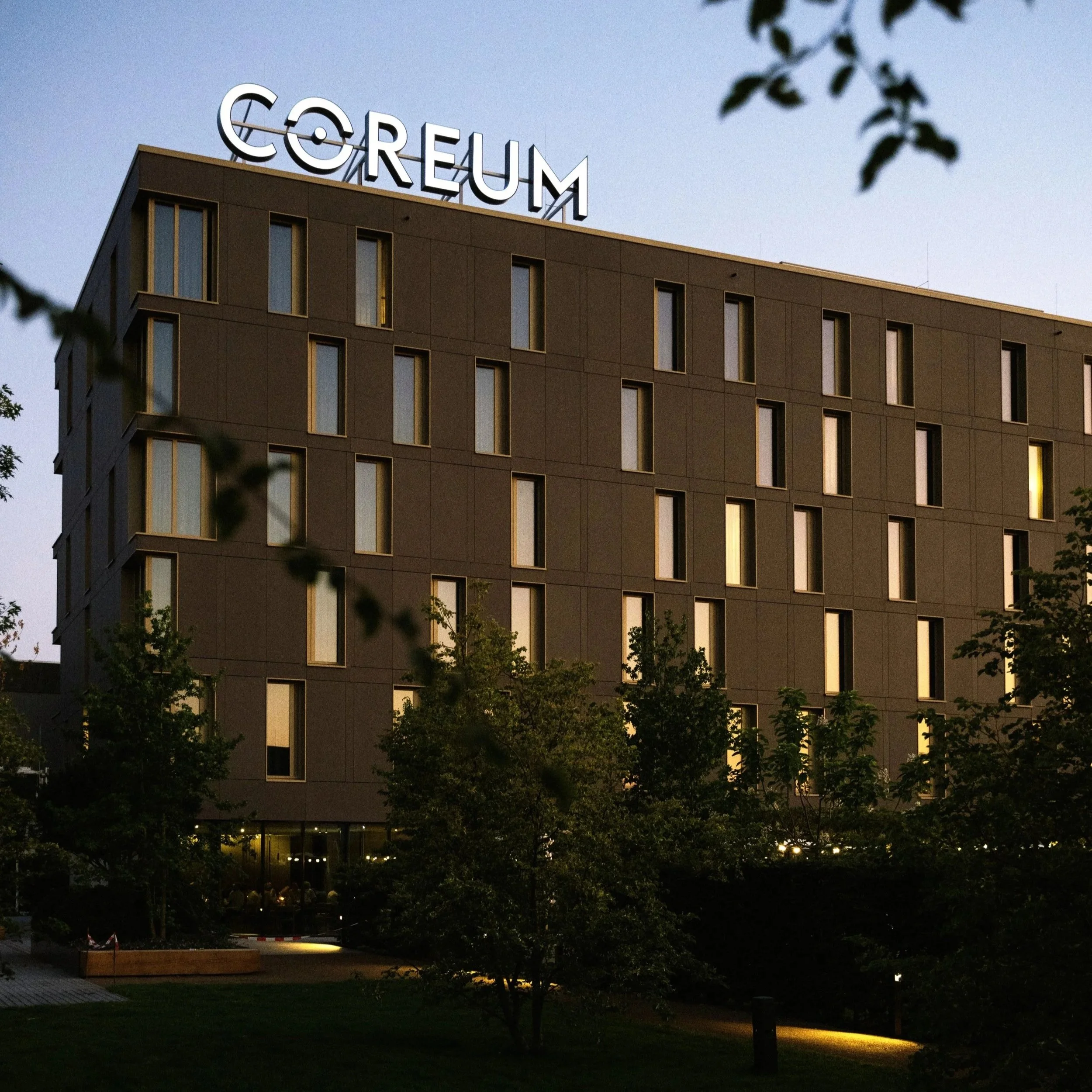
Pictures: Hotel Coreum, designed by Studio de Schutter
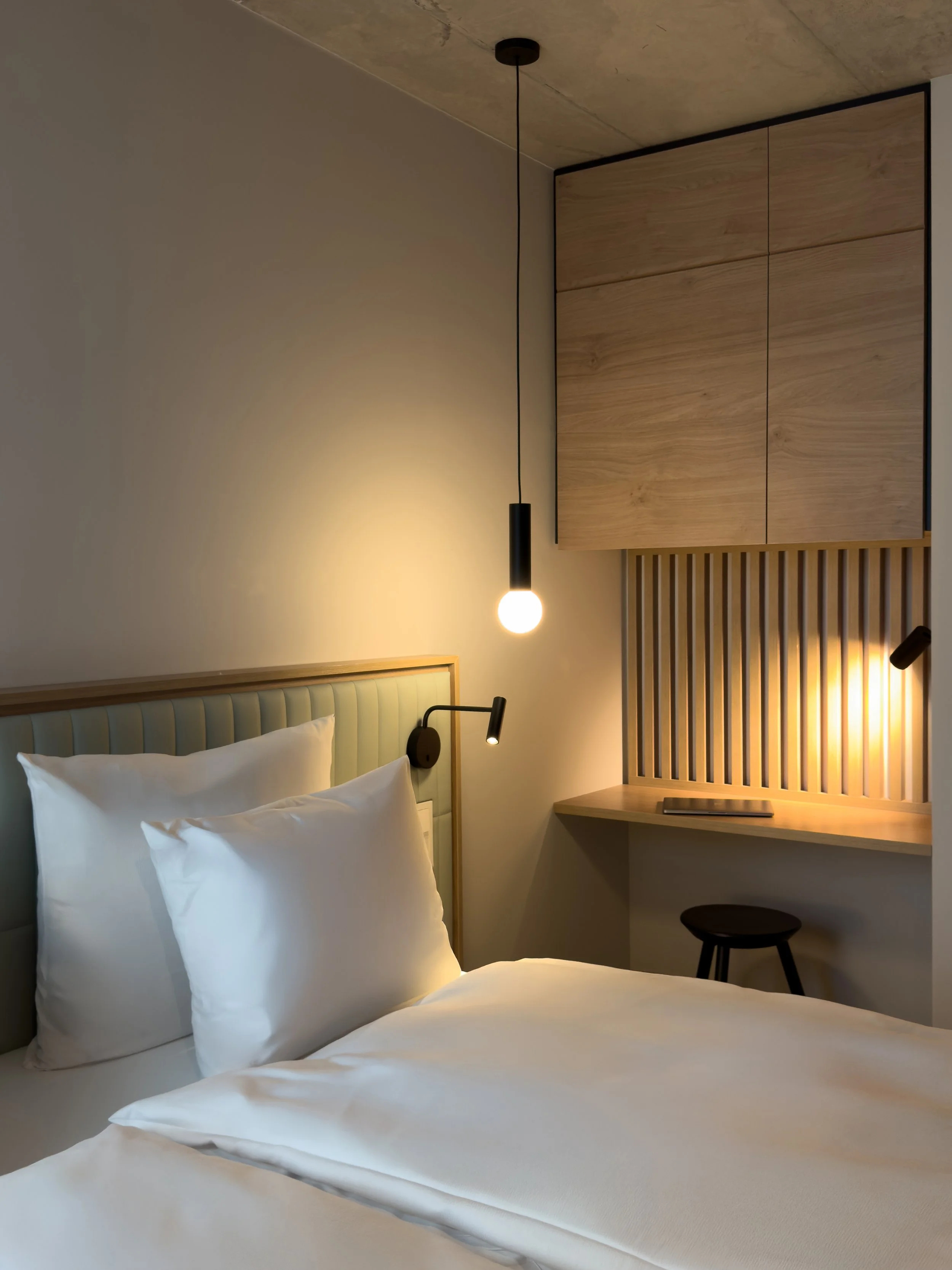
Guest Rooms: Brand Turns Personal
The hotel room is where brand experience becomes real. No longer staged, no longer shared. This is the most intimate space of the entire hotel, and lighting here is experienced over hours, not seconds.
In the room, guests are not observing a concept. They are living in it.
Lighting must adapt to real situations. Arrival after a long journey. Unpacking with half opened luggage. Answering emails late at night. Reading in bed. Waking up briefly at 3 a.m. Leaving quietly before sunrise. Each moment demands a different quality of light.
One fixed mood can never support this rhythm.
• Scene based lighting replaces technical switch logic
• Indirect light creates calm and reduces visual stress
• Precise light supports reading, work and orientation
Good room lighting gives guests control without asking them to think. Intuitive scenes, clear hierarchy, gentle transitions. The space responds instead of requiring instruction.
The best hotel room lighting disappears.
Not because it lacks character.
But because it supports every moment, effortlessly!
The most personal brand experience in a hotel is not what you see first, but what quietly supports you through the night.
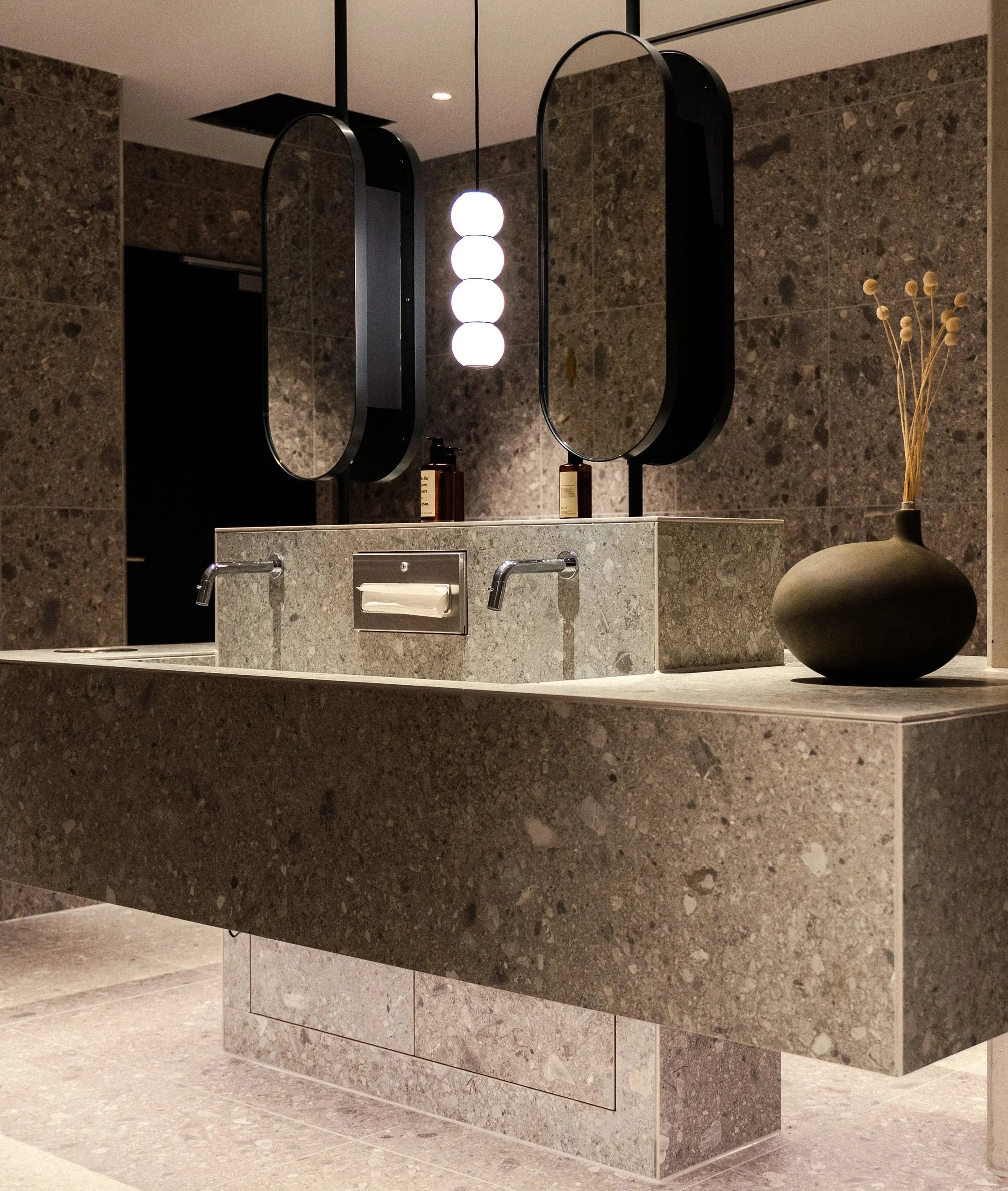
Bathrooms: Intimacy and Precision
Hotel bathrooms are deeply personal spaces. More than any other room, they confront the guest with themselves. Mirrors reveal every detail. Light shapes perception. Mood. Confidence.
Lighting here is never neutral.
If the light is too cold, the space feels clinical and unforgiving. Too warm, and it feels artificial, almost dishonest. The balance is delicate, and essential.
Well designed bathroom lighting focuses on vertical illumination around mirrors. Faces are evenly lit, shadows are softened, contrasts reduced. Ambient light supports orientation without overpowering. The colour rendering is clear, calm and trustworthy.
• Softly modelled light for accurate reflection
• Ambient light for spatial comfort
• Balanced tones that flatter without distorting
In hotel bathrooms, lighting does more than make things visible.
It shapes how guests see themselves.
And that influence on confidence often matters more than any surface, material or object in the room.
In the bathroom, light does not decorate the space. It defines how comfortable you feel with yourself.
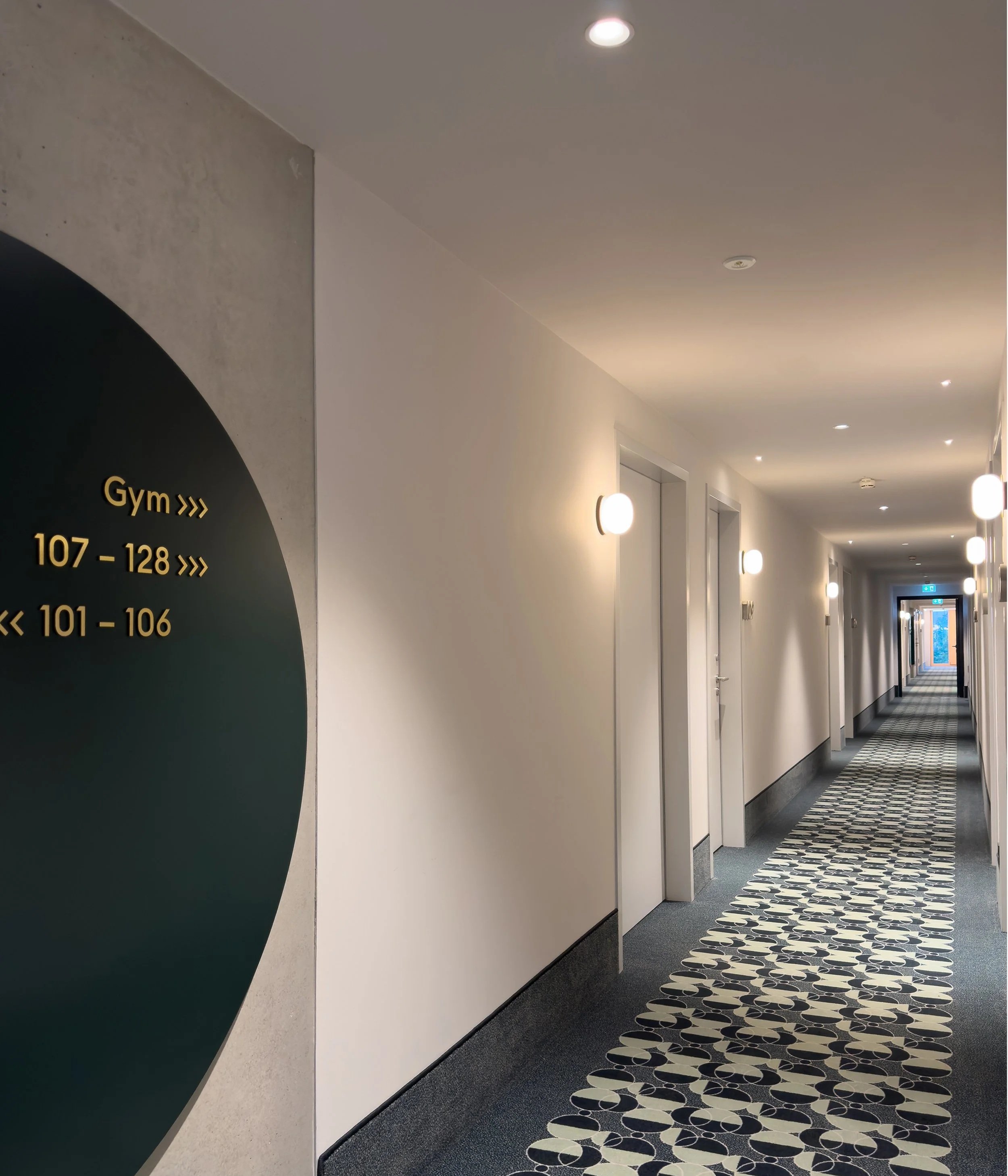
Corridors: Orientation and Reassurance
Hotel corridors are transitional spaces, yet they shape comfort more than almost any other area. Guests move through them alone, often late at night, sometimes half awake, carrying luggage or searching for their room. Light defines whether these moments feel calm or uneasy.
Lighting here is never secondary.
If corridors are too bright, they feel endless and institutional. If they are too dark, they feel unsafe and disorienting. The balance lies in clarity without exposure, in guidance without dominance.
• Light distribution that supports orientation
• Rhythmic lighting for intuitive wayfinding
• Controlled contrast to maintain calm
In hotel corridors, lighting does more than illuminate circulation.
It reassures guests as they move through the building.
And that quiet sense of orientation and safety often defines the overall experience more than guests consciously realise.
In hotel corridors, light is not about visibility. It is about reassurance, direction and the feeling of being at ease while moving through space.
Light as Memory
Working with Studio De Schutter means choosing a partner who understands lighting as part of a larger story, not as an isolated layer. Our approach is rooted in listening first: to the place, the architecture, the operator and ultimately to the future guest experience.
We translate brand values into spatial atmosphere and emotional clarity. Every project is developed holistically, from the first concept to long term operation. We think in sequences, not in rooms. In transitions, not in isolated moments. This allows lighting to feel coherent, intuitive and timeless throughout the entire hotel.

At Studio De Schutter, technical precision and emotional intelligence go hand in hand. Sustainability, durability and maintenance are considered from the beginning, ensuring that lighting concepts remain relevant and efficient over time. The result is lighting that does not dominate, but defines.
Further Case Studies: Hotel Coreum, Hotel zur Amtspforte
Contact Us:
