

Garden Lighting: Ideas for Clear Structures in Outdoor Spaces
A garden is not accidental.
It is composed.
During the day through materials, paths and planting.
At night through light.
Garden lighting does not only define what is visible.
It defines how the outdoor space is read.
We show six principles that turn a garden into a clear, functioning whole.
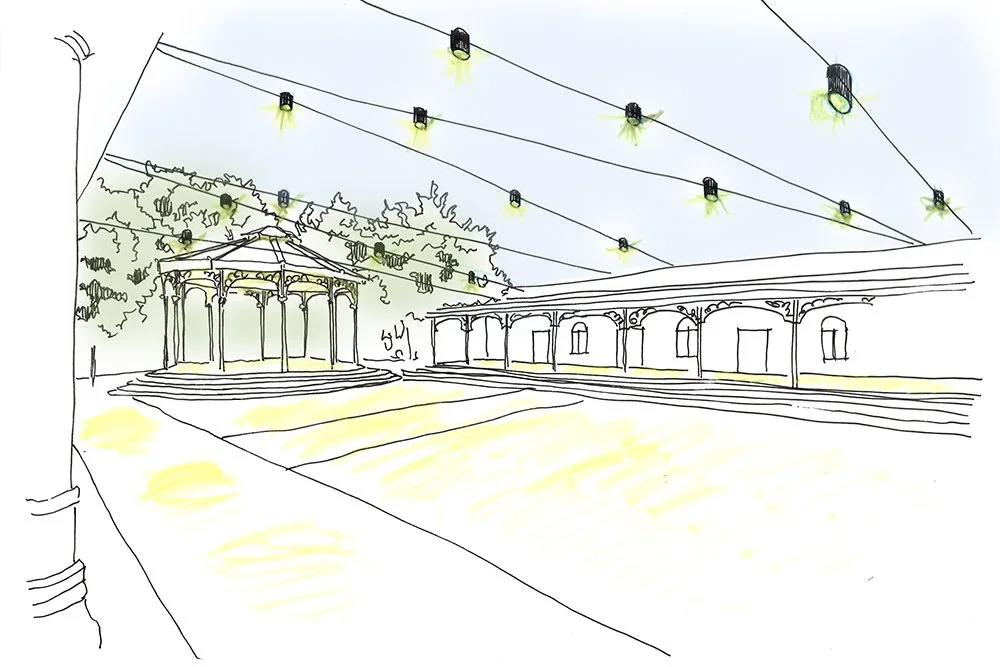
1. Guiding paths instead of overlighting them
Lighting in the garden begins with orientation.
Paths are not surfaces.
They are lines.
Good planning means:
Punctual lighting instead of continuous light strips
Low luminaires with clear light distribution
A consistent rhythm instead of random placement
What this creates:
Safe movement
Calm, clear guidance
No glare
Too much light destroys structure.
Too little makes it unreadable.
The quality lies in between.
2. Defining zones instead of treating everything equally
A modern garden works like a floor plan.
Different areas require different lighting logics.
Typical zones:
Terrace
Seating areas
Paths
Planting areas
Facade zones
What matters:
Each zone has its own light intensity
Transitions are deliberately designed
No uniform distribution across the entire garden
This creates hierarchy.
And with it, orientation.

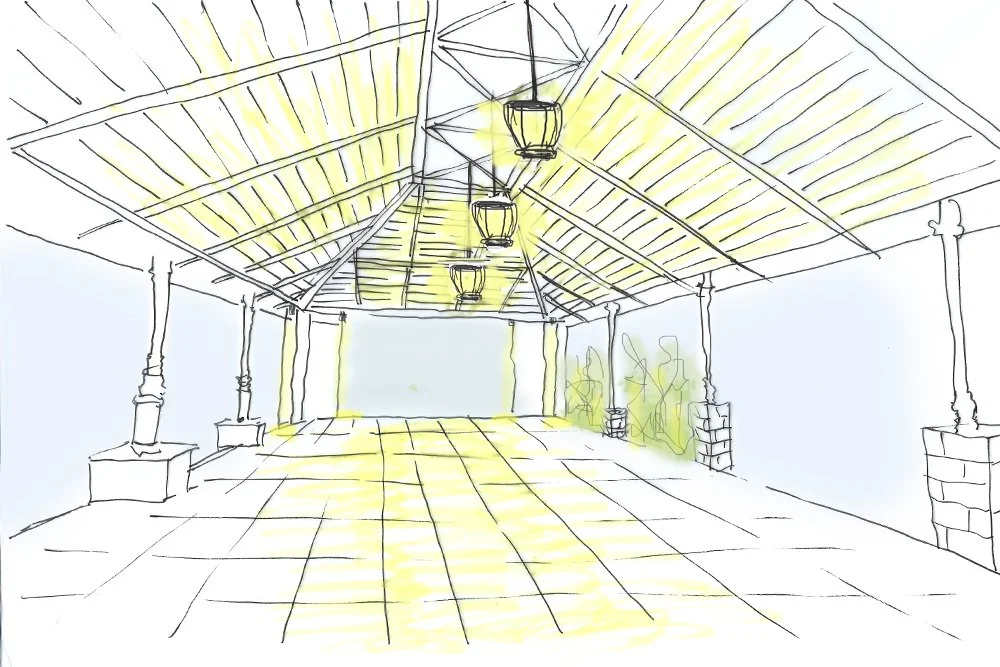
3. Making vertical surfaces visible
Most gardens are lit too flat.
Everything happens on the ground.
And that is exactly the problem.
Vertical elements create depth:
Trees
Shrubs
Walls
Facades
Typical techniques:
Uplights for trees
Wallwashers for walls
Targeted spots for individual plants
The result is not a brighter garden.
But a spatial one.
4. Reducing light to create impact
More luminaires do not mean more quality.
Quite the opposite.
A modern outdoor space thrives on deliberate reduction.
In practice, this means:
Planning intentional dark zones
Illuminating only what matters
Defining sightlines instead of making everything visible
Darkness is not a flaw.
It is a design tool.

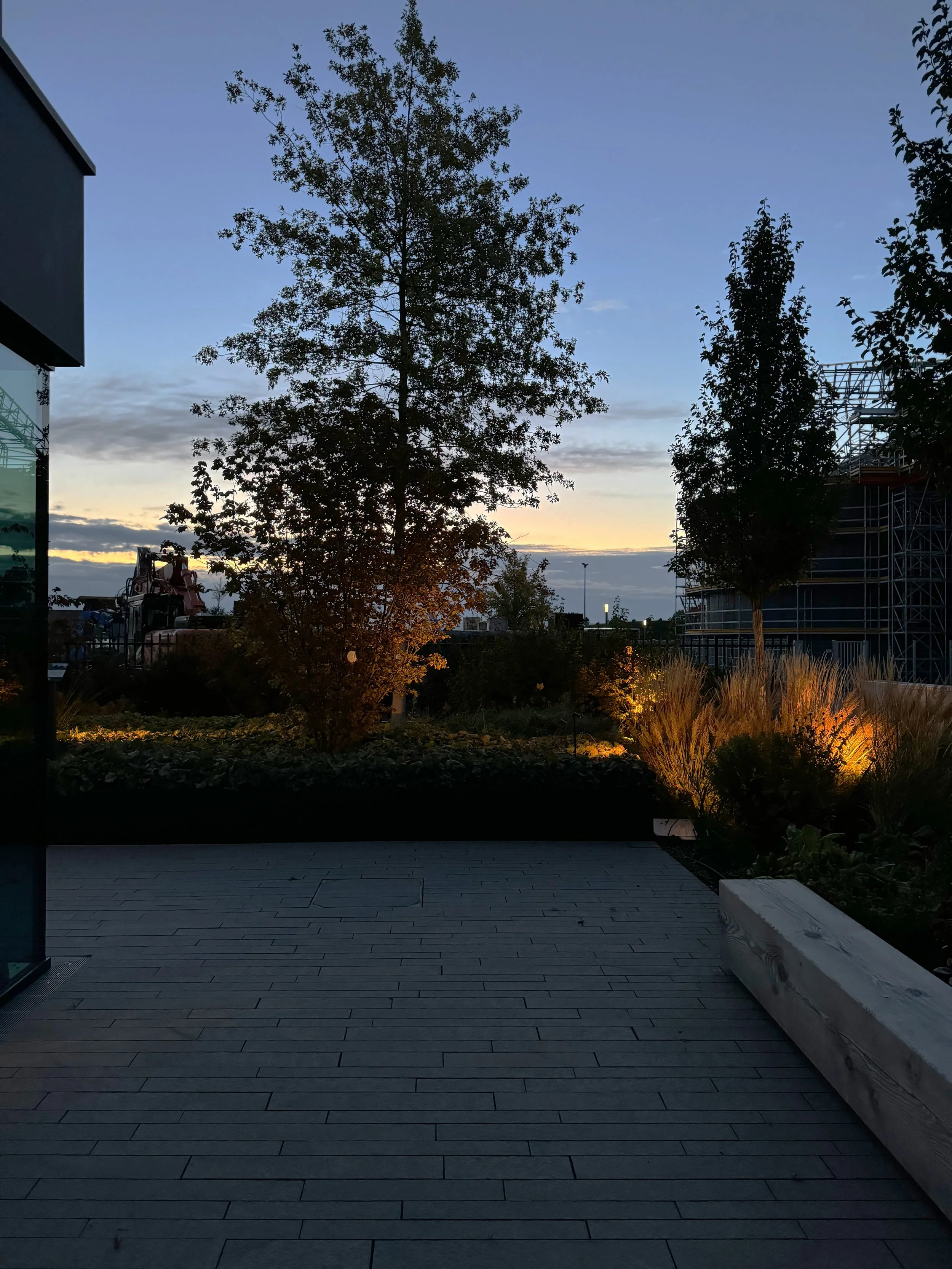
5. Staging materials correctly
Surfaces respond differently to light.
And this is often ignored.
Typical interactions:
Wood appears warm and soft
Stone reveals structure and depth
Water reflects and moves light
Metal can either glare or create sharp accents
Therefore:
Choose light color and angle deliberately
Control reflections
Avoid overlighting materials
Light does not only reveal the garden.
It reveals how it is built.
6. Integrating technology, not making it visible
Good garden lighting is not defined by technology.
But by its effect.
Key principles:
Integrate luminaires into architecture and landscape
Keep cables and technical elements invisible
Maintain simple, intuitive control
Optionally useful:
Dimming functions for different uses
Timers for automated sequences
Sensor-based additions for pathways
Complexity stays in the background.
Clarity remains in the space.

Common Mistakes
Many gardens do not fail because of ideas.
But because of execution.
Typical issues:
Too many luminaires without a concept
Wrong light colors in outdoor spaces
Glare caused by poorly aimed spots
No hierarchy between surfaces and zones
The result feels restless.
And loses all structure.
Conclusion
Garden lighting is not an addition.
It is a second design.
One for the night.
Those who plan precisely do not create a brighter garden.
But a clearer one.
With structure.
With direction.
And with a lasting effect.

Contact Us:
