
Tonhain
Event venue · Berlin
Project Type: Event space, music hall and recording studio
Completion: 2025
Size: 330 m²
Client:Tonhain
Project phases: LPH 2 - 8
Architect:Tietz & Tietz – Architektur & Design
Acoustics:Krämer & Stegmaier
Photography:Clara Evens
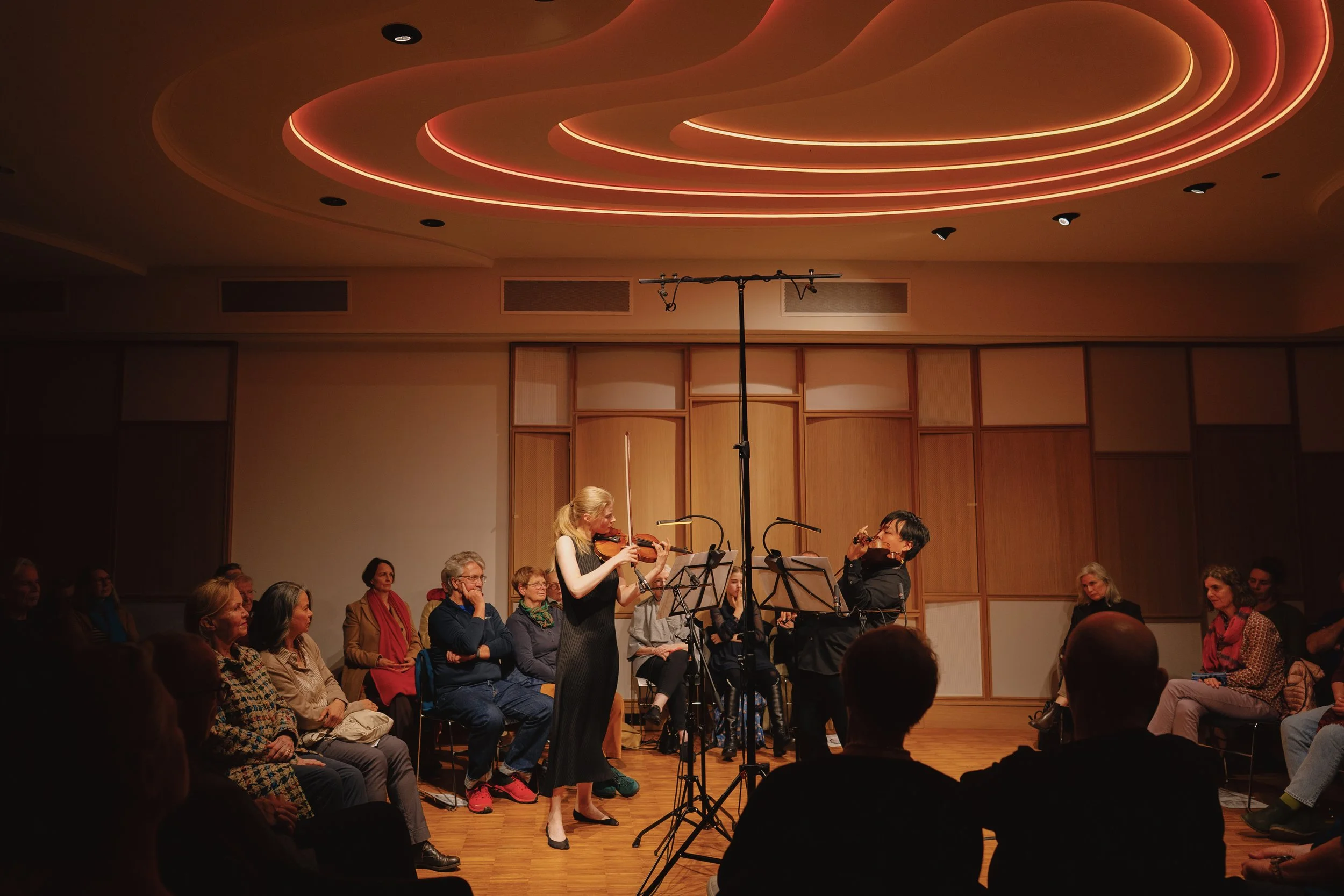
With Tonhain, a new, intimate venue for chamber music and professional audio recording has emerged in Berlin. Where the “Thorwaldsen-Lichtspiele” once screened films, and later housed a sacred space, a concert hall with a state-of-the-art recording studio and seating for up to 99 guests now defines the place.
Studio De Schutter was commissioned to develop an immersive, flexible lighting concept that responds to the project’s specific spatial and acoustic requirements while playing a defining role in shaping Tonhain’s visual identity.
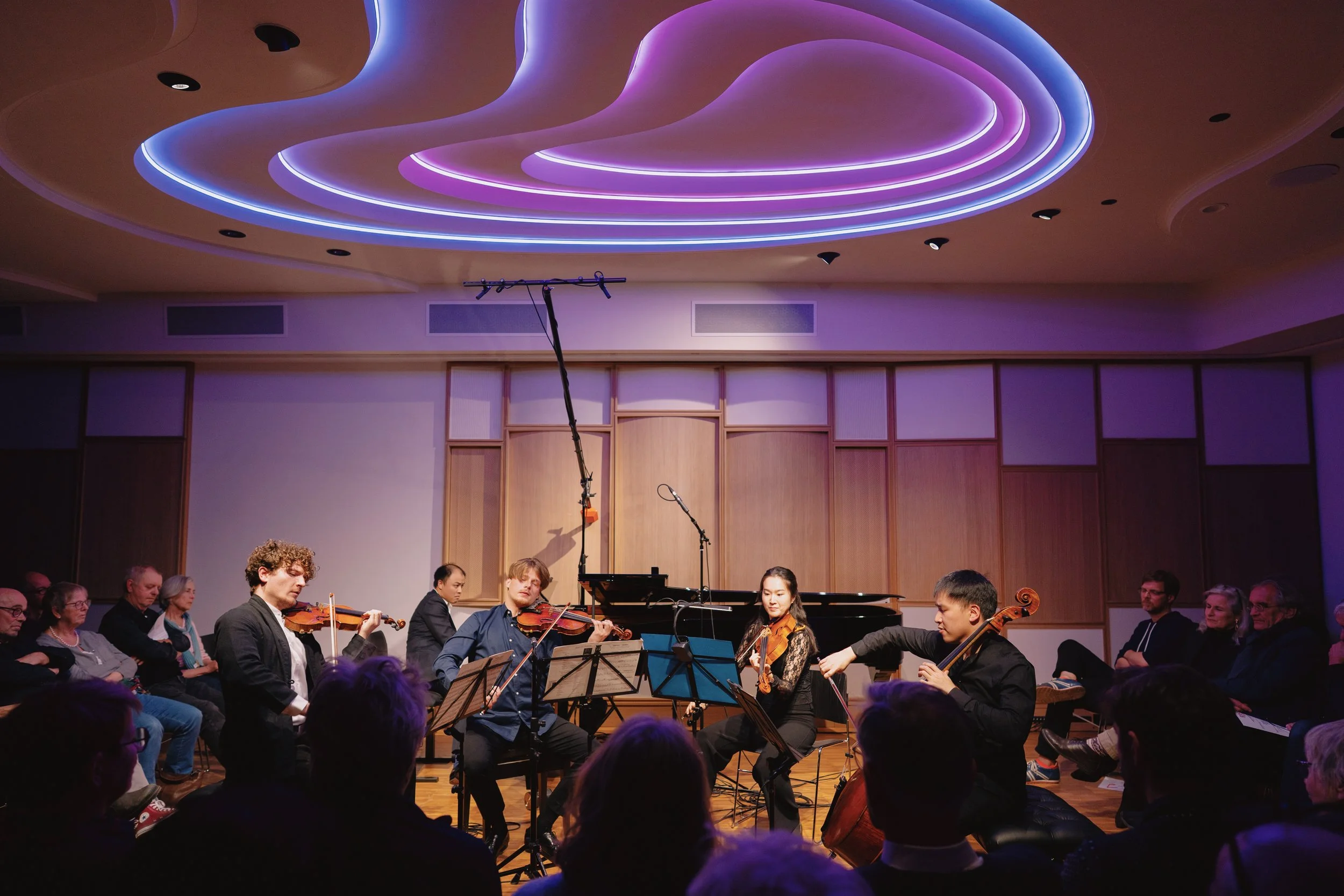
Tonhain brings together professional audio recording, chamber music concerts, masterclasses, rehearsals, as well as multimedia formats within a single space. The client brief defned clear ambitions: modern, smart, fexible, distinctive, experimental, and with a strong recognizability.
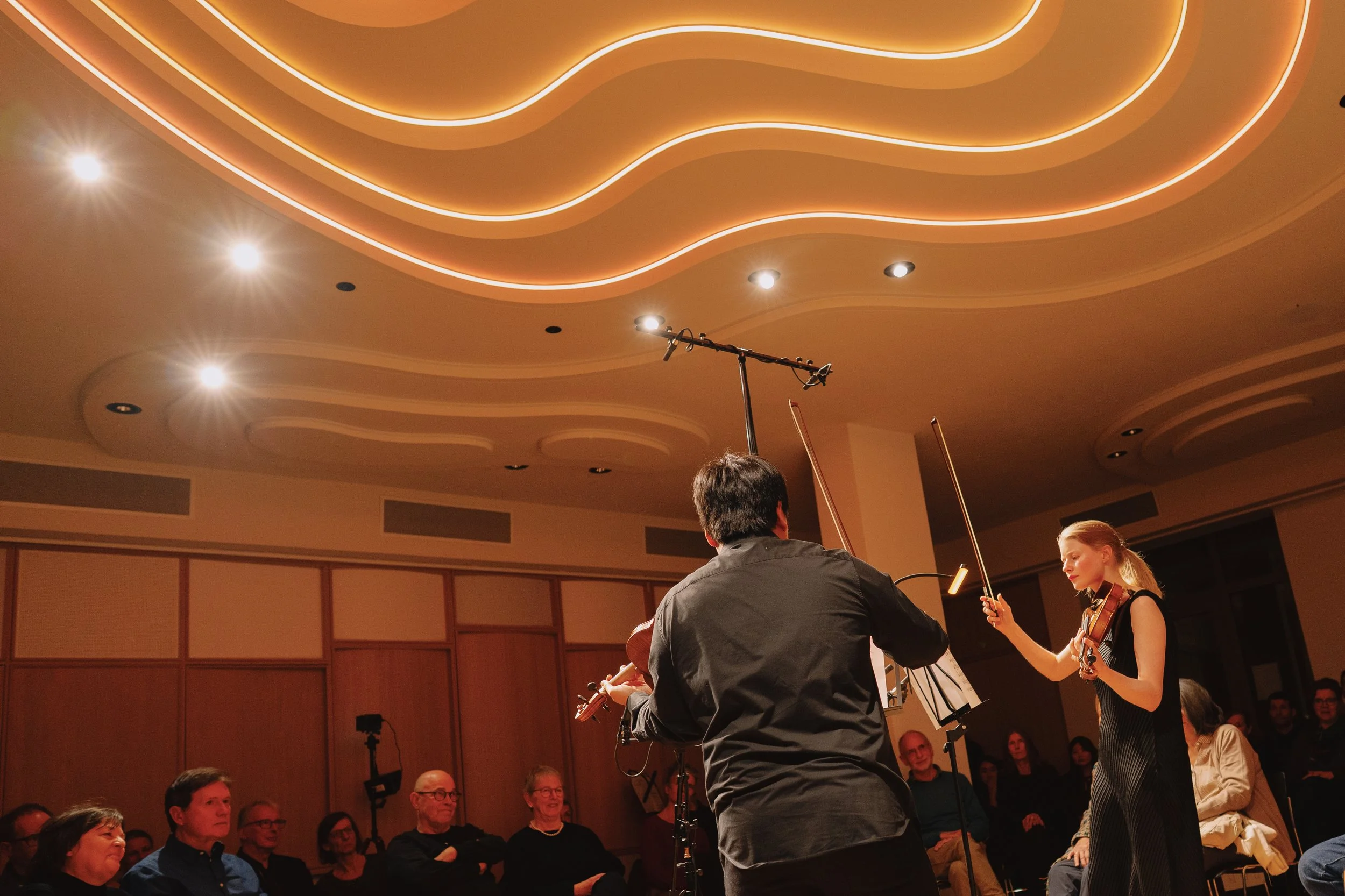
The lighting concept translates this vision into a visual language: the spaces appear warm and atmospheric, yet technically precise and calm. Light staging, ceiling topography, and acoustic performance interact to create a distinctive, recognizable identity.
Architecture as landscape
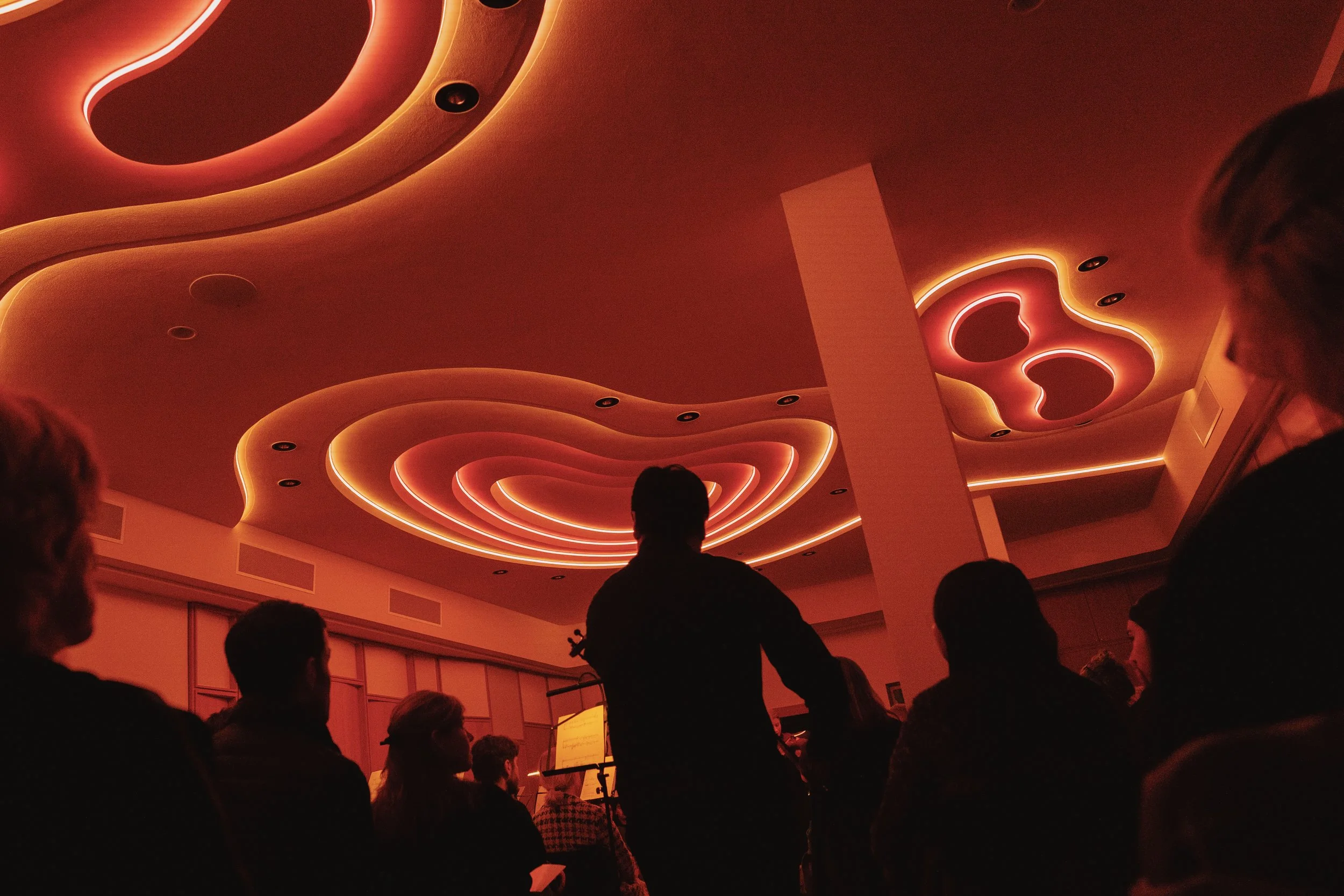
The acoustic ceiling, developed by Tietz & Tietz – Architecture & Design, is a defning element of the space. Its organic geometry—a recessed “lake” fanked by two “mountains”—functions both as an acoustic instrument and as a spatial narrative.
This topographical structure defnes the conditions for the lighting. Architecture, acoustics, and illumination were therefore conceived together from the outset and tested in a full-scale mock-up. The result is not an additive intervention, but an integrated system in which light becomes part of the architectural logic.
Atmospheric light emerges where technical details are precisely planned.
Sustainability and future viability
Beyond its spatial quality, sustainability plays a central role in all projects by Studio De Schutter. Replaceable components, energy-efcient technologies, and a reduced level of intervention ensure long-term usability.
The system’s high fexibility enables diferent scenarios without structural modifcations, making adaptability itself a sustainable strategy.
A space for recording, performance, and experimentation
Tonhain brings together professional
audio recording, chamber music concerts, masterclasses, rehearsals, as well as multimedia formats within a single space. The client brief defned clear ambitions: modern, smart, fexible, distinctive, experimental, and with a strong recognizability.
The lighting concept translates this vision into a visual language: the spaces appear warm and atmospheric, yet technically precise and calm. Light staging, ceiling topography, and acoustic performance interact to create a distinctive, recognizable identity.
The atmospheric layer emerges through the integration of light into the architecture, as it merges with the space, subtly reinforces the architectural concept, and at the same time makes the spatial depth perceptible.
Deutsch;
Tonhain: ein immersives und identitätsstiftendes Lichtkonzept für ein Musikstudio in Berlin
Studio De Schutter entwickelt ein atmosphärisches und hochflexibles Beleuchtungskonzept für Kammermusik, Recording und interdisziplinäre Formate.
Mit Tonhain entsteht in Berlin ein neuer, intimer Ort für Kammermusik und professionelle Audioaufnahmen – ein hybrides Studio-Konzept, das Zukunft und Geschichte miteinander verbindet. Wo einst die „Thorwaldsen-Lichtspiele“ Filme zeigten und später ein sakraler Raum untergebracht war, eröffnet nun ein Konzertsaal mit hochmodernem Recording-Studio und Platz für bis zu 99 Gäste.
Studio De Schutter wurde beauftragt, ein immersives und flexibles Lichtkonzept zu entwickeln, das den besonderen räumlichen und akustischen Anforderungen entspricht und die visuelle Identität von Tonhain maßgeblich mitprägt.
Ein Ort für Recording, Bühne und Experiment
Tonhain vereint professionelle Audioaufnahmen, Kammermusikkonzerte, Masterclasses, Proben sowie multimediale Formate in einem Raum. Das Kundenbriefing formulierte klare Anforderungen: modern, smart, flexibel, charaktervoll, experimentierfreudig und mit hohem Wiedererkennungswert.
Das Lichtkonzept übersetzt diese Haltung in eine visuelle Sprache: Die Räume wirken warm und atmosphärisch, zugleich technisch präzise und ruhig. Lichtinszenierung, Deckentopografie und akustische Qualität greifen ineinander und erzeugen eine eigenständige, wiedererkennbare Identität.
Architektur als Landschaft
Die von Tietz & Tietz – Architektur & Design entwickelte Akustikdecke prägt den Raum maßgeblich. Ihre organische Geometrie – ein abgesenkter „See“, flankiert von zwei „Bergen“ – ist zugleich akustisches Instrument und räumliches Leitmotiv.
Diese topografische Struktur definiert die Bedingungen für das Licht. Architektur, Akustik und Beleuchtung wurden daher von Beginn an gemeinsam entwickelt und in einem 1:1-Mockup überprüft. Das Ergebnis ist kein additiver Eingriff, sondern ein integrales System, in dem Licht Teil der baulichen Logik wird.
Flexibilität als Grundsatz
Die Nutzung des Raums erfordert ein Höchstmaß an Anpassungsfähigkeit. Unterschiedliche Bühnenpositionen, wechselnde Formate und variable Besetzungen verlangen ein Lichtsystem, das sich präzise auf jede Situation einstellen kann – ohne sichtbar in den Raum einzugreifen.
Die Lösung folgt einem klaren Prinzip: maximale Wirkung bei minimaler Präsenz. Durch die Integration beweglicher Lichtpunkte in die Architektur konnte auf klassische Bühnentechnik verzichtet und die Anzahl der eingesetzten Leuchten reduziert werden.
In Kombination mit einer präzisen Steuerung entsteht ein System, das sich intuitiv an unterschiedliche Nutzungen anpasst – und dabei stets im Hintergrund bleibt.
Atmosphäre durch Integration
Die atmosphärische Ebene entsteht durch die Integration der Beleuchtung in die Architektur. So verschmilzt Licht mit dem Raum: Es verstärkt die architektonische Idee, ohne sich in den Vordergrund zu drängen, und macht den Raum in seiner Tiefe erfahrbar.
Nachhaltigkeit und Zukunftsfähigkeit
Neben der gestalterischen Qualität spielt Nachhaltigkeit in allen Projekten von Studio De Schutter eine zentrale Rolle. Austauschbare Komponenten, energieeffiziente Technologien und eine reduzierte Eingriffstiefe sichern eine langfristige Nutzbarkeit.
Die hohe Flexibilität des Systems ermöglicht unterschiedliche Szenarien ohne bauliche Anpassungen – und macht Wandel zum integralen Bestandteil der Planung.